Freelance Photographer in Dubai, UAE - Experienced, Sophisticated, Affordable & Reliable
  • Home
  • Photography
    • Real Estate Photography
    • Landscape Photography
      • Travel Photography
      • Street Photography
    • Portrait Photography
      • Business Portrait Photography
      • Fashion Photography
    • Food Photography
    • Product Photography
    • Event Photography
      • Concert Photography
    • Sport Photography
    • Still Photography
  • Videography
    • 360 Interactive Virtual Tour
  • Latest Projects
  • News & Tips
  • Contact
Home
Photography
    Real Estate Photography
    Landscape Photography
    Travel Photography
    Street Photography
    Portrait Photography
    Business Portrait Photography
    Fashion Photography
    Food Photography
    Product Photography
    Event Photography
    Concert Photography
    Sport Photography
    Still Photography
Videography
    360 Interactive Virtual Tour
Latest Projects
News & Tips
Contact
Freelance Photographer in Dubai, UAE - Experienced, Sophisticated, Affordable & Reliable
  • Home
  • Photography
    • Real Estate Photography
    • Landscape Photography
      • Travel Photography
      • Street Photography
    • Portrait Photography
      • Business Portrait Photography
      • Fashion Photography
    • Food Photography
    • Product Photography
    • Event Photography
      • Concert Photography
    • Sport Photography
    • Still Photography
  • Videography
    • 360 Interactive Virtual Tour
  • Latest Projects
  • News & Tips
  • Contact
News and Tips

Why Interior Designers Should Keep Their Eyes on Smart Glasses

May 16, 2024 by Louie Alma Photography No Comments

Why Interior Designers Should Keep Their Eyes on Smart Glasses

From classic programs like AutoCAD that help with site modeling and planning to newer design tools such as Homestyler, which makes interior decoration and rendering much easier, it’s no secret that technological developments aid interior designers.

Recently, though, much attention has been focused on the use of relatively newer developments like augmented reality (AR) and virtual reality (VR) in the design industry. Specifically, the arrival of technology using AR and VR components is expected to change how designers visualize their projects.

While AR and VR are used in a variety of formats, one of the most convenient that designers can optimize this new tech is through smart glasses. Below, we’ll take a closer look at smart glasses and how they can be used in the interior design process.

What are smart glasses?

Essentially, smart glasses are Internet-connected wearable devices that can marry digital interfaces, content, and data with the real world. According to XR Today, smart glasses help empower everyday users and customers, as the glasses can be optimized for a wide variety of uses. They can be used as ideal tools for training company team members, offering remote assistance to professionals, or delivering hands-free guidance to individuals.

In line with this, smart glasses have also developed social media-friendly technology, with Ray-Ban Stories being among the latest and most prominent in the line-up of new releases. These stylish smart glasses offer wearable reliability and help you stay connected by letting you capture a moment or listen to music while your phone stays in your pocket. Additionally, Ray-Ban Stories helps streamline social media use with your glasses by letting you share posts to your online account right where you can see it through your lenses. These features redefine what smart glasses can do for the everyday consumer looking to make good use of the technology available on the market.

As it stands, the current smart glasses market size is expected to reach $10.6 billion by 2024. Furthermore, the capabilities of smart glasses will only continue to grow as big tech players like Razer, Lenovo, and Vuzix strive to push the capabilities of the accessory for a variety of uses.

How can smart glasses help interior designers?

For interior design, smart glasses present invaluable contributions in aiding the design process. AR and VR technology are already widely used by interior design service providers to provide customized designs to customers and offer low-cost design plans in a short time span. These technologies primarily aid in reducing rework, increasing quality, lowering labor costs, improving safety, streamlining collaboration, and aiding in project management.

However, most of these features are primarily accessed through mobile or computer apps. Projects can still be viewed in full 3D models and 360-degree views but do not provide the most immersive experience for designers. As such, integration between favored design programs and smart glasses can greatly help interior designers. Fortunately, the Varjo XR-3 smart glasses have developed the kind of technology that aids the work done by interior designers and architects. These smart glasses overlay virtual elements onto the physical environment, which helps designers assess the suitability of their designs in real-world contexts and make adjustments accordingly.

Smart glasses also make it easier to show clients ongoing design projects and provide better presentation that can support designers’ explanations as they walk their clients through the designs for checking. Besides their role in projects, these glasses can also help foster connections with fellow designers in the industry and lead to a better social media presence to attract future clients and build their portfolio. Overall, smart glasses provide a lot of use for interior designers, and more technological developments can be expected in the near future, given the considerable growth of the current market.
Share:
Reading time: 3 min
News and Tips

Foolproof Wildlife Photography Tips From a Top Pro (VIDEO)

May 16, 2024 by Louie Alma Photography No Comments

Foolproof Wildlife Photography Tips From a Top Pro (VIDEO)

There’s no better way to learn than listening to a top pro explain the secrets to his success, and that’s what you’ll find in the following tutorial from acclaimed South African wildlife photographer Mark Dumbleton. His popular YouTube channel has the simple goal of helping other shooters capture better images in the field and make them look amazing.

This six-minute episode is the result of conversations between Dumbleton and several other professional wildlife photographers. He kicks off the tutorial like this: “I’ve spoken to many pro photographers about how they set up their cameras, and they all say the same thing, and in this video I’ll show you the camera mode they all use and explain why.”

Dumbleton also discusses important metering techniques you should use for getting the light right under a variety of conditions, along with several other wildlife shooting methods that contribute to great imagery. And keep this in mind: You needn’t go on safari to in search of exotic game, because everything you’ll learn will prove valuable for capturing photos of birds and other more common animals at a local park, game reserve, or even in your own backyard.

The lesson begins with a quick discussion of key exposure setting as they pertain to this genre of photography. One common denominator among Dumbleton and his experienced colleagues is this: “We need to react swiftly to situations and minimize the need to adjust camera settings on the fly.”

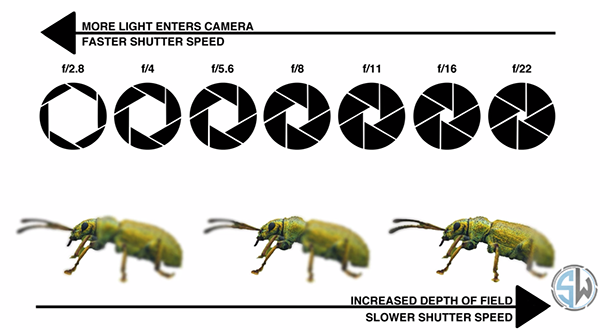
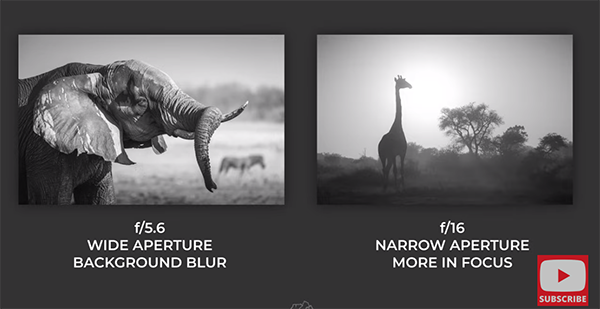
This is one reason that Dumbleton often prefers Aperture Priority mode, along with the fact that f/stop control is “crucial for achieving desired background rendering and precise subject focus.” And he provides examples of the significant difference this makes in the look of every image you shoot. Bottom line, wide apertures blur backgrounds while narrow apertures increase depth of field.

Shutter speed, on the other hand, is “crucial for freezing action or intentionally blurring action” for creating unique effects. That’s why different subjects require different shutter speeds depending upon how fast they’re moving (or if you’re dealing with a static scene in which an animal is at rest). Once again, Dumbleton provides some impressive examples of what you can expect when shooting at both long and short shutter speeds.

The foregoing is just a small taste of what you’ll learn in this quick and important lesson. After discussing all the technicalities of using the right gear and properly configuring the camera, Dumbleton concludes the video with some very helpful personal shooting techniques.

His instructional YouTube channel offers an abundance of solid information for wildlife photographers of all skill levels, so be sure to take a look.

And don’t miss the related tutorial we featured from another top expert, with several solid tips for processing wildlife photographs so they look as good as possible.

Share:
Reading time: 2 min
News and Tips

Mastering Depth of Field in Macro Photography for Mind-Blowing Images (VIDEO

May 16, 2024 by Louie Alma Photography No Comments

Mastering Depth of Field in Macro Photography for Mind-Blowing Images (VIDEO

Understanding how to control depth of field (DOF) is essential for most forms of photography, and this technique can make the difference between a ho-hum image and one that makes viewers exclaim “Wow!” And nowhere is this more essential that when photographing macro subjects in the field—or even when shooting closeups of tiny inanimate objects at home.

That’s because DOF plays a pivotal role in accentuating a key subject by separating it from other areas withing the frame. You’ll learn how to unlock the secrets to this technique in today’s comprehensive 21-minute guide—whether you’re a beginner or a more experienced shooter.

Instructor Stewart Wood is an accomplished pro specializing in macro photography with a portfolio of mind-blowing images. He’s also a popular instructor who regularly passes along the new techniques he learns so that you can take advantage of them too. His goal for this episode is to help you “perfect your macro shots and tell compelling visual stories by mastering the art of depth of field.”

Wood coves plenty of ground in a hurry, so we recommend jotting down a few notes for future reference. He discusses a wide variety of topics, from essential gear, the impact of camera-to-subject distance, and powerful techniques like focus stacking and others.

The bottom line is that you’ll learn how to manipulate aperture settings to isolate a subject and capture intricate details with stunning clarity. And, after all, that’s what great macro photography is all about. Wood begins by explaining the concept of DOF, and how it pertains to this particular genre.

Wood spends a couple minutes discussing aperture settings and illustrates how different f/stops will dramatically impact your results. In this regard the concept of diffraction is a crucial one because, as you’ll see, image quality tends to suffer as you stop a lens down beyond acceptable limits—typically f/5.6 or f/8. That’s why it often makes sense to control exposure by modifying shutter speed and/or ISO.

The focal length of your lens also factors into the equation, as does the level of magnification it provides. The crop factor of a camera, if you’re not using a full-frame model, is another important consideration. As far as composition is concerned, it’s important to understand the impact that camera angle and camera-to-subject-distance have on your results.

When it comes to editing your images there’s a method known as focus stacking that can pay huge dividends, and you learn how this process works. Essentially this involves shooting multiple photographs of the same scene—each with a different point of focus—with the camera locked down on a tripod. Then you merge the shots during post processing to achieve one final image with ideal DOF exactly where you want it.

Wood concludes the lesson by explaining how to use everything you learned to become a much better visual storyteller. If this guide strikes your fancy be sure to visit Wood’s instructional YouTube channel where you’ll find other lessons that will elevate your macro photography skills.

Share:
Reading time: 2 min
News and Tips

Got a New Camera? Change These 4 Settings ASAP (VIDEO)

May 16, 2024 by Louie Alma Photography No Comments

Got a New Camera? Change These 4 Settings ASAP (VIDEO)

So you just purchased a new camera and it’s time to undertake the task of configuring it properly to suit your particular style of shooting so you “can grab the most out of the sensor.” As a Shutterbug reader you’ve no doubt done this before and know that the menu contains of myriad of default settings you may want to change.

That’s because camera manufacturers set up cameras without knowing whether you shoot portraits, actions sports, landscapes, or something else. So the default configuration is just a guess designed to achieve pretty good results in a wide variety of situations. If “pretty good” doesn’t sound good enough for you, watch as one of our favorite instructors explains the four settings you should change first, before delving deeper into the menu of your new toy.

Instructor Vlad Manea is a Romanian-born pro now based in Germany. He specializes in tutorials for beginners, and this one is about as basic as it gets. And even if you’ve owned your camera for a while, we suggest that you check the settings you made previously and take advantage of Manea’s advice.

At the top pf Manea’s list is the important consideration of file type, and he says this: “Do yourself a favor and set this to Raw,” instead of sticking with the Jpeg default. He says that doing this will “squeeze the most out of the sensor” and enable the camera to record the maximum amount of information. Raw files also have significant benefits during the image-editing process.

Manea’s second suggestion is based upon his supposition that “you didn’t buy a camera to keep on Auto, so let’s get out of the trap now.” He recommends shooting In Manual or one of the semi-automatic modes like Aperture priority—depending upon your skill level, personal [reference, and the type of photos you shoot most. He discusses three primary attributes and how they combine to create an ideal exposure.

The lesson continues with a discussion of various autofocus modes available, with the goal of helping you determine which one makes the most sense for you. Naturally, when conditions or the subject matter changes it’s a simple matter to make another choice. The two primary considerations involve whether you typically shoot static shots or capture subjects in motion.

The video concludes with White Balance options, and here Manea recommends that beginners start with the Auto setting for reasons he explains. Then as your skills improve you’ll be ready to try other settings that are tailored to specific qualities of light. He notes that when shooting in Raw “you’ll be able to modify White balance without any type of issues.”

This lesson is a good one to bookmark so that you’re ready to go the next time you pull a new camera out of its box. Manea’s instructional YouTube channel is a great source of information—especially for those just starting out. So pay a visit and explore what’s available.

And on a related topic, don’t miss the tutorial we posted earlier, explaining one camera setting that another pro says will enable you to consistently capture perfectly exposed photographs.

Share:
Reading time: 2 min
Page 2 of 3«123»

Advertisement

Seven GREAT Gift Ideas for Photographers & You

November 28, 2025

35 Of The Best Photography Gifts, By Budget (2025)

Hummingbird Photography Tips and Facts – Part 2

Future Hospitality Summit Saudi Arabia Marks Ninth Edition in Riyadh

November 27, 2025

Qiddiya City Announces the Opening of Its First Major Asset, Six Flags

Game On in Paradise – Campioni Soccer Academy Returns to Kuramathi Maldives

DISCOVER FESTIVE JOY ONE BIT AT A TIME WITH THE INNSBRUCK REGION’S ADVENT CALENDAR OF EVENTS

Alternative San Francisco: discovering the city in a new light

48 hours in San Francisco, California, USA

This Tom Kerridge x M&S stainless steel pan set is selling fast – I can see why considering its £80 price tag and seriously quality build

Subscribe to Our Newsletter

Check your inbox or spam folder now to confirm your subscription.

Popular Posts

LUXURY APARTMENT IN DUBAI

LUXURY APARTMENT IN DUBAI

August 20, 2020
LUXURIOUS AND SPACIOUS VILLA IN DUBAI

LUXURIOUS AND SPACIOUS VILLA IN DUBAI

LUXURY VILLA IN PALM, DUBAI

LUXURY VILLA IN PALM, DUBAI

August 26, 2020

Advertisement

Pages

  • 360 Interactive Virtual Tour Sample
  • About the Photographer
  • Business Portrait Photography
  • Concert Photography
  • Event Photography
  • Fashion Photography
  • Food Photography
  • Landscape Photography
  • Portrait Photography
  • Product Photography
  • Real Estate Photography
  • Sport Photography
  • Still Photography
  • Street Photography
  • Travel Photography
  • Videography

Categories

  • Apartments
  • Food Photography
  • Latest Projects
  • Luxury Residences
  • News and Tips
  • Real Estate Photography
  • Villas

Before and After Version

  • STYLISH APARTMENT IN CITYWALK, DUBAI

  • ULTRA LUXURIOUS RESIDENCE IN DUBAI

  • Real Estate Photography in Dubai, UAE

    Luxurious 7 Bed Villa with Private Pool, Cinema, Bar and Lounges at Jumeirah Golf Estates

  • LUXURY VILLA IN PALM, DUBAI

© 2020 Copyright Louie Alma Photography. All rights reserved.