The cruise industry is now open for business, as registration is officially open for the FCCA Cruise Conference and Trade Show, the only official cruise conference taking place in the Caribbean and Latin America, as well as the Florida-Caribbean Cruise Association’s (FCCA) keynote and only open registration event allowing any attendee to target about 100 high-level cruise executives during an agenda featuring workshops, networking functions, one-on-one meetings, and more.
This is the driest and often the hottest place on Earth, where some areas are so high above sea level that it can be difficult to breathe. Petulant temperatures offer up freezing mornings and evenings and boiling hot afternoons. There’s a sparse desert where llamas roam freely, mineral-rich canyons, a pristine night sky, shining lagoons that look like artwork, and smoking volcanoes of the Andes emit cloud-like plumes of steam replete with pulverised rock.
Frankly, spending a week in Northern Chile’s San Pedro de Atacama was an excellent decision.
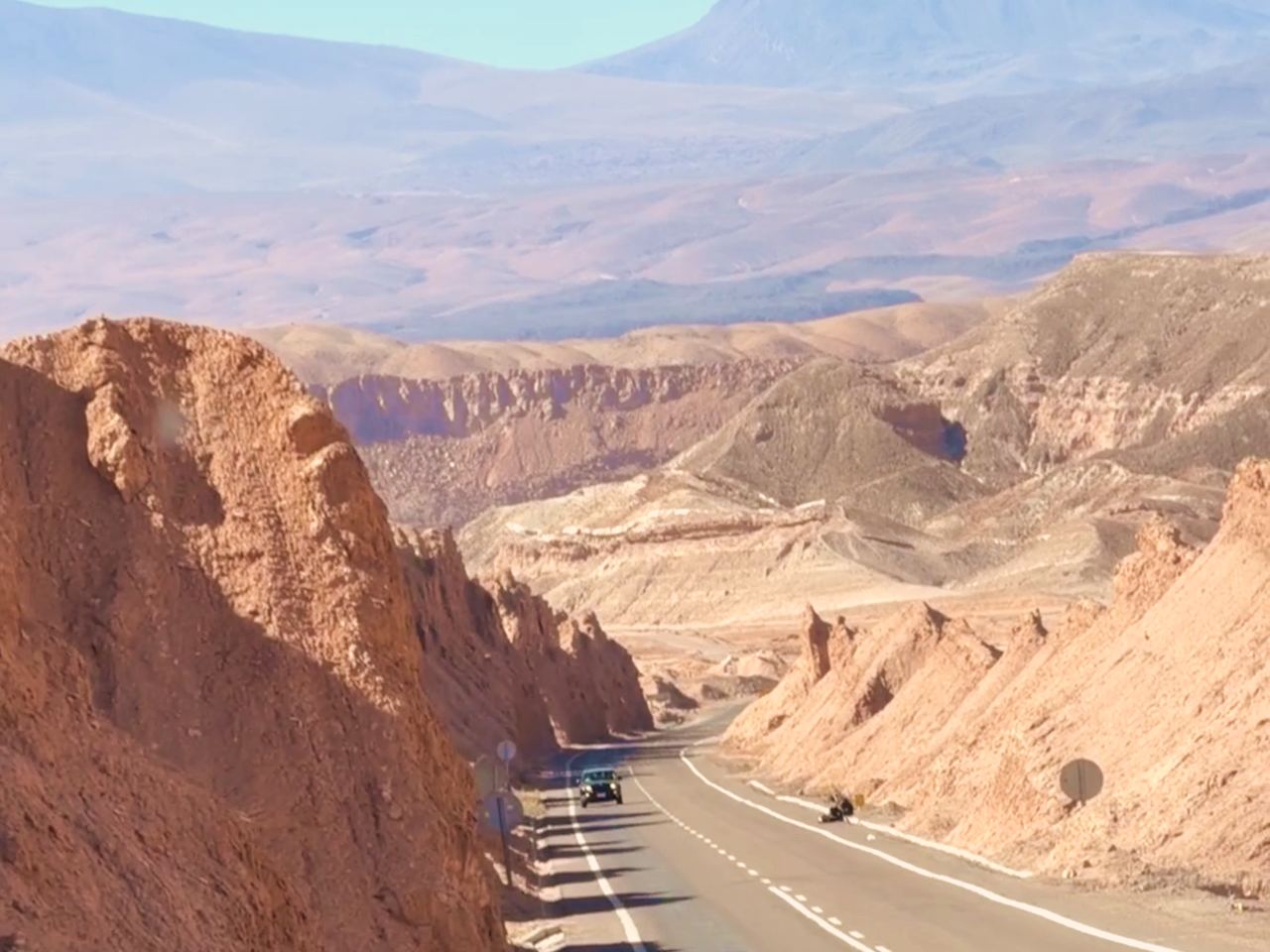
The 62-mile drive from the airport in Calama (a copper-mining town) is literally one of ups and downs. The journey starts at 2,400 metres above sea level. We stop to enjoy the mountainous desert scenery of the Cordillera de Domeyko, 3,600 metres above sea level, passing through moonscapes and settling in San Pedro de Atacama at 2,400 metres, where at last some lush greenery appears.
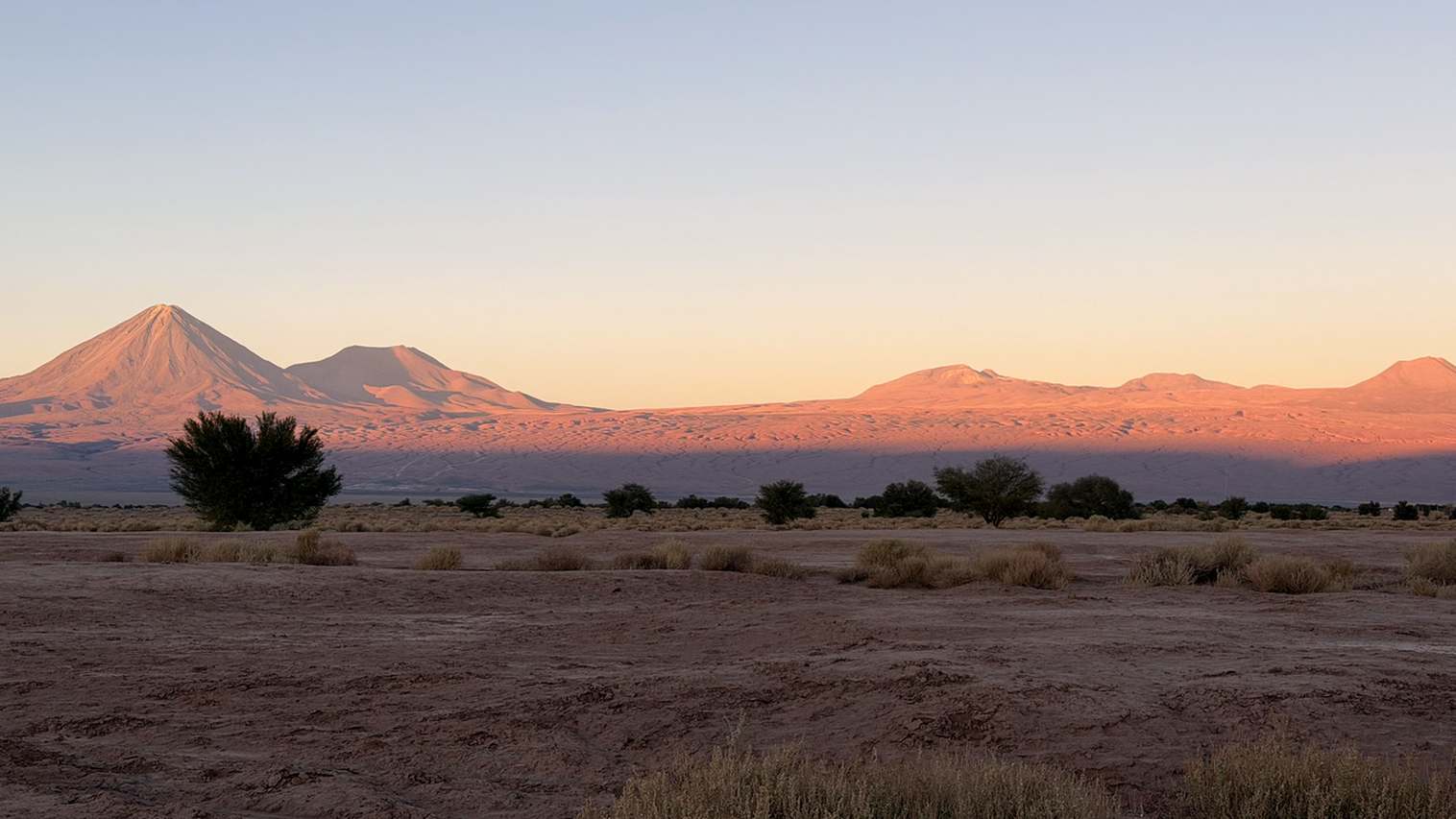
Large areas of this arid, dusty land have turned white with lithium and salt deposits. Sometimes there is a haze on the horizon, and as the sun sets, a bright, lantern-orange hue descends, creating an incandescent mountainscape.
And geologically, the provenance of this place is mind-blowing. Beneath my feet is an ancient seabed that,195 million years ago, was under the sea. We were walking over the tectonically active South American Plate, where millions of years of tectonic compression buckled the earth’s crust, pushing up the surrounding Andes mountain range, the Cordillera de Domeyko, and the famous Cordillera de la Sal (Salt Range).
Route 28 from Calama to San Pedro, Chile
Cone-shaped Licancabur and the smouldering Láscar volcano are the most beloved by the ancient Lickanantay, the highly spiritual indigenous people, and uncannily, wherever I go, there they are always looking on from the east. Just on the other side is Argentina.
We turn off the tarmacked Route 28 onto dirt tracks, which are for the most part not signposted towards Reserva Elemental Puribeter (which means “Water Path” in the indigenous Kunza language). This is a 47-hectare conservation area in San Pedro de Atacama, and I wonder how the driver recognises the land so well that we actually get there.
San Pedro de Atacama Town
I’m glad we did, as the alternative would be to stay in San Pedro de Atacama town, a 10-minute drive away. Not that that would be a bad thing; the town is pretty and petite, with dirt streets, hemmed by one-story Spanish colonial adobe buildings – some have turned red from dusty roads.
At the top of San Pedro is an attractive square, with a 17th-century Iglesia de San Pedro de Atacama, a Pueblo-style church, the second oldest in Chile. The ceiling and the entrance door are built with cactus wood and held together with llama leather.
Caracoles, the main road is full of bars, restaurants, shops and street sellers. I enjoyed a massage at Kimal Rela and bought a gorgeous llama wool scarf, ideal for the UK winters.
Iglesia de San Pedro de Atacama
Street vendors
A street in San Pedro de Atacama
San Pedro town early evening
It’s a chilled vibe, a sense of easy living, and perhaps why the town attracts backpackers who stay at mud brick hostels costing from as little as $20 a night. There are five-star hotels too, but a stay at the out-of-the-way luxurious Puribeter cannot be beaten.
Puribeter
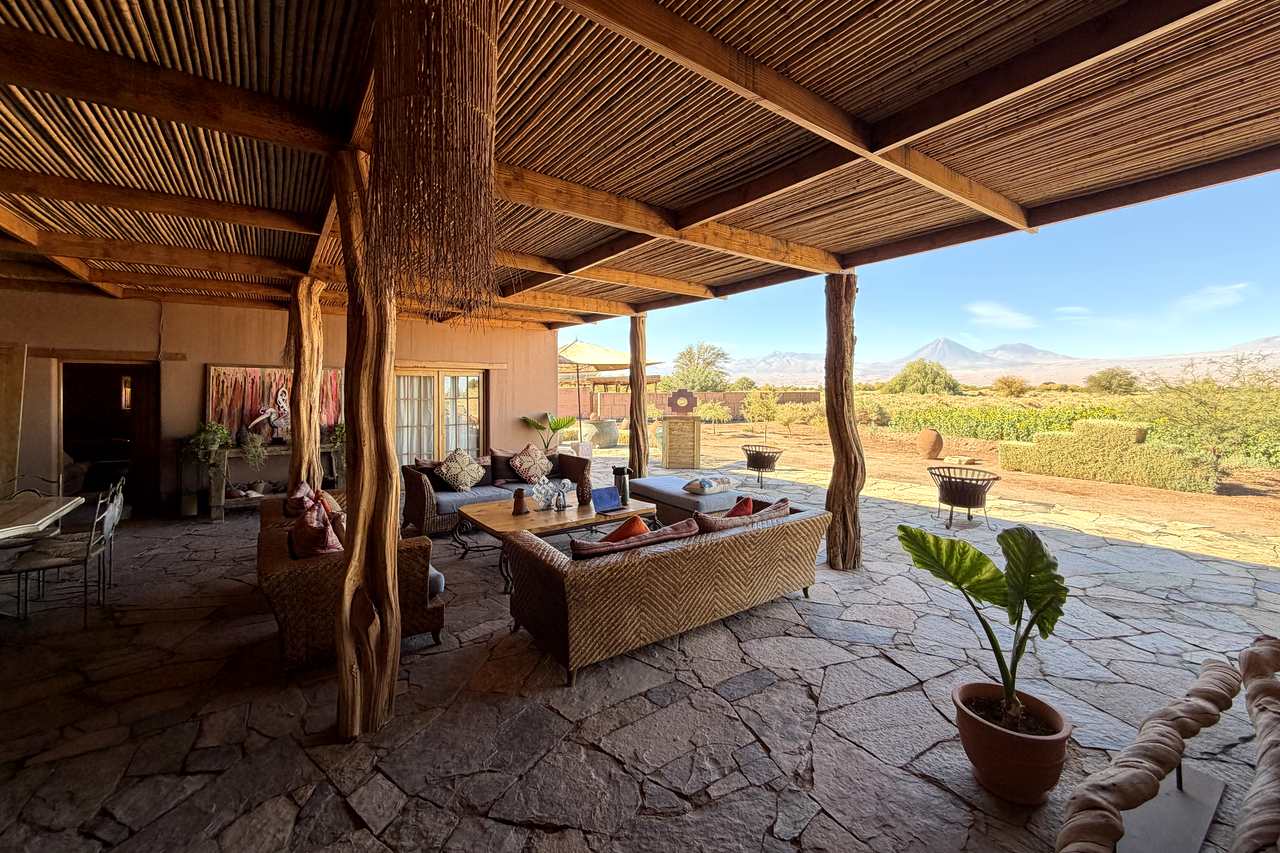
Our home isa delightful, quiet, private property on the Puribeter reservation. Just in front of the open-sided living space, we could see Licancabur and Láscar, who soon began to feel like old friends.
This is where we meet Juan Carmelo Ramírez Rodríguez, a member of the Lickanantay (aka Atacameño) community. He is known simply as Carmelo, yet there is nothing simple about him. An educator working with the reservation with a shaman-like passion for the ancestral knowledge, ecology, and native and spiritual heritage of the Atacama Desert.
Awakening ceremony – gratitude for Pachamama
Though not an early riser, there was no way I would miss Carmelo’s 5.30 am ritual for a sunrise homage to the earth – Pago a la Tierra (Payment to the Earth). This is an intricate ceremony to thank and give back to Pachamama (Mother Earth).
An Indian table was arranged on the ground. The base was a colourful blanket on top of which Carmello placed coca leaves, seeds, wine, traditional sweets, and sunflowers. A glass of Chicha finds its way into my hand, a highly potent alcoholic drink, and as I sip, I become aware of hawks, owls and other birds filling the chilly early morning air with their dawn chorus.
Carmelo plays Bombo & Wank’ara: and Zampoña
Indian Table adorned with symbolic ornaments
Carmelo chants, then plays a Bombo & Wank’ara, a double-sided drum and plays Zampoña, bamboo pipes.
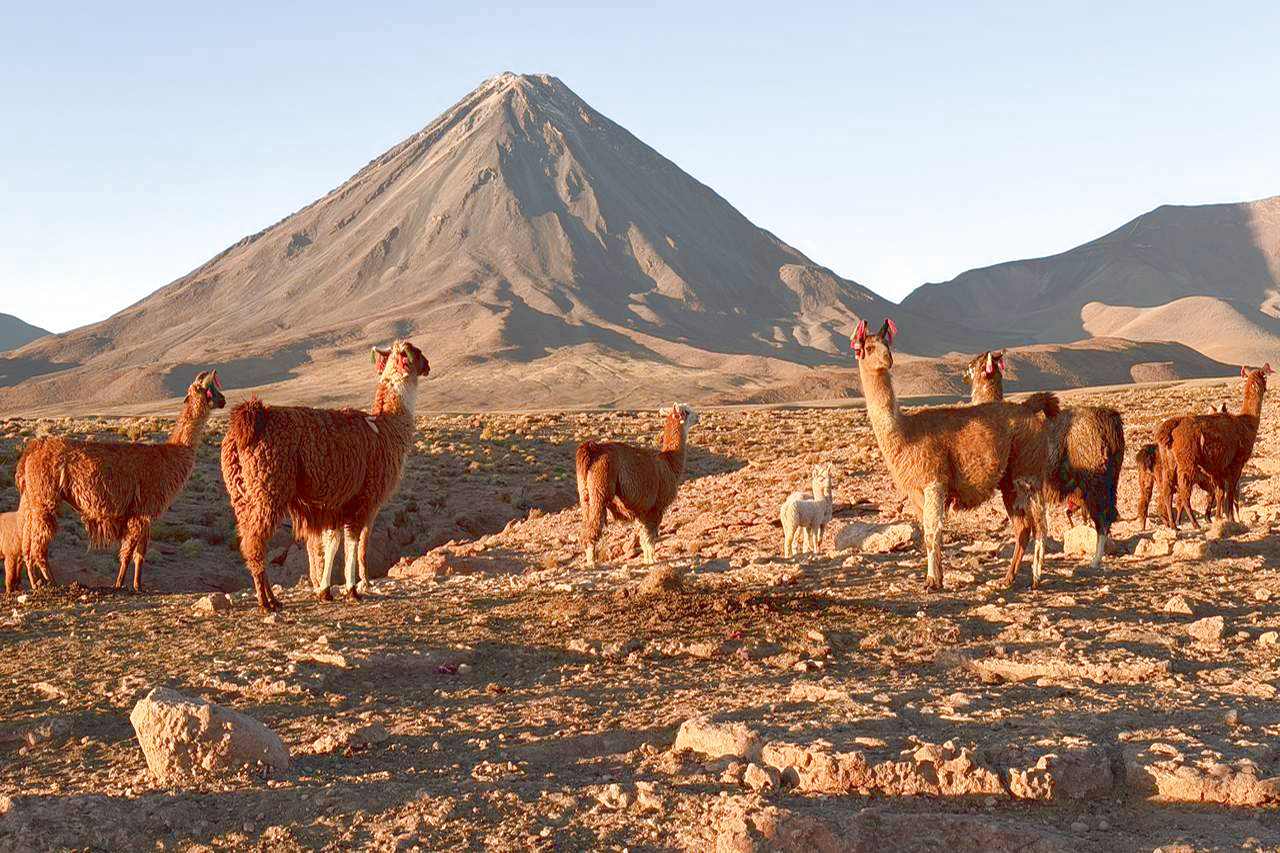
Another day, we visit Ramalda, a fine lady also from the Lickanantay community. She runs a farm, as her ancestors have done for centuries, of llamas, horses and goats along the Paso Jama mountain pass at an elevation of 4,200m (13,800 ft).
Llamas in front of Lycancabur at Paso Jama
Llamas are deeply woven into the region’s history, culture, and ecology. They supply wool, meat and fertiliser, and visitors love their cheeky faces and friendly nature.
Ramalda’s herds had gone higher into the mountains to find food, while we joined her in a ceremony where she talks of gratitude to Pachamama and the spirit of the mountains, especially Licancabur, which she says is the source of her wellbeing. She shows how to make yarn from lama wool. By the time we finished, the llamas and goats had made their way down the mountains as if to join us in venerating the earth. I got to walk among them for a while.
Yerbas Buenas Petroglyphs & Valle del Arcoíris (Rainbow Valley)
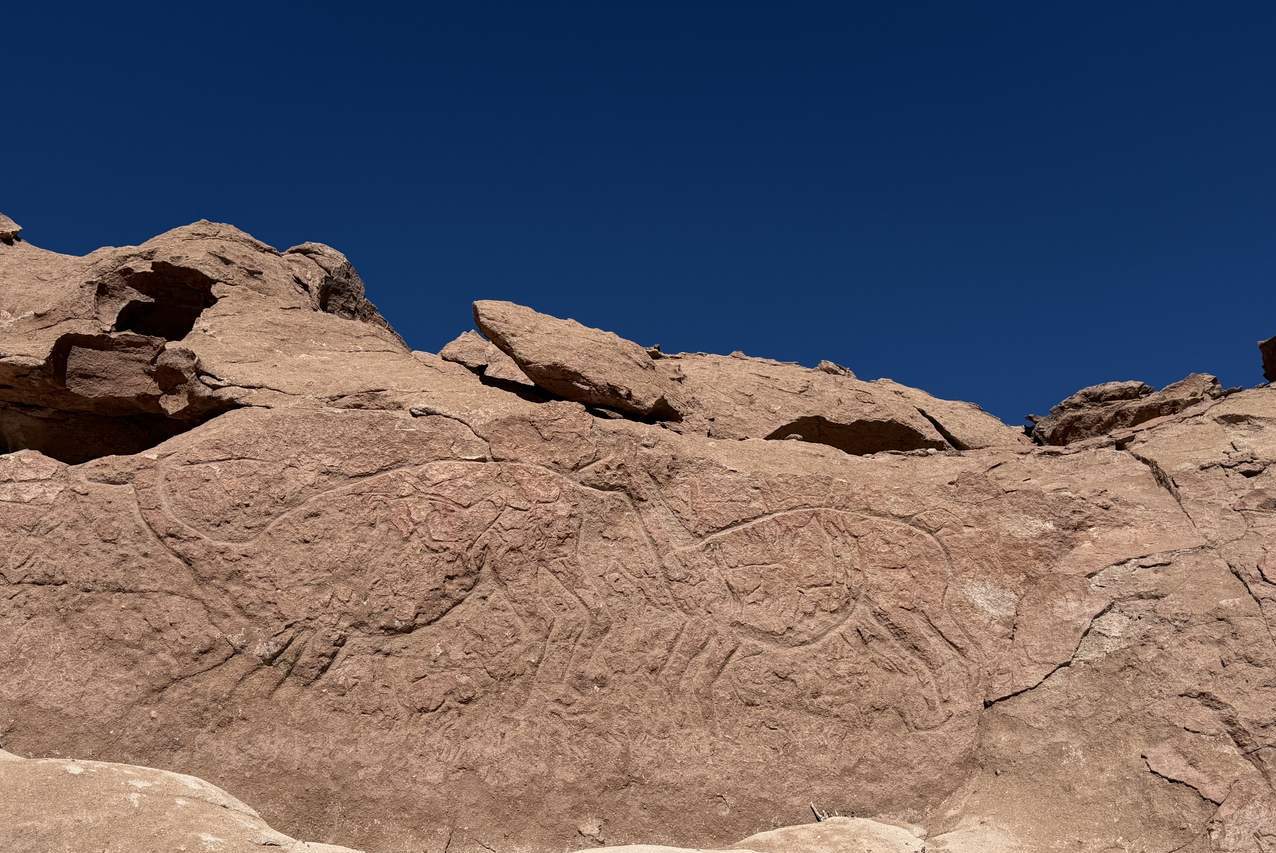
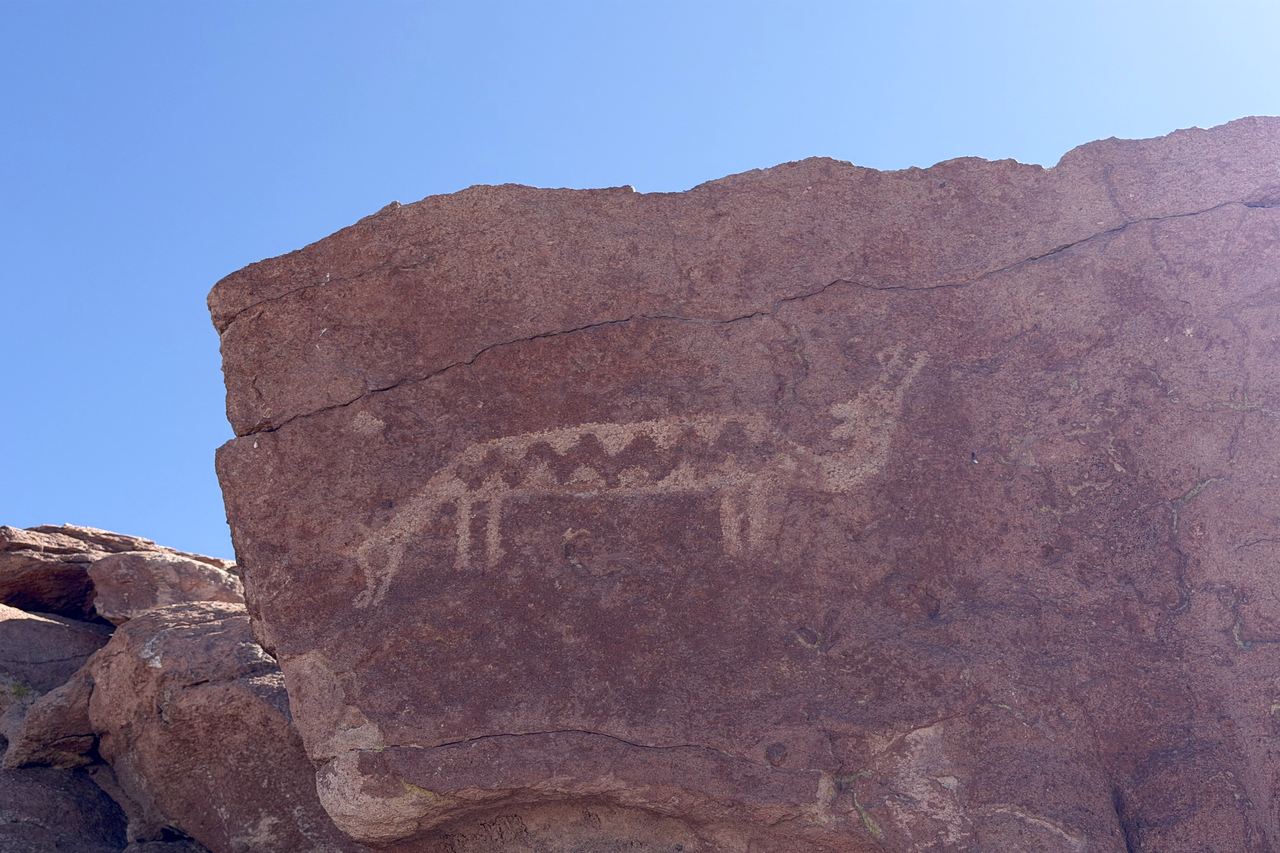
Later, we head towards the Cordillera Domeyko mountain range to the Yerbas Buenas Petroglyphs archaeological site. Drawings etched into rocks some 10,000 years ago still show daily life and spiritual beliefs of the Atacameño. Ilama caravans, hunter scenes and symbolic figures are shown doing their thing. Monkey-like creatures appeared, too, suggesting that this was part of an ancient trading route that stretched from the Amazon to the Pacific.
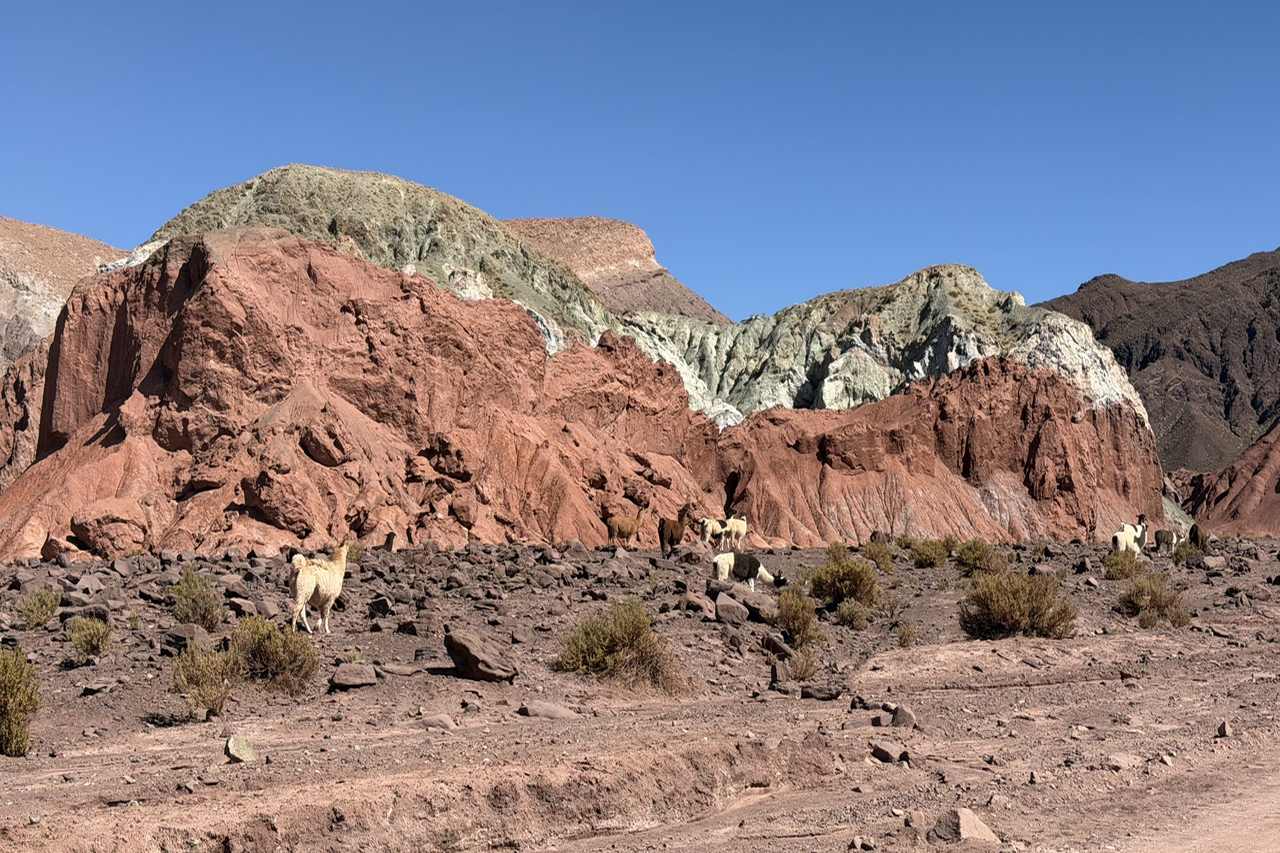
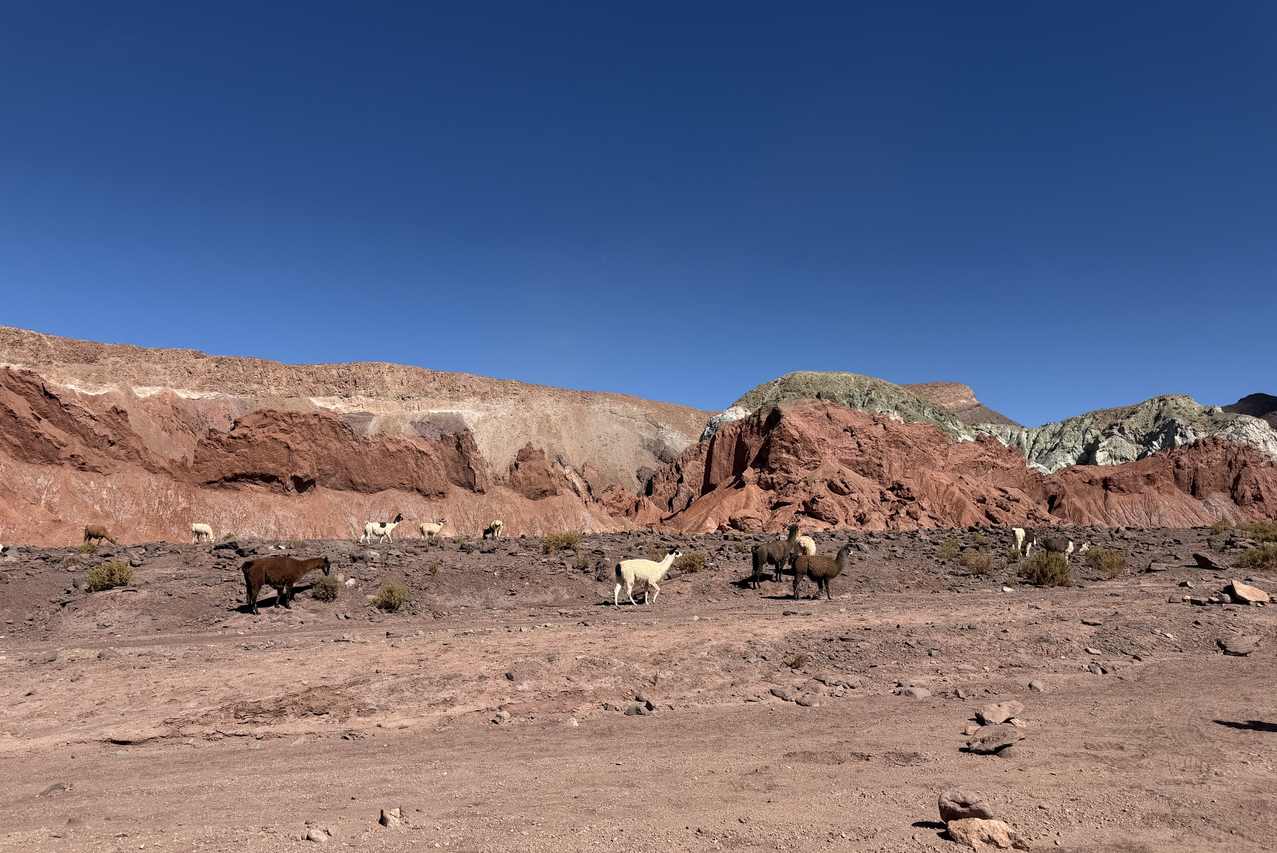
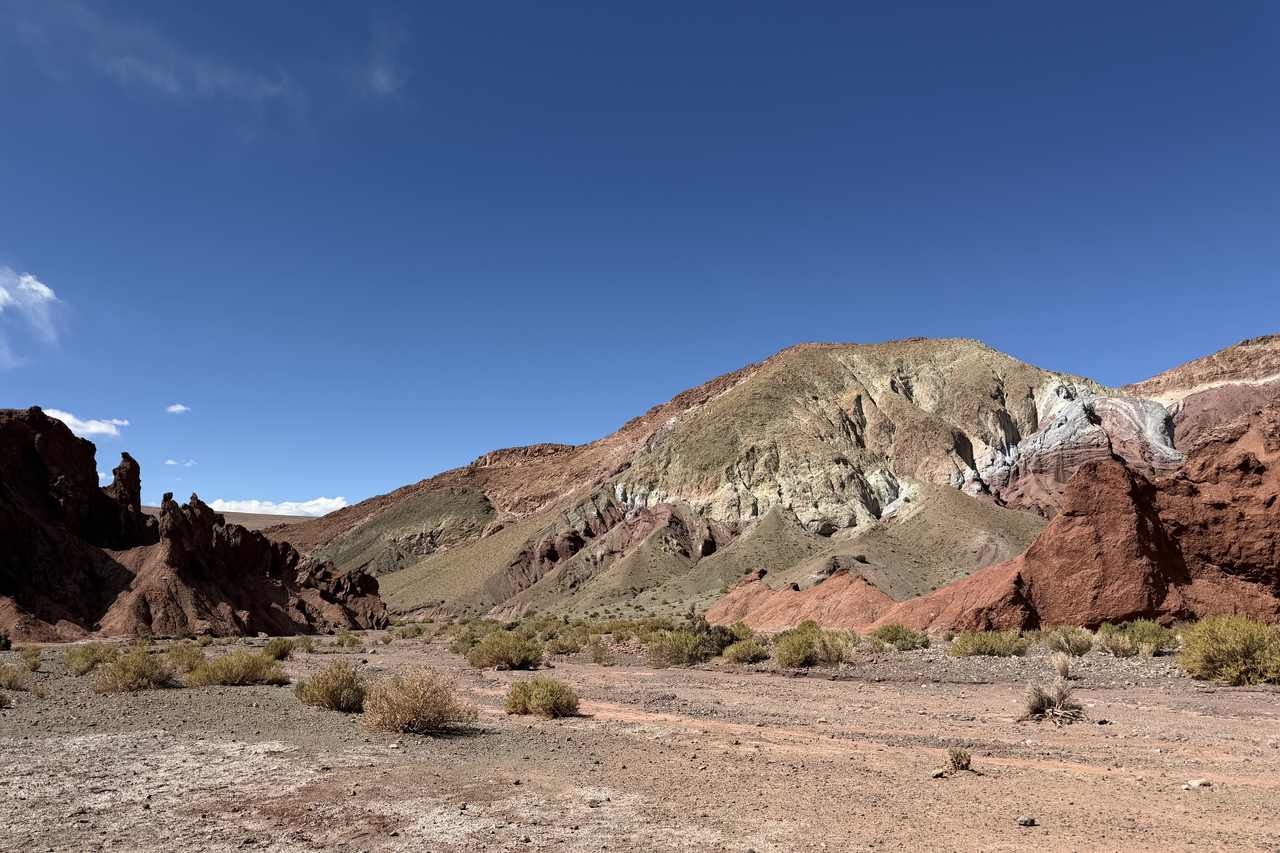
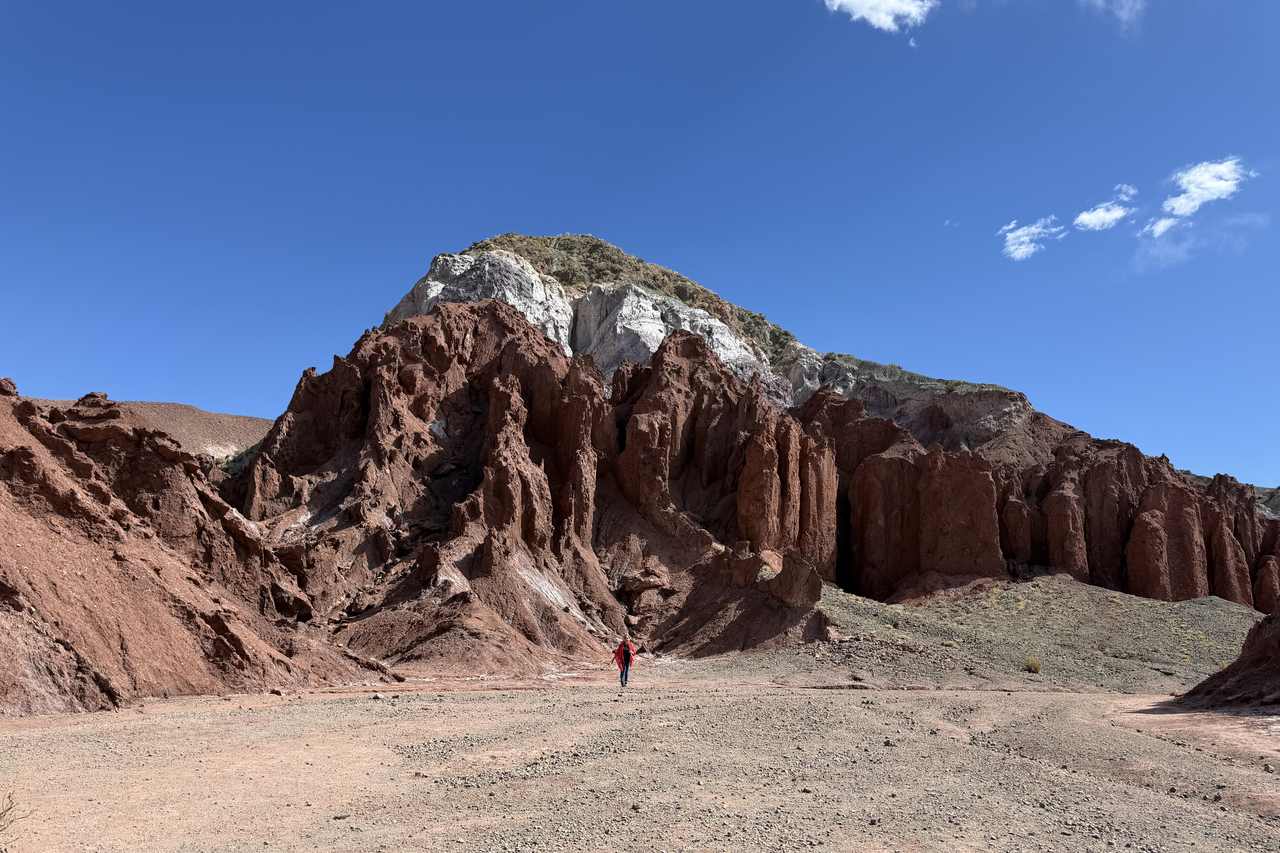
Nearby is the beautiful Rainbow Valley, a dry canyon in the Domeyko range. It’s a mishmash of vibrant hues of red, green, white, yellow and brown. I loved it here, and so it seems did a herd of Llamas.
Rainbow Valley
Rainbow Valley
Rainbow Valley
Rainbow Valley
Puritama Thermal Springs
By now, the land, the history and the spirituality had taken root. So by the time I visited the Puritama Thermal Springs, I was ready to explode with joy at another extraordinary feat of nature. At 3,500 meters (11,500 feet) above sea level, I got to bathe in warm mineral-rich springs right here in the driest place on earth.
Puritma – water from the Andes feeds the geothermal pools
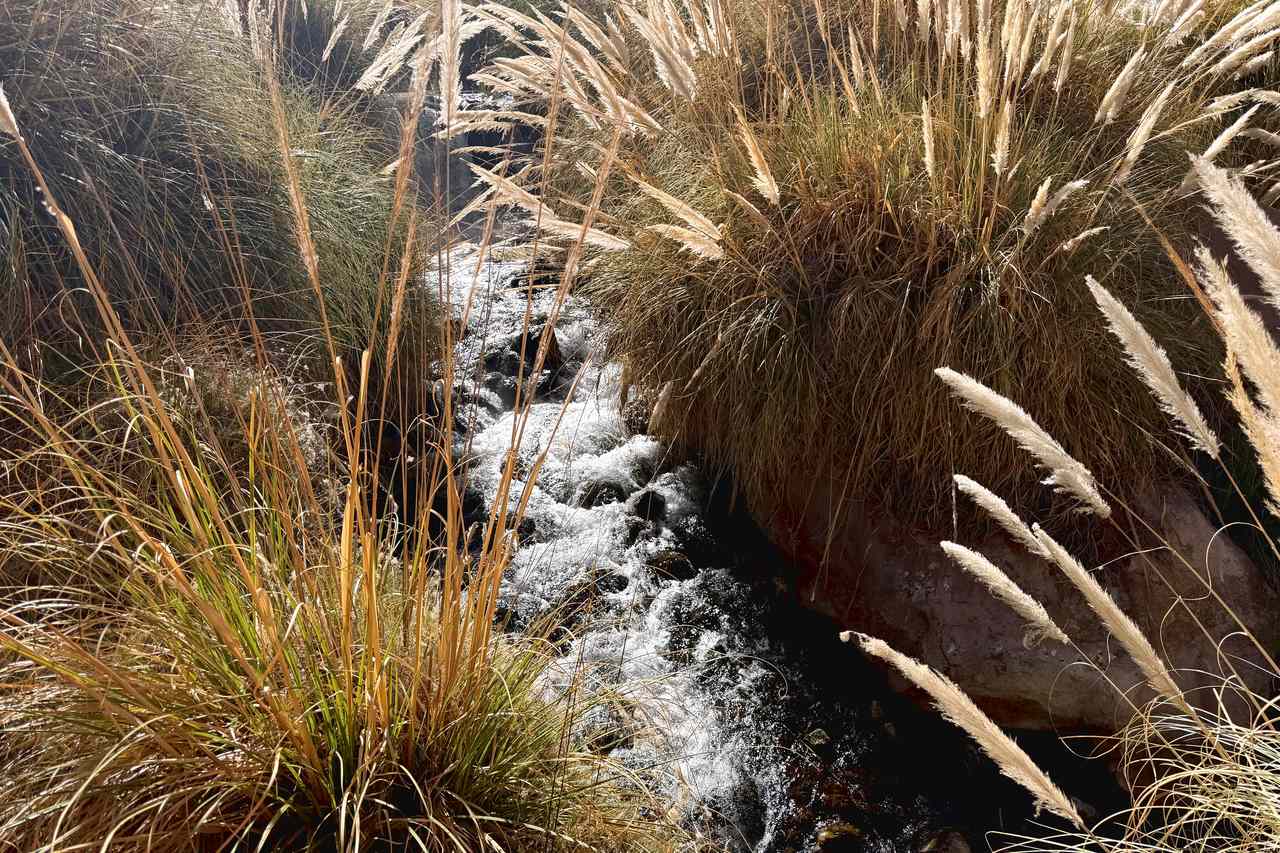
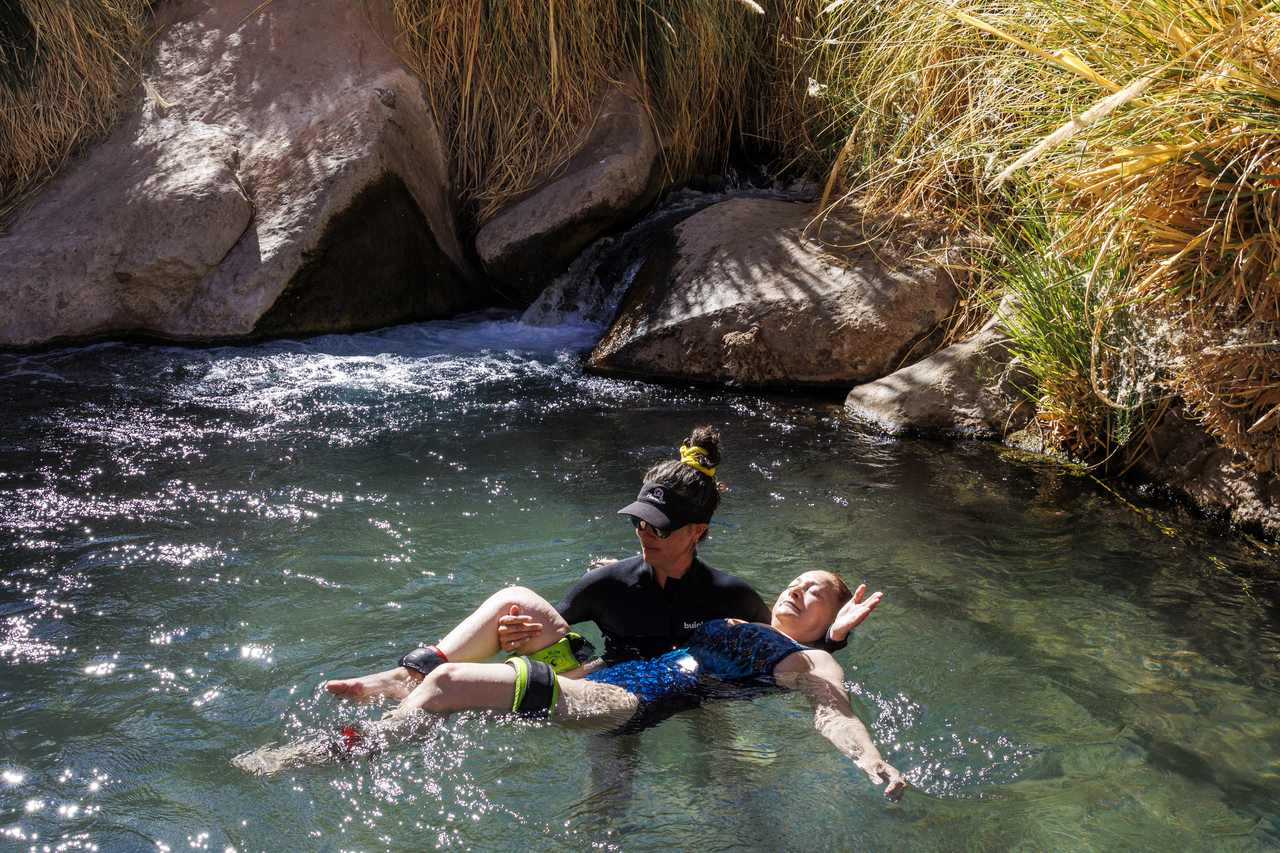
The water starts as rainfall high in the Andean mountains, flows through the desert canyon, seeps underground, gets heated by magma and hot volcanic rock, then rises to feed eight geothermal pools surrounded by rocks, reeds, and marsh grasses. The water stays at a glorious temperature of 33°C, and is simply perfect for bathing.
Receiving a gentle massage at Puritamar Springs c. Jeremy Flint
I, like others, flocked here with Trekana tour operator. The experience included a gentle, extremely relaxing massage while in the pool, followed by a fabulous lunch of local specialities.
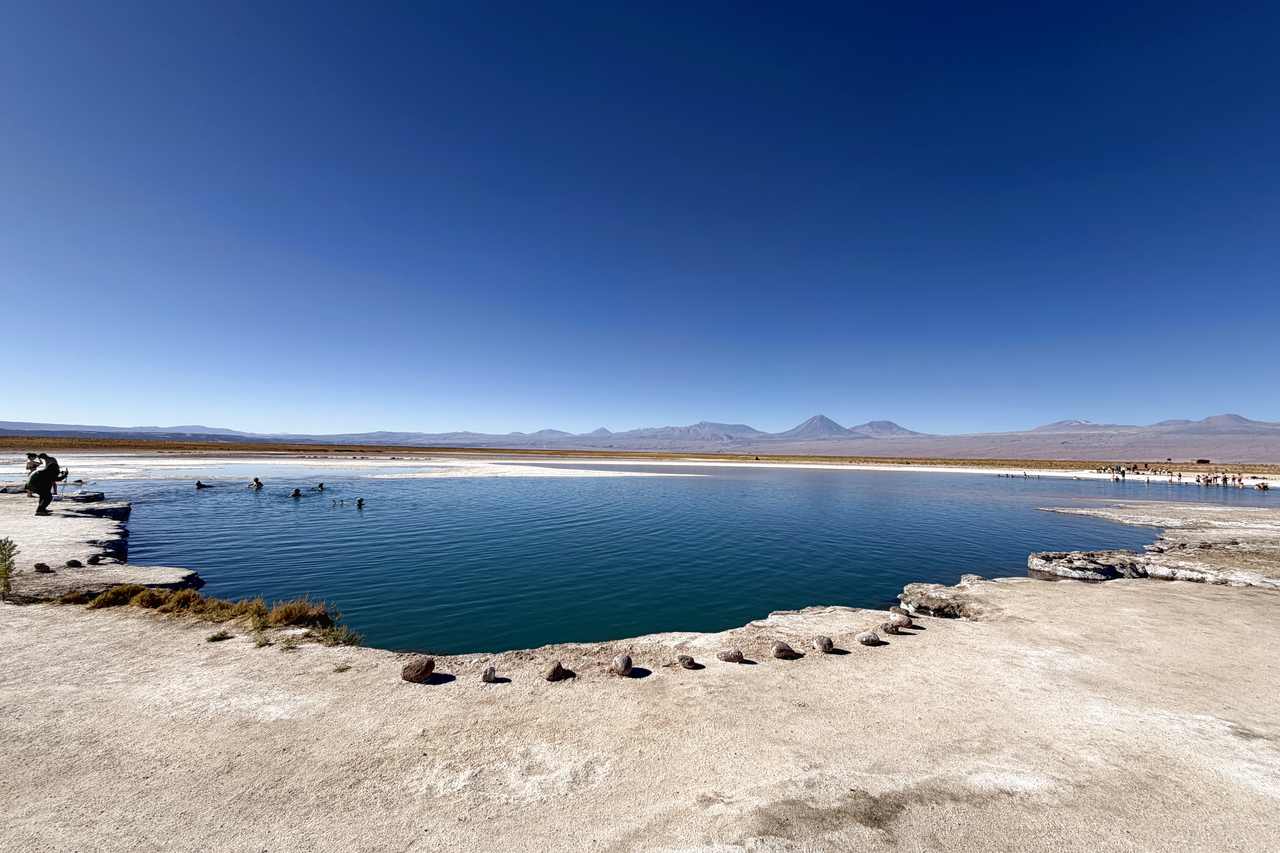
Floating on the Cejar lagoon
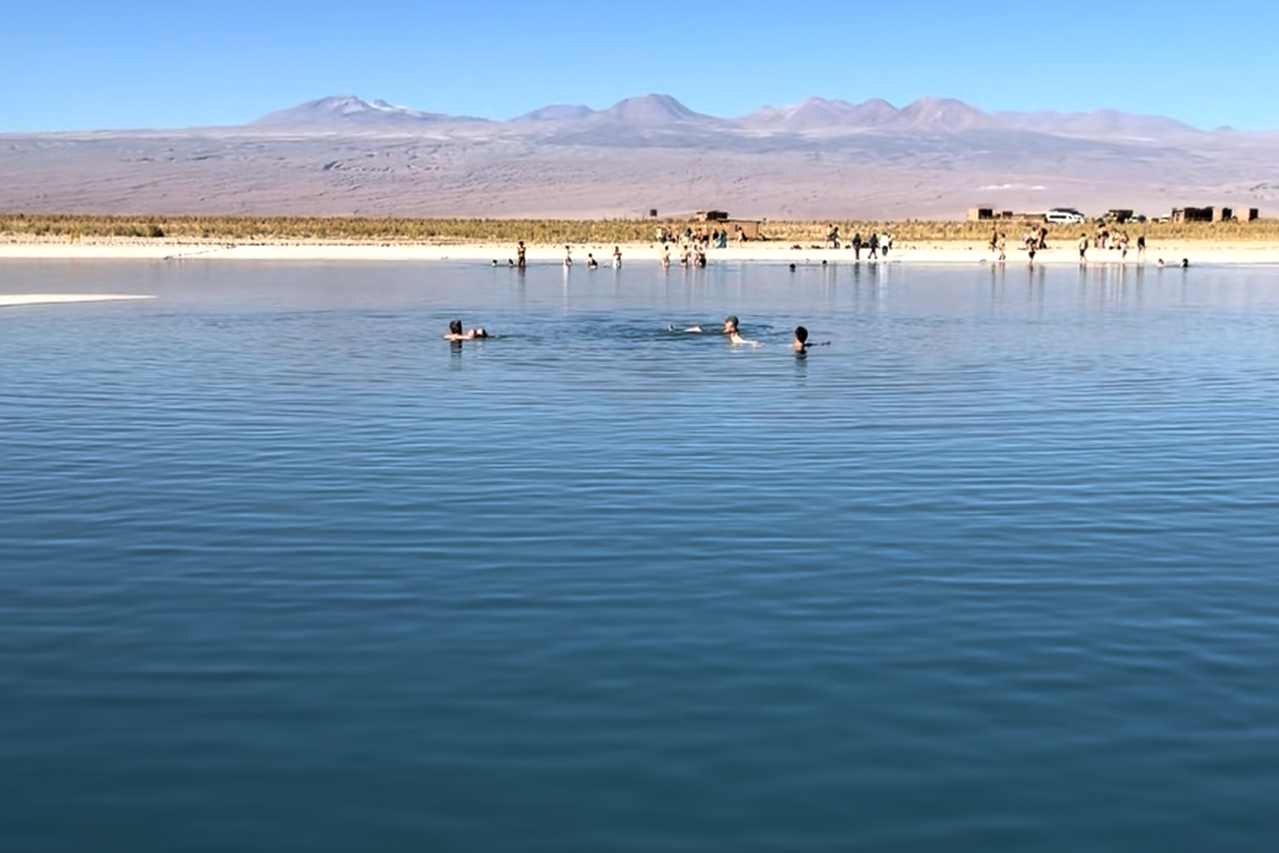
Located 28 km from San Pedro, in the heart of the Atacama Salt Flat, is this gorgeously hued turquoise lagoon, looking stunning surrounded by white gashes of salt. The water is salty, so you get to float effortlessly, just like the Dead Sea.
The Cejar lagoon
The Cejar lagoon
The water is absolutely freezing, though, and it took me ages to actually get in, but floating and chatting with friends surrounded by white salt landscapes, turquoise contrasts, and distant volcanoes was exhilarating.
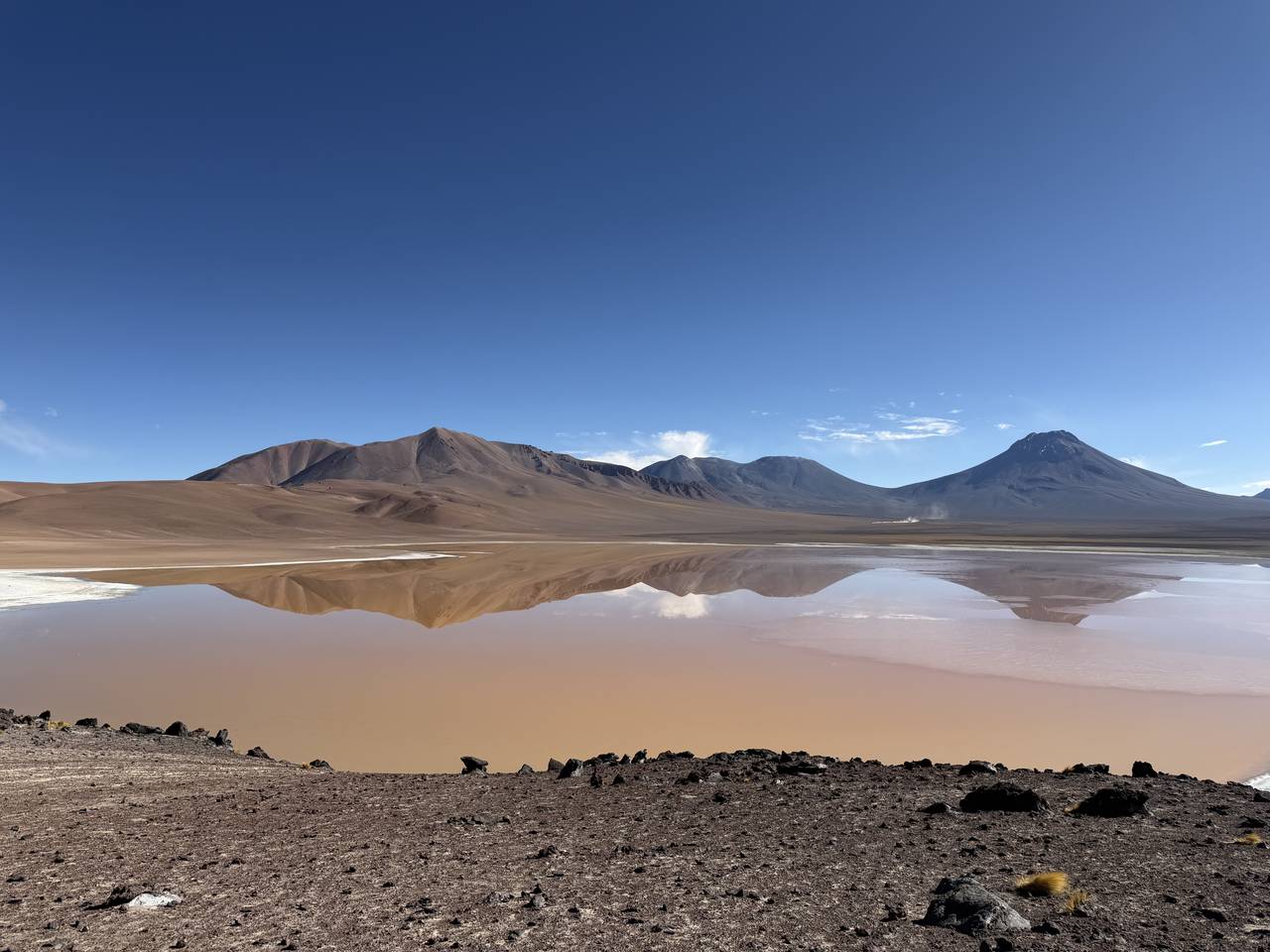
Time to reflect at Lake Lejia
Laguna Lejía is a stunning, high-altitude salt lake in Chile’s Atacama Desert.
We use mountain roads to climb upwards to see the shallow Lake Lejia. The views were sometimes sparse, sometimes busy with wandering vicuñas whose wool makes the finest garments. Rica rica plants grow wild, often used for tea and general cooking, Finally we arrive at this high-altitude (4,325 meters/14,190 ft) salt lake. We stopped for a while to enjoy tea and lunch as we look on in awe.
Stargazing in the Atacama Desert’s unbelievably clear skies
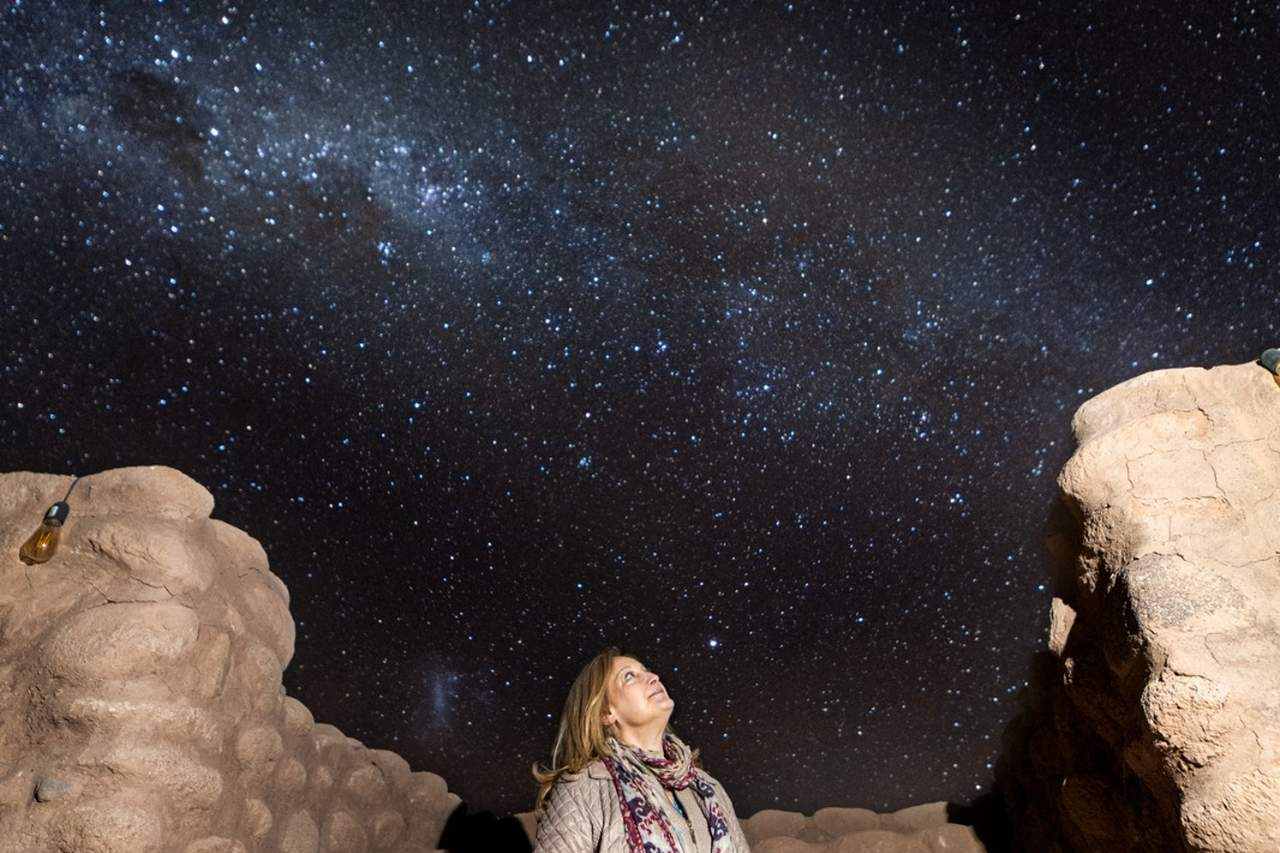
Yet it is not only about the landscape. In the absence of pollution, the skyscape in the Atacama Desert is so clear you don’t really need a telescope.
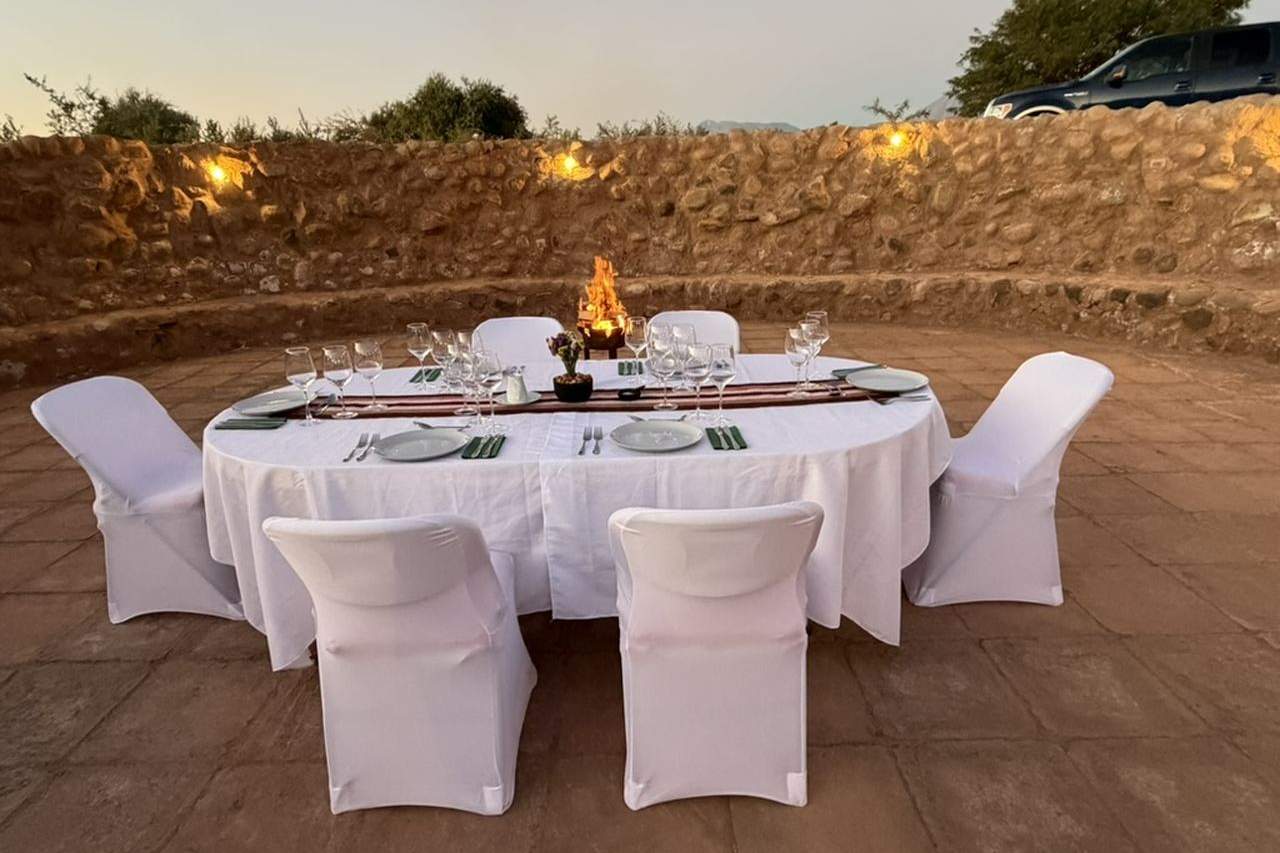
Dinner under the stars
Star gazing
We headed to the IO Crux Observatory for a guided celestial experience that started with a heavenly al fresco dinner at sunset, where we dine on llama croquettes, followed by a tour of the night sky.
Our guide pointed out Jupiter’s moons and Saturn’s rings, Orion and the Southern Cross constellations and a Milky Way that cannot be seen in the Northern hemisphere, and Yakana, a huge dark area that forms the shape of a llama.
Sound healing at Lagunita
As the days fritter away, I feel myself somehow shifted by all that I have seen and experienced. Yet there was still one more experience that would seal it – a sound bath at sunset at Lagunita with healers Luna and Terry, courtesy of Flavia Expeditions.
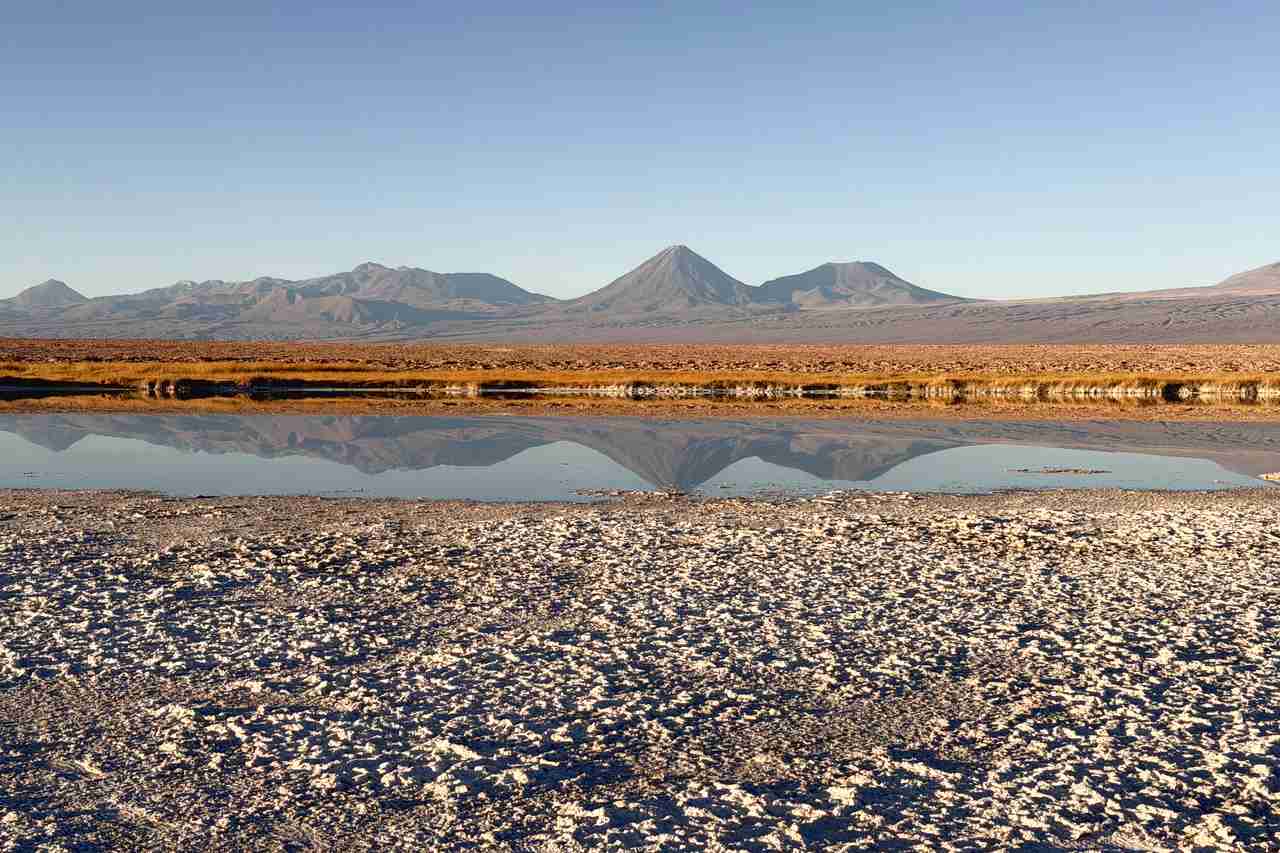
Luna created healing sounds with her bowls as the sun set, throwing reflections of Lycancabur and the rest of the Andes onto the lagoon, marking the end of a most beautiful week away.
Whether for business, technology, culture or food, Londoners continue to board flights from London to Tokyo on a frequent basis. For UK citizens, the available London to Tokyo flights are worth knowing, and whether it’s the question of how long the flights from London to Tokyo are or about available airports and airlines, there’s something for everyone.
The first thing to consider is your booking. When it comes to flights from London to Tokyo, you can book direct and indirect flights at the moment from London’s major international airports.
London to Tokyo Flight Time
The average London to Tokyo flight time ultimately depends on whether you fly direct or choose to connect elsewhere. Flights without a connection to worry about can get you from the UK to Japan in 13 to 14.5 hours, making this the quickest way to travel between the two cities.
For anyone looking at indirect flights, however, the real answer is much less definitive. As such, they could spend between 16 hours and over 20 hours in the air, given how many longer or shorter flights from London to Tokyo with one connection are available. The exact number will be dependent on the relevant airport’s location and whether bad weather or any other external factors come into play.
Overall, travellers will find flying to be the most convenient way to make it from London to Tokyo in terms of hours spent in the sky. However, the one-stop option might offer a little more flexibility.
Departure Airports: Heathrow and Gatwick
Most Heathrow Tokyo flights depart from Heathrow Airport. Winner of the gong for the UK’s most direct long-haul reach, it’s London’s Japan air travel hub. Journey there for linking schedules or direct connections.
Some Gatwick to Tokyo flights are also available. But they’re seasonal, depending on your airline and the time of year. Gatwick to Japan plane passengers usually end up on linked itineraries, although non-stops are not unknown.
Location, flight terminal facilities and airport flight times are some of the other factors affecting the one that may be closest for your flight.
Narita and Haneda: Tokyo’s Two Main Airports
Tourists and commuters touching down in New Tokyo most often arrive at Narita International Airport or Haneda Airport.
London Narita flights are more often than not landed at Narita International Airport, which is about 60 kilometres east of central Tokyo. This, for decades, has been one of the primary international air gateways when arriving in Japan, with a range of good rail and coach links to the city.
Haneda Airport, meanwhile, is much closer to central Tokyo and is located around 15 kilometres away from the city centre. Many connecting passengers prefer flying to Haneda due to the shorter time it takes for immigration, etc., if making a transfer there. Also, in recent years, the number of international flights to Europe has been increasing. Some have only been short-term flights, while others have been extended.
Airlines Operating the Route
There are plenty of international airlines to choose from flying the London to Tokyo route, whether you are after direct flights or stopovers. Various Japanese and other overseas airlines will take you there, so compare your preferred airline and destination before making a decision.
Most routes will have different numbers of layovers, and finding out what there is to do in each of the stopover departure destinations, like Istanbul, Doha, Dubai, Bangkok, or Helsinki, can be a handy way to pass the time while waiting for the change of plane and direction. An airline will generally be associated with a certain route, seeing as they are a popular way to persuade customers to return again and again. Finding out the luggage policy is never a bad idea.
Choosing the Best Option
As for London to Tokyo flights, there is no one-size-fits-all answer. For some, the shortest journey will be the most important; others will have airport or airline priorities. With the facts of Heathrow vs. Gatwick for departures, Narita vs. Haneda for arrivals and the airlines flying the route, you’ll be better placed to take the facts on board and reach the right decision for the stress-free start from one of the best cities in the world
Let’s be honest: Dyson is kind of a big deal. This appliance brand has created products to tackle everything from our dirty floors to our wet, unstyled hair, but it’s also known for its impressive, high-quality fans and air purifiers. And the Dyson Find+Follow Purifier Cool (£549.99 at Dyson) is the latest model to be added to that lineup.
Merging one of the best air purifiers with the best fans, Dyson quietly dropped the Dyson Find+Follow last month. But with minimal marketing and the excitement of the handheld Dyson Hushjet Mini Cool Fan launch overshadowing it, it seems as though the Find+Follow hasn’t been given the attention it deserves. So, allow me to explain – especially as fans are in short supply right now.
On the surface, this air-purifying fan looks very similar to other Dyson models. But this new release is smarter than ever, and solves the biggest problem I have with fans. Namely, the fact that fans don’t account for the ‘pockets’ of hot air you have to deal with when you move around your house.
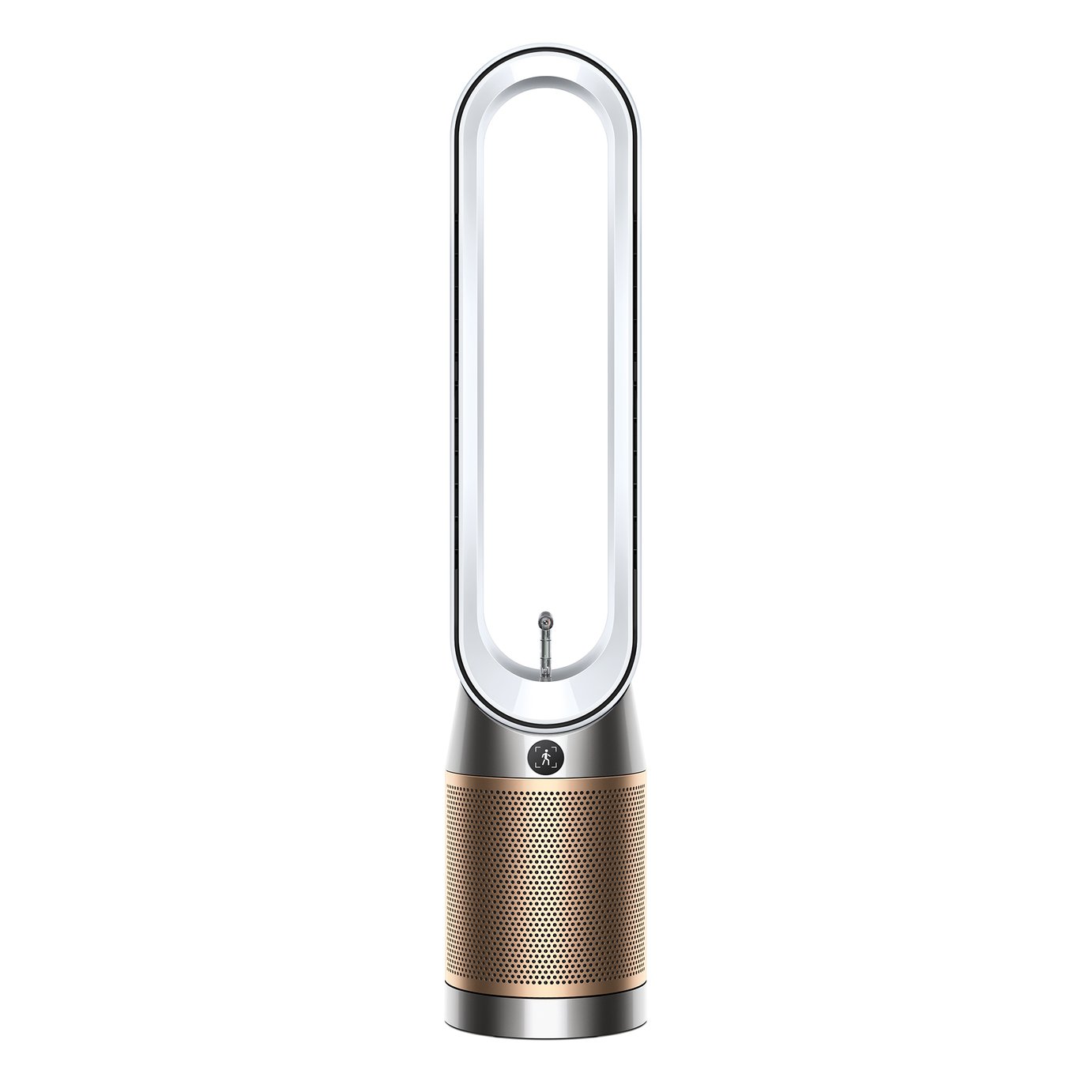
Dyson Find+Follow Purifier Cool
Controlled via an app, Dyson’s new smart air purifying fan comes in a classic white and gold colourway and the brand’s iconic bladeless loop design.
Dyson has designed this new purifying fan to automatically track your movements in a room, so it can ‘follow’ you and ensure the cooling, purified air is always pointing towards you.
And if you share your space with others, the air projection system will detect this and automatically adjust the oscillation up to 350° so that the same purified air is shared between you, as long as you’re not in a space larger than 27m².
When it notices that you’ve left the room, it will stop moving and wait for you to return. And if you don’t return within the hour, it’ll switch to Auto mode to maintain the room’s comfort and air quality. Of course, throughout it all, you also get the benefits of using an air purifier during a heatwave, which is a little-known hack to cope with rising temperatures.
(Image credit: Dyson)
And as someone who tests air purifying fans and believes they are wholeheartedly worth it, I’m lucky to have a few in my house right now – especially with temperatures soaring and my husband’s hay fever wreaking havoc on his entire being.
However, one problem I’ve always had with fans is that they’re quite restrictive to where you’re sitting or standing in that moment, considering they don’t actually cool a room in the same way portable air conditioners do. And while an oscillating fan is always better than a static fan, oscillation isn’t exactly accurate.
Instead, you just have to hope that the oscillating breeze catches you exactly where you are at the time, distributing the ‘wind chill’ they produce in a way that makes you feel cooler. If it doesn’t, you’re thrust back into a pocket of hot air that UK homes are known for during the hotter months. But that’s where the Find+Follow can help.
(Image credit: Dyson)
Naturally, you may have concerns associated with smart AI technology that uses a camera and 17-point user detection to ‘track’ you around your own house. But to quell one of the biggest concerns I had when I heard about this new appliance, Dyson has confirmed that it is cyber-safe.
The brand explains, ‘Dyson’s Find+Follow AI vision system never identifies anyone and only detects presence. Images are processed instantly within the machine, deleted and never leave the device.’ So, you don’t have to worry about any images or personal data being shared elsewhere.
(Image credit: Dyson)
Despite all of the perks and tech features, though, it’s hard to ignore that an appliance like this comes in at a premium price. At £549.99, it’s not cheap, and it is definitely possible to find an air purifying fan for a lot less.
But if you already think Dyson fans are worth it, and you love new technology, unlike anything you’ve ever seen, it could be an investment worth making. If not, here are some other air purifying fans I’d recommend.
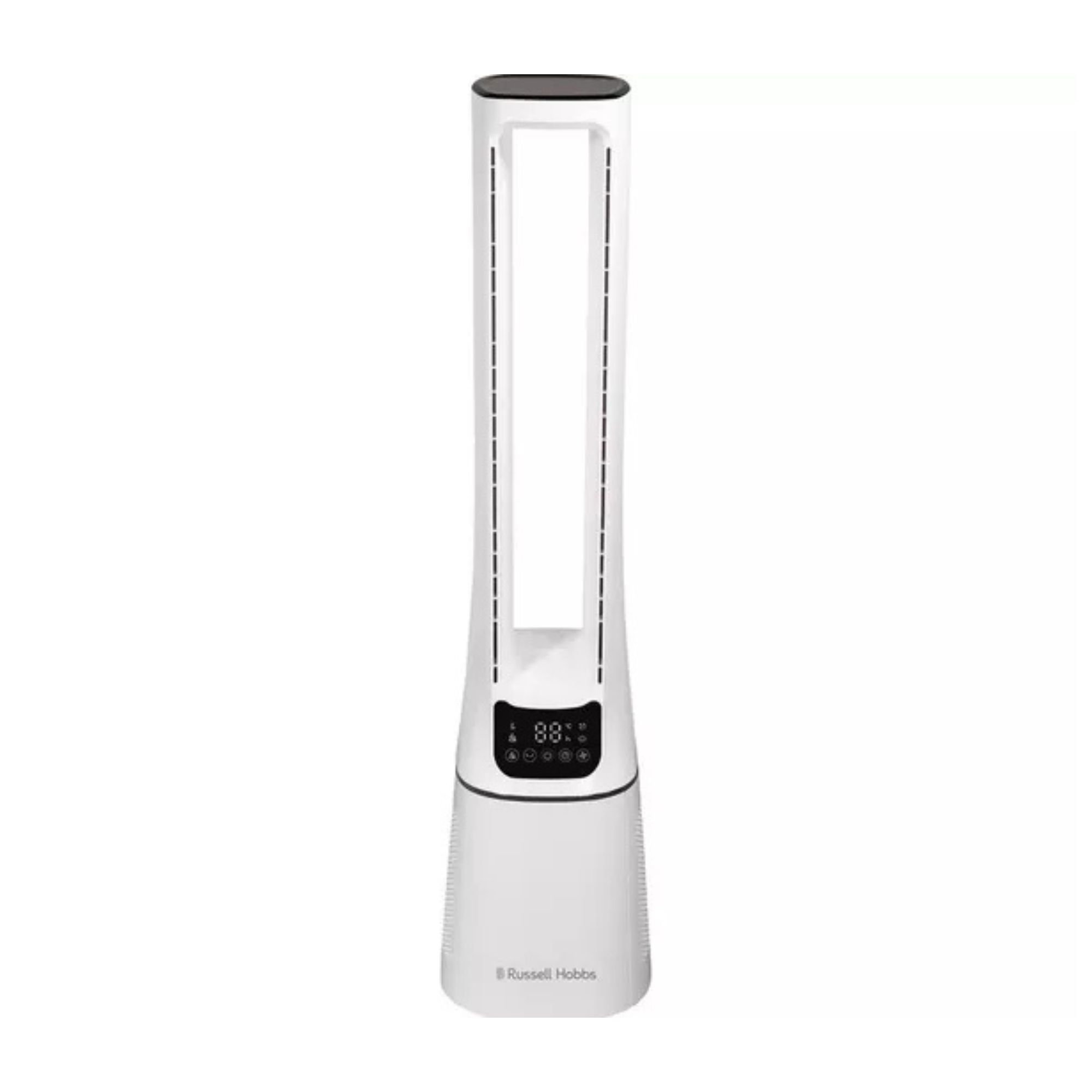
Russell Hobbs RHBLDL12 Bladeless Tower Fan
I tested this air purifying fan last year, and I raved about it so much that I inspired my mum to buy one too! It has an oscillation feature and integrated filtration to help you breathe easier, too.
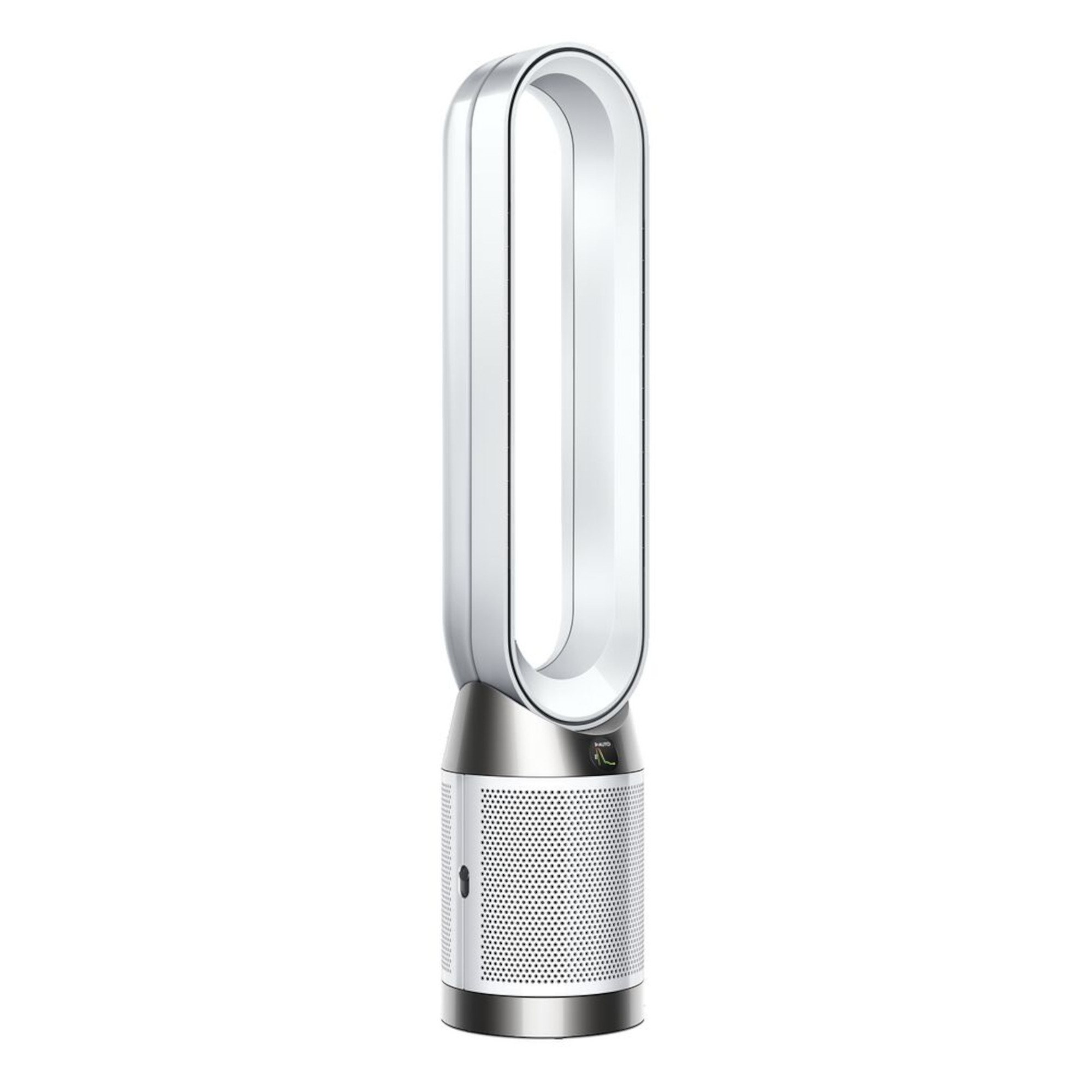
Dyson Purifier Cool PC1 (TP11)
If you don’t like the Find+Follow feature, the Dyson Purifier Cool PC1 is a great alternative. It offers very similar air-purifying properties but doesn’t include the AI technology. Our Senior Digital Editor, Jenny, loved it during testing.
Blueair ComfortPure 3-in-1 T10i Air Purifier
If space is limited, this air purifying fan offers a more compact design. It will also serve as a heater in the winter, but just be warned that it is an air purifier first and foremost. Our tester loved it and gave it a 4.5-star review.
What do you think of Dyson’s new air purifying fan? Could it be your new heatwave hero?


 And geologically, the provenance of this place is mind-blowing. Beneath my feet is an ancient seabed that,195 million years ago, was under the sea. We were walking over the tectonically active South American Plate, where millions of years of tectonic compression buckled the earth’s crust, pushing up the surrounding Andes mountain range, the Cordillera de Domeyko, and the famous Cordillera de la Sal (Salt Range).