
Top 10 Mumbai sights that won’t cost you a rupee
Mumbai is one of India’s incredible cities; renowned for its architecture, monuments, vibrant sights, bazaars and its spicy cuisine. And it can also be one of India’s great value cities.
A surprising number of the best-known sights and highlights – including mausoleums, wandering through fish markets, admiring architectural gems and landmarks, meeting characters and seeing institutions at work – are free for everyone to enjoy, and they won’t cost you a single rupee to experience.
Most are also easily accessible as you stroll around the Colaba or Fort areas of the city and enjoy Marine Drive, while others are only a short hop away on Mumbai’s suburban trains.
Several attractions are at their best in the early morning as sunlight adds a sharpness to the city’s features, while others spring into life as the day progresses.
You may also like: Magical Mumbai
Here are 10 top sights and experiences you can enjoy for free:
Sassoon Dock
Wander down to the southern end of Colaba at dawn, pass through the Clock Tower entrance gateway to the Sassoon Dock, and you’ll be on a busy quayside where fishing trawlers land their catches.
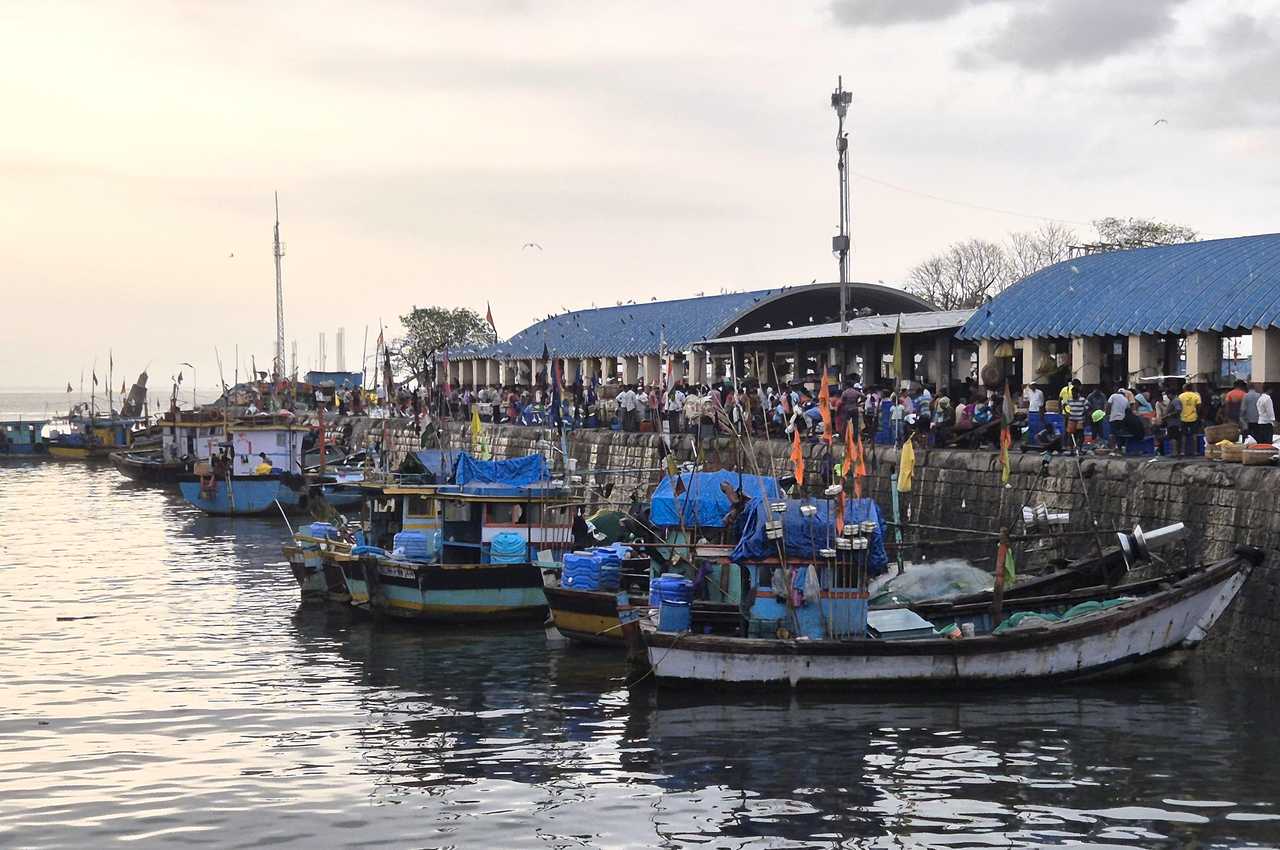
Sasson Dock Boats, Mumbai
Egrets perch expectantly, ravens swoop low and cats furtively prowl for scraps, as auctioneers sell the fresh fish on to merchants and wholesalers.
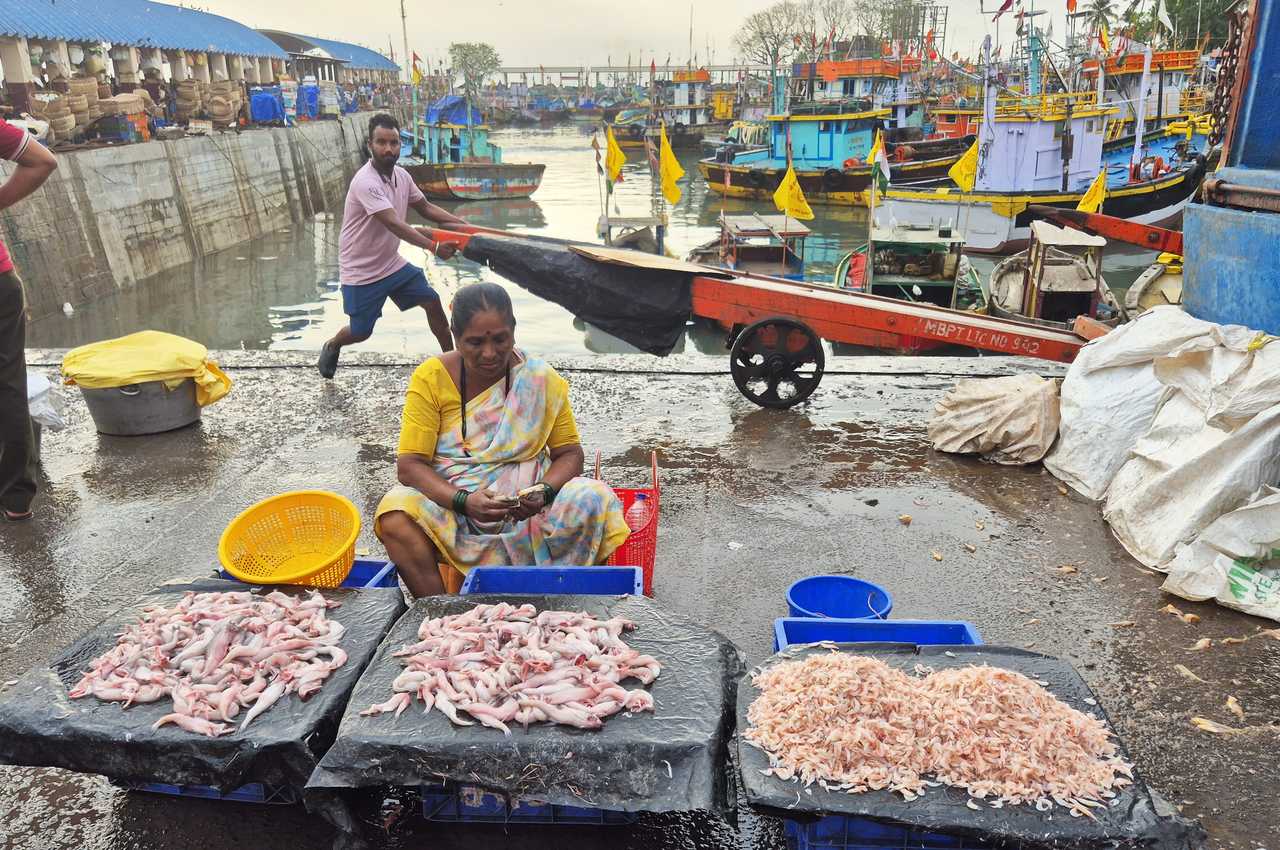
Selling shellfish at Sassoon Dock,Mumbai
Meanwhile, local women sell from baskets laid out on the quay; anything from mackerel and pomfret, red snapper, tuna, crabs, prawns, shrimps and cuttle fish. Crushed ice is laid over to keep the fish fresh and cool as other boats dock and swing their catch ashore. It’s a colourful scene, played out on the quayside of a cool Mumbai morning on the dock, built in 1875 on reclaimed land by the mercantile company David Sassoon & Co.
Haji Ali Dargah
Reached by a narrow causeway and only accessible at low tide, the Haji Ali Dargah is a Sufi shrine and tomb of Pir Haji Ali Shah Bukari, a wealthy merchant from Uzbekistan who had settled in Mumbai after his travels.
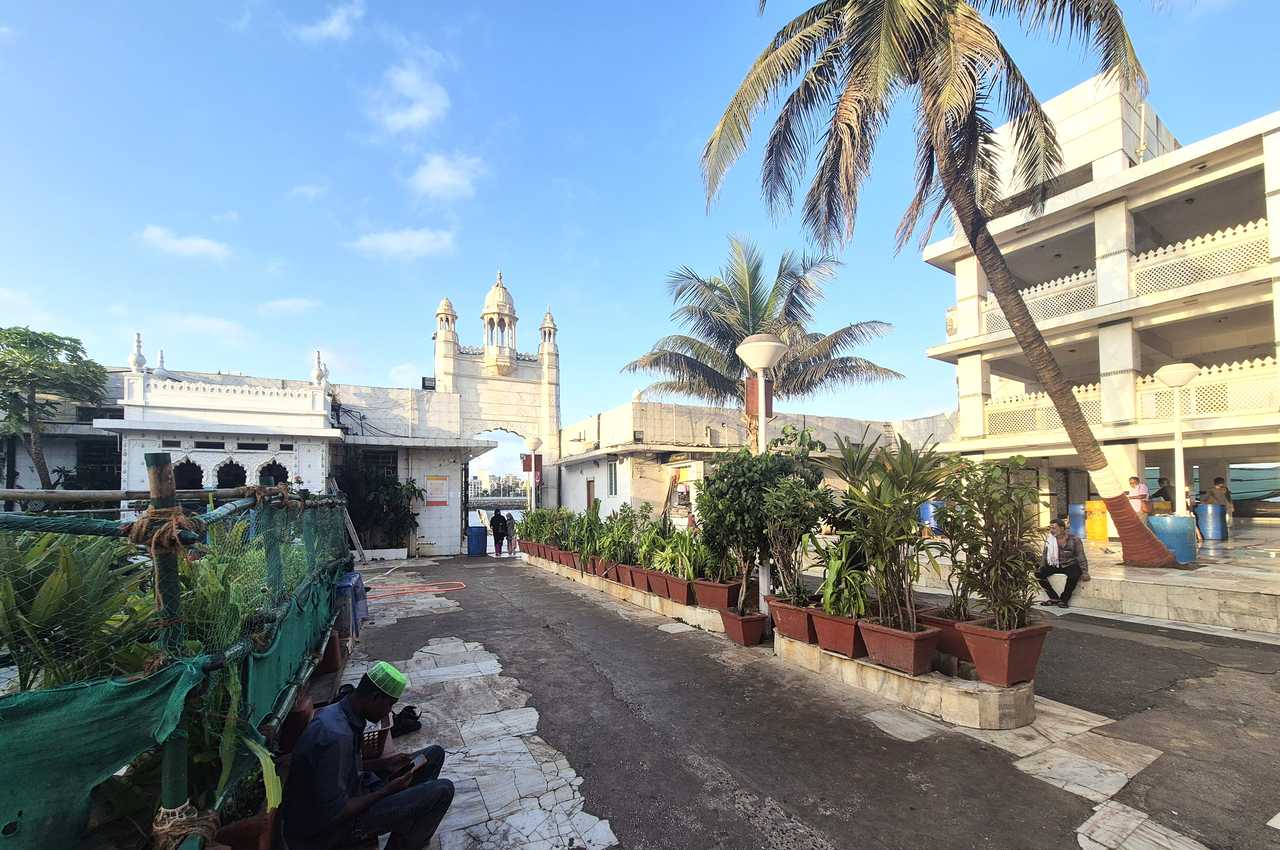
Inside the Haji Ali Dargah
Legend says that he gave up his wealth and made a pilgrimage to Mecca, but died on the way there. When he became ill, he’d asked his followers to throw his body into the sea. The coffin floated back to Worli, one of Mumbai’s peninsulas, where the shrine was built in 1431.
The entrance leads past stalls of bright fabrics and onto the causeway, which is covered twice a day at high tide. Within the complex is the tomb of Haji Ali, where Muslims queue to receive blessings, while behind it stands a mosque. Around the tomb complex, as the sea laps the rocks, some visitors paddle or bathe, others sit cross-legged on the stones, eating breakfast or pose for photographs.
Gateway to India
One of India’s most recognisable landmarks, this magnificent monument was built to mark the arrival of King George V of England on the sub-continent in 1911 to be crowned Emperor of India when the country was still part of the British Empire.
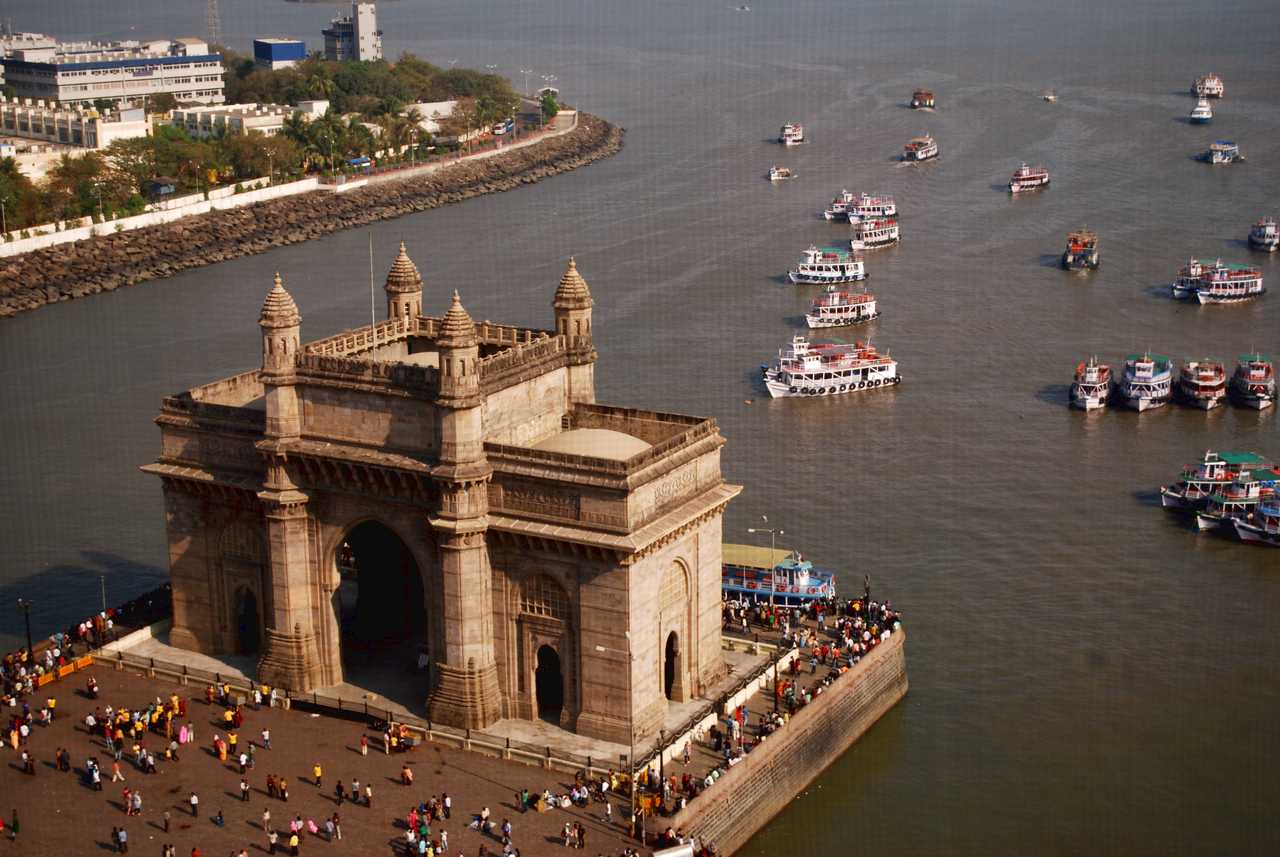
Gateway of India, Mumbai
Although he was the first British monarch to visit India, George V never actually walked through the Gateway as it wasn’t completed until 1924. Built of yellow basalt in the Indo-Saracenic style, the central dome is 26 metres high with four turrets and two side chambers that were used for civic receptions.
It’s a lovely setting and easy to walk around as boats bob on the harbour beyond waiting to take day-trippers to the caves of Elephanta Island, while the grandeur of the Taj Mahal Palace Hotel stands nearby.
Grant Road Skywalk
Effectively a giant elevated footpath over the streets leading away from Grant Road Railway Station, it could also be a fascinating giant modern art installation as it ferries passengers past apartments away from the station down towards the Marine Drive area.
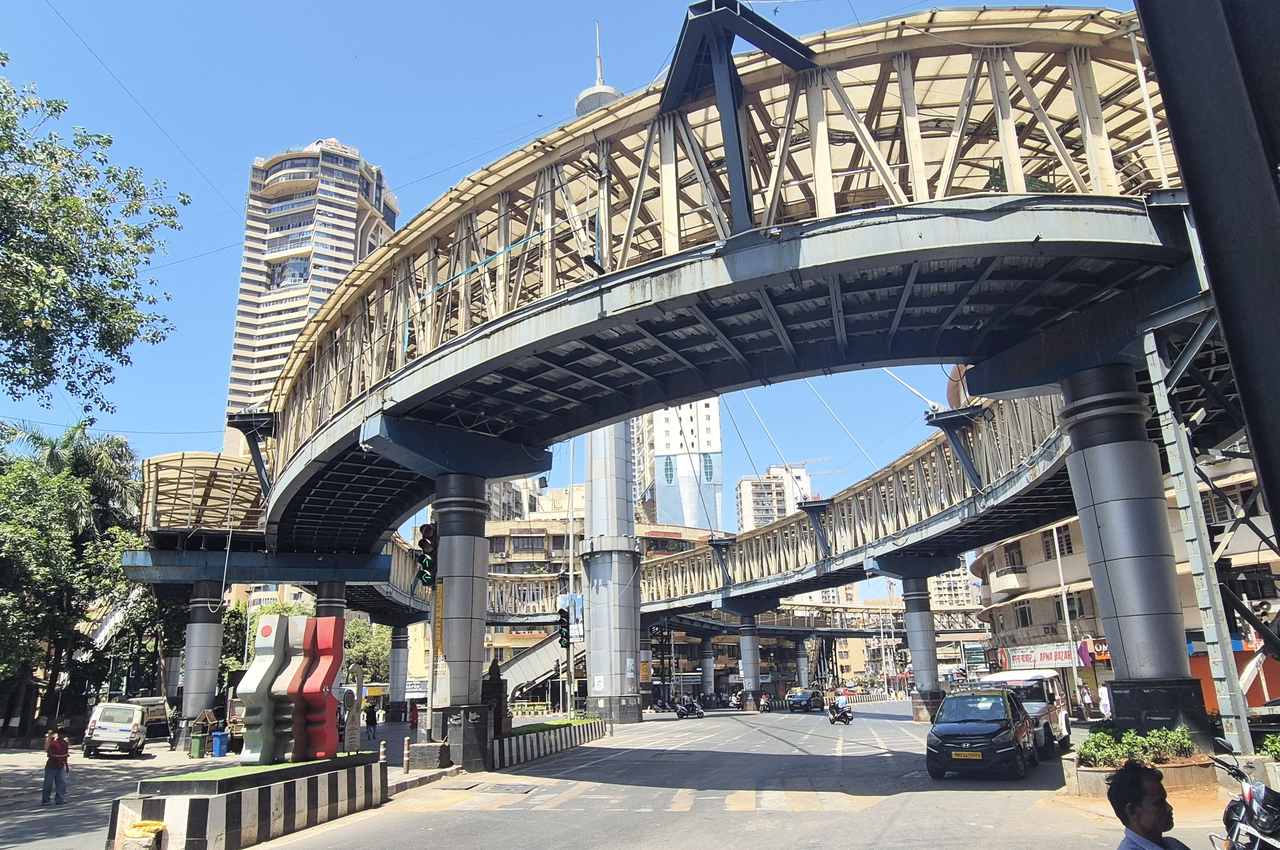
Grant Road Skywalk, Mumbai
There are several skywalks under the Mumbai Skywalk Project, most linked to Metropolitan Railway Stations, but Grant Road is one of the more creative with its iron latticework and an impressive oval ‘cage’ over the Nana Chowk interchange.
In a nearby side street, the tree-lined Laburnum Road, is Mani Bhavan, a three-storey wooden balconied house used as a Mumbai base by Mahatma Gandhi between 1918 and 1934 during his campaign for independence from British rule.
Meet the Dabbawallas
Mumbai’s dabbawallas are one of the city’s great institutions, a 5,000-strong tiffin tin army which collects home-cooked food from suburban apartments and transports the meals, first by train from stations such as Dadar or Bandra to Churchgate Railway station, where the lunches are sorted and then distributed onward to the desks of office workers.
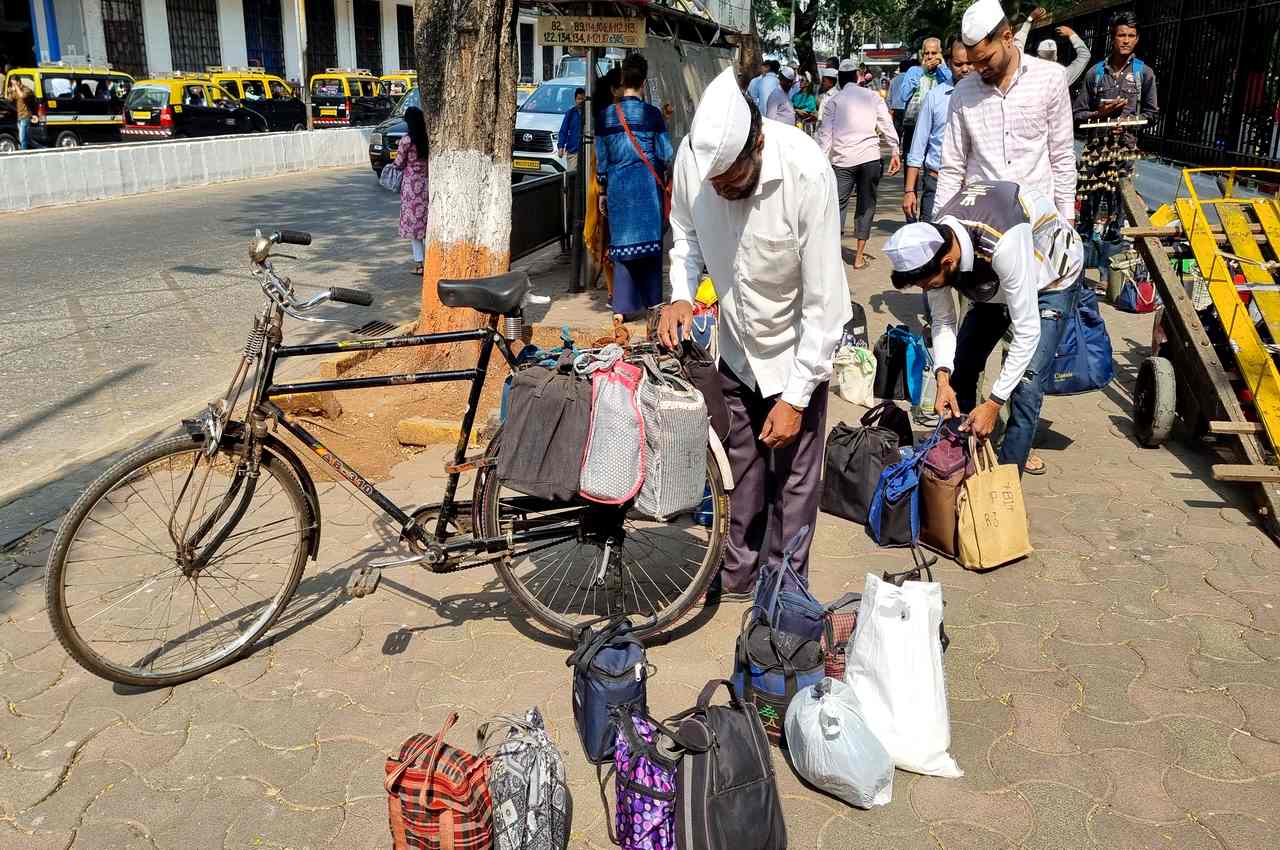
Dabbawallas sorting bagged tiffintins outside Churchgate Railway Station, Mumbai
You can watch the dabbawallas at work during the critical final sorting of the tiffin tins (often in lunch bags) outside the station and then load their bikes and barrows to deliver to offices in Cuffe Parade, Colaba and the Nariman Point area. Each tiffin tin containing rice and chapatis, chutneys and vegetable or meat curry, is carefully coded to ensure it gets to the correct desk on time.
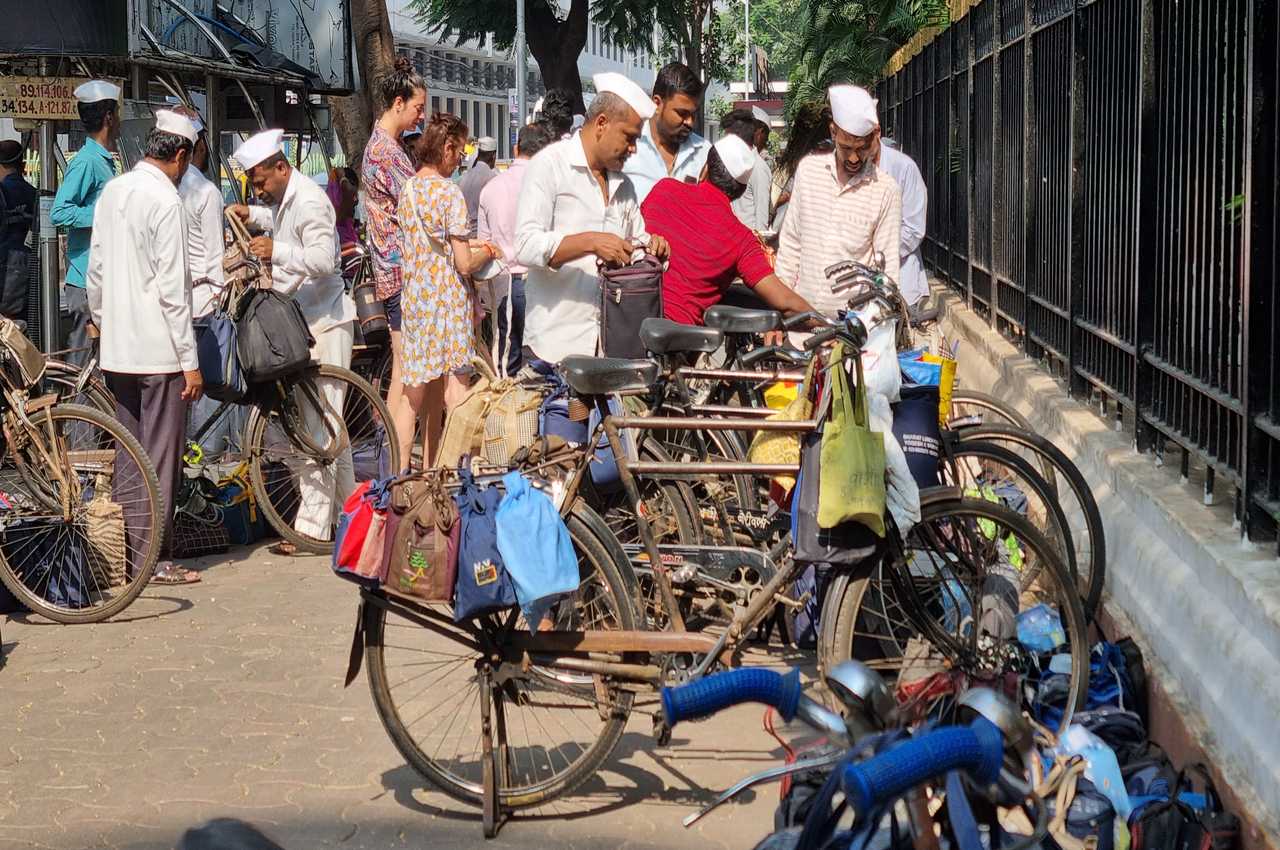
Mumbai’s Dabbawallas
The dabbawallas, who have been delivering since the 1890s, are a friendly bunch and happy to talk about their job or pose for photographs. See them at work on the pavement opposite Churchgate Station between 11am and 12 noon.
Mahalaxmi Dhobi Ghat
The biggest outdoor laundry in the world is next to the Mahalaxmi Suburban Railway Station. Take the footbridge over the road to the viewing platform that overlooks the dhobi ghat for great pictures.
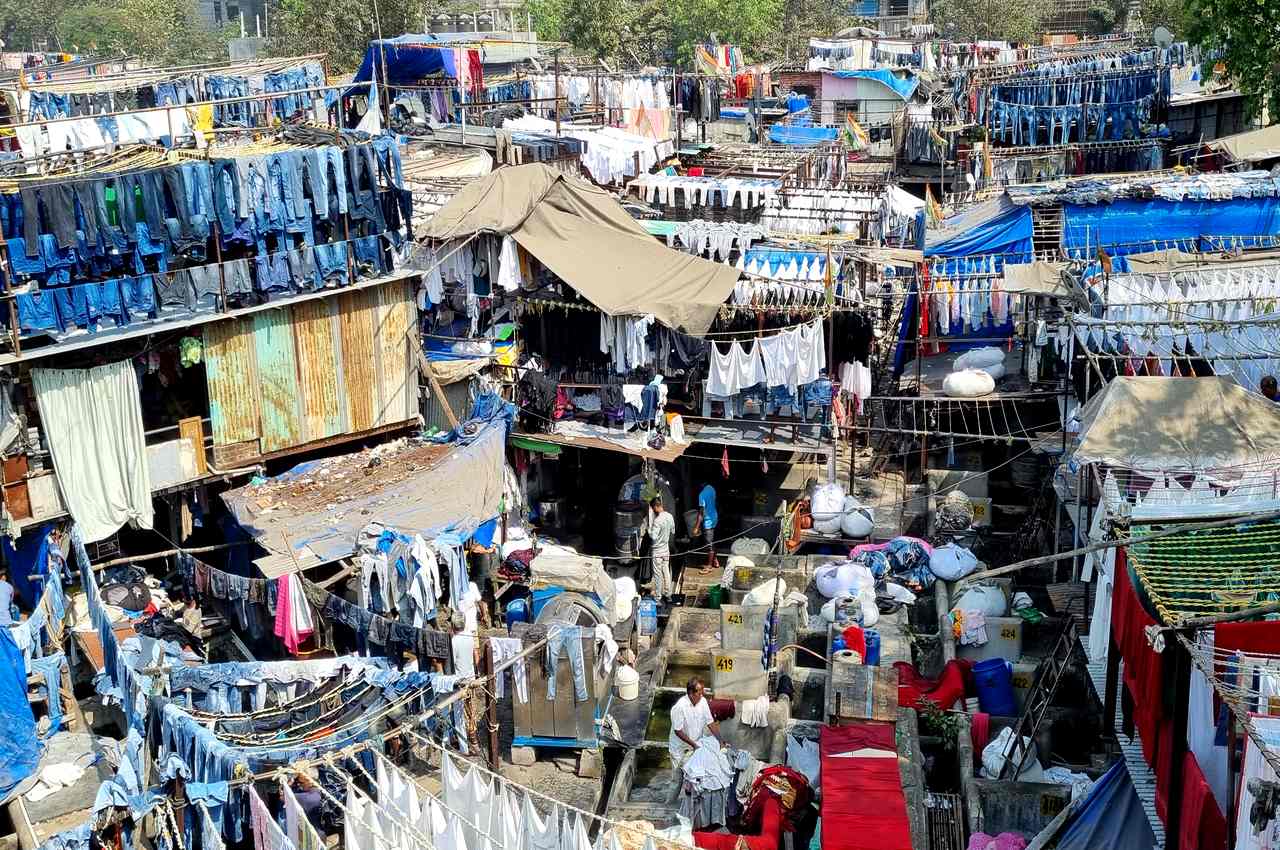
Dhobi Ghata Mahalaxmi, Mumbai
You can’t go into the laundry as it’s a busy working environment, but the viewpoint offers a panorama of the washing tanks and lines of hotel bedding sheets, jeans, coloured garments and shirts and saris strung out to dry. The laundry dates from the late 19th century, operates 18 hours a day, washing up to 100,000 garments and employs 7,000 dhobi-wallas (laundry workers). Each garment is coded – similar to the dabbawallas tiffin tin system – to ensure it gets back to the right hotel and owner, or restaurant, later in the day. Inevitably, in the city that is home to Bollywood, the dhobi ghat has also formed the backdrop of some Hindi and Marathi movies.
Dadar Flower Market
For a blaze of colour and fresh natural aromas, the Mumbai Flower Market is an early morning treat. Sprawling along the pavement and into a network of alleys and shops beyond the western entrance of Dadar Railway Station, numerous stands and stalls are selling the brightest array of flowers you can imagine.
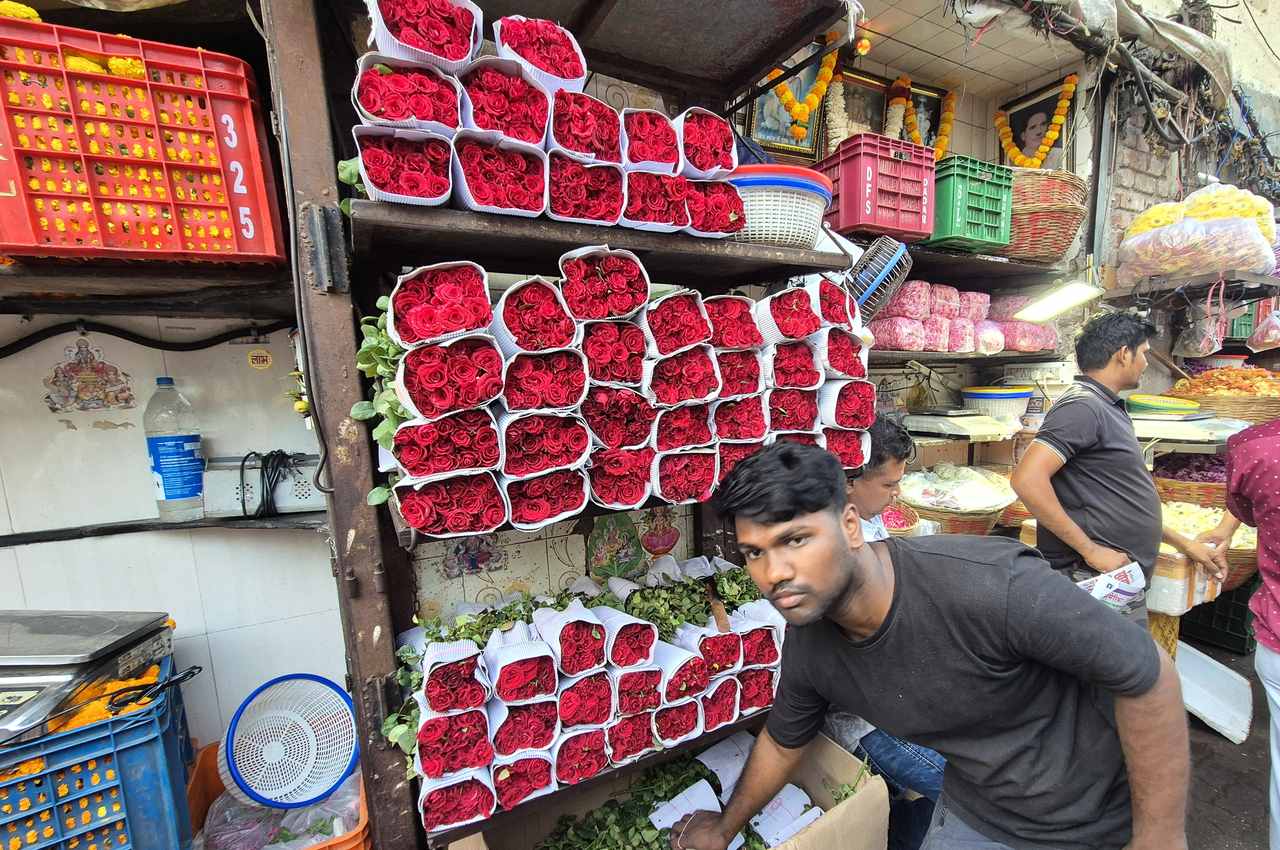
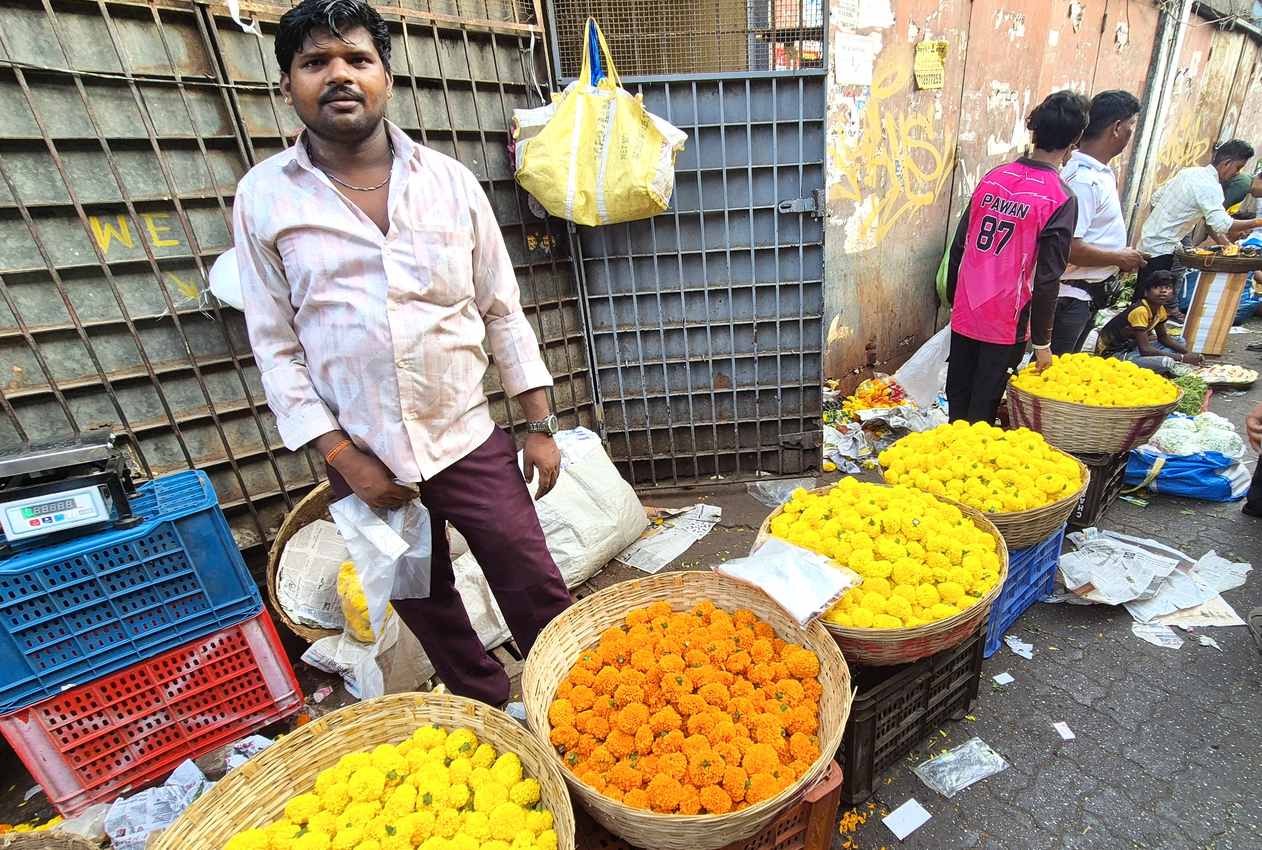
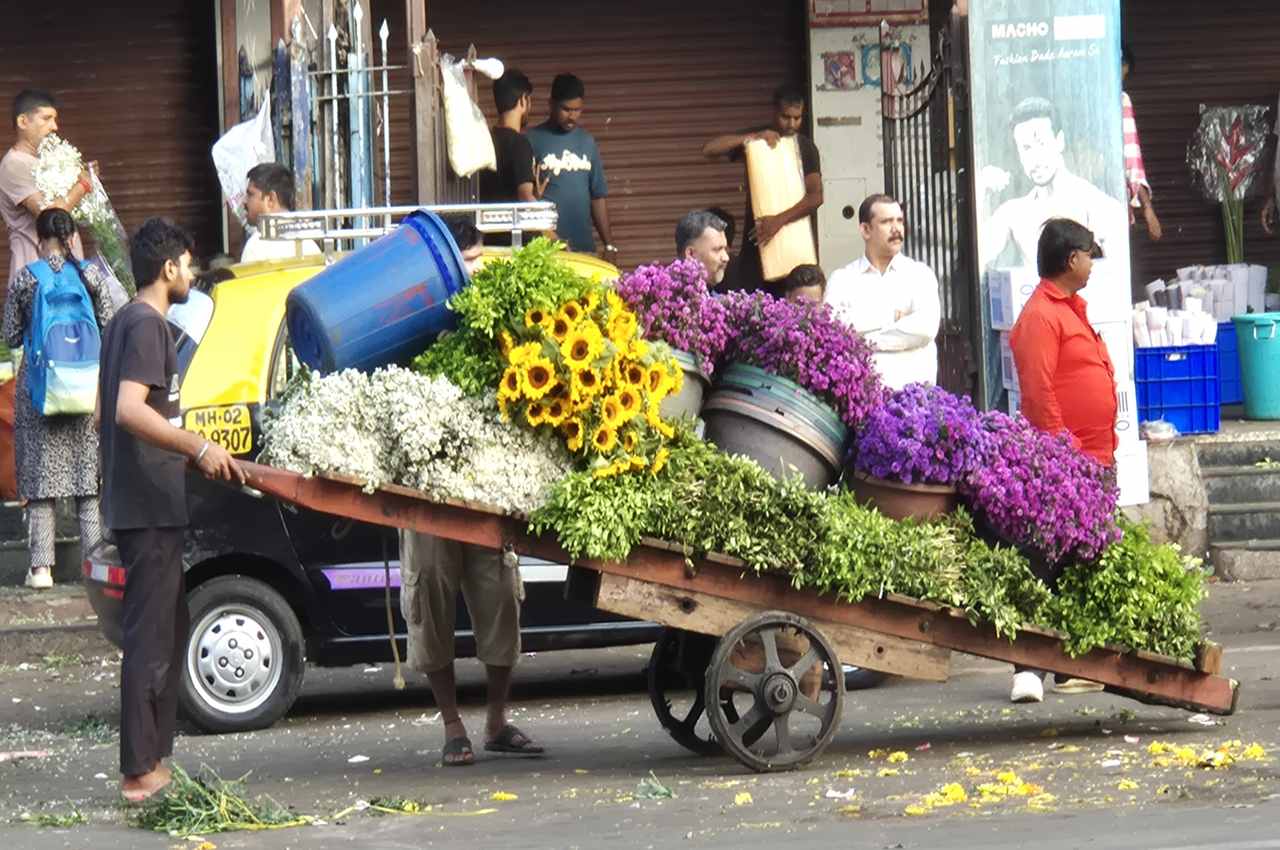
If you get here at about 7-8am, you’ll see the market in full flow with shopkeepers buying up bunches of red roses and chrysanthemums, wholesalers selling and bulk-buying blooms and garlands of yellow and orange marigolds being made up for temples, or to greet guests in high-end hotels. Bunches of greenery to adorn the flowers, and regularly sprinkled with water for freshness, lie on sacks nearby.
Marine Drive
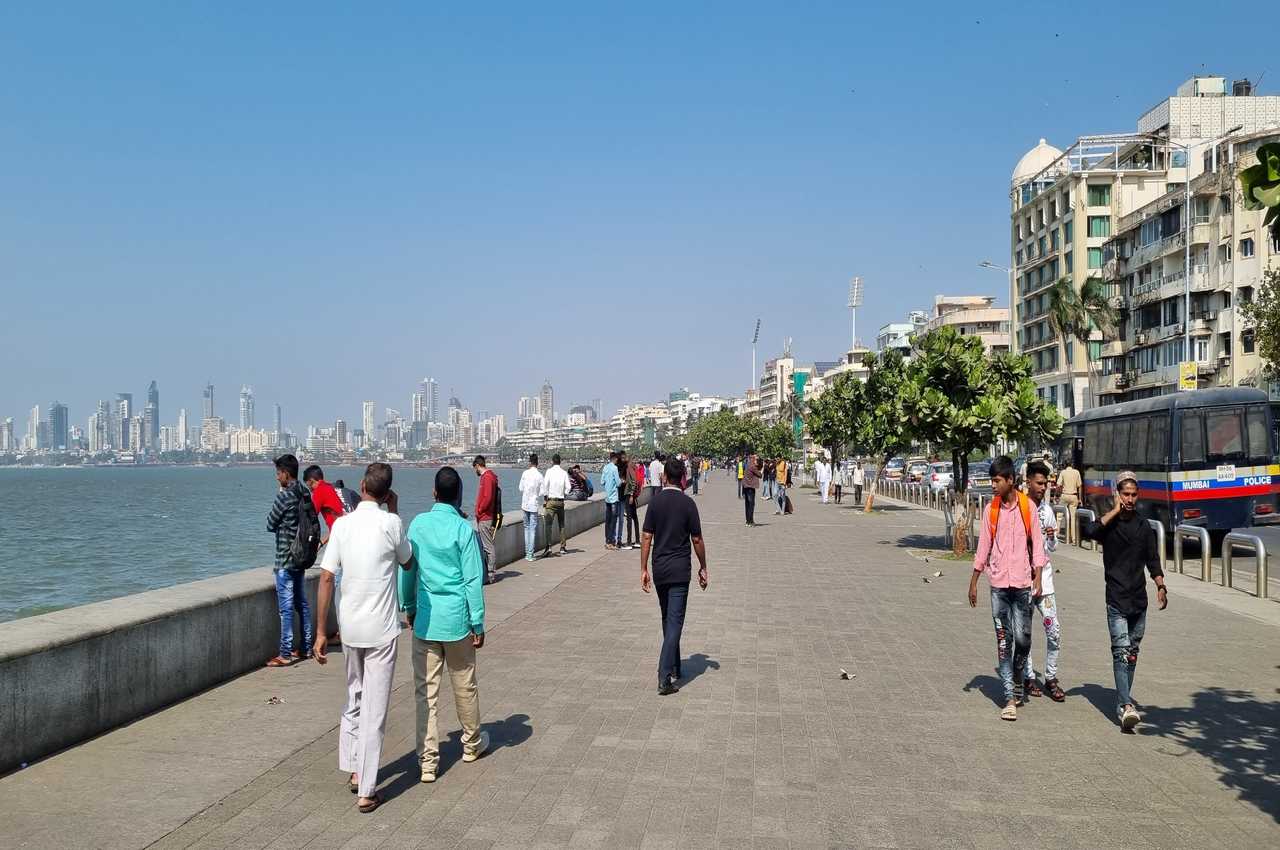
Marine Drive, Mumbai
From Nariman Point to Chowpatty Beach is about two miles from south to north along Marine Drive with views over Back Bay and out to some of Mumbai’s high-rise property hotspots.
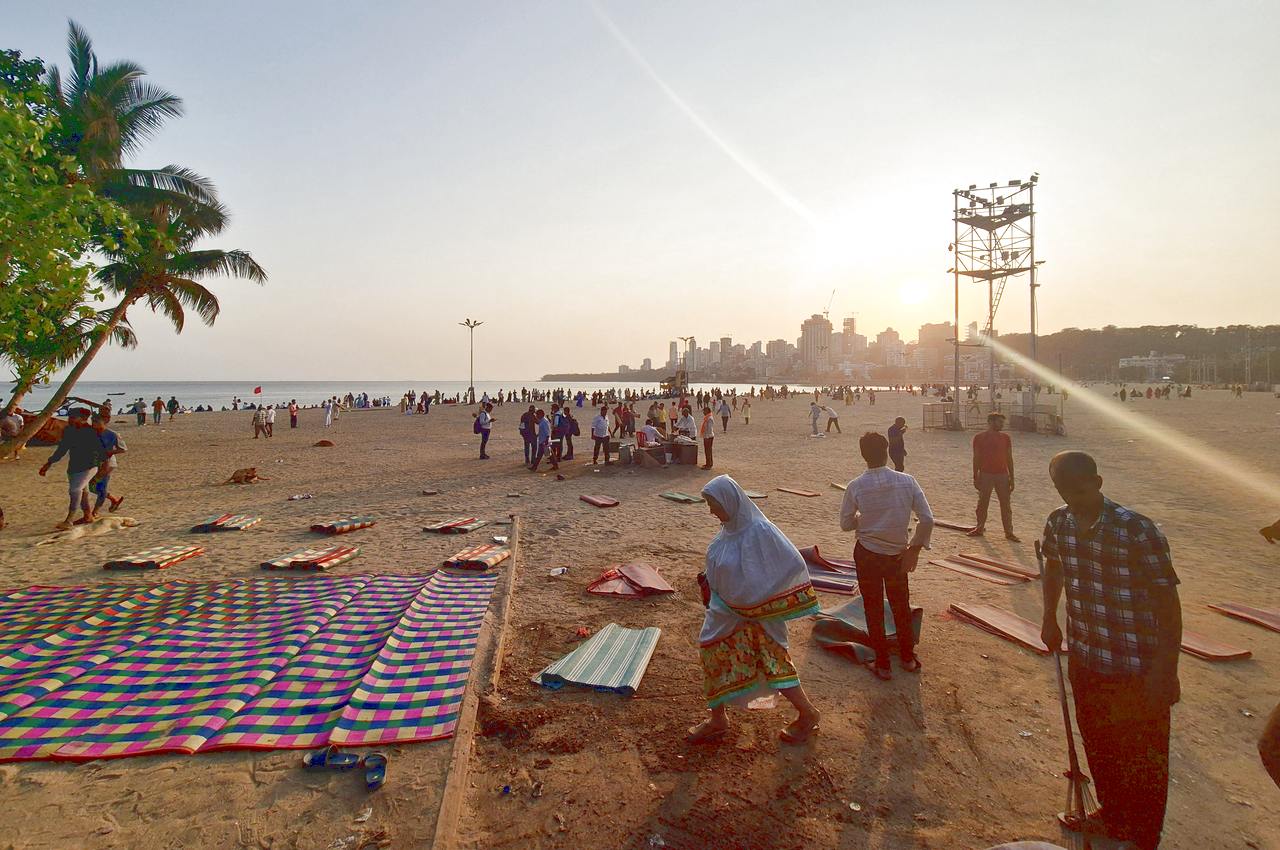
Chowpatty Beach at sunset
Along the way, landmark waterfront hotels and art-deco style apartments overlook a promenade which remains popular with Indian families as they make their way past the Wankhede Cricket Stadium to Chowpatty Beach.
The route forms part of the Victorian Gothic and Art Deco Ensemble of Mumbai Heritage, a collective of buildings that are architecturally famous in this part of Mumbai. At the far end of Marine Drive, you can wander onto Chowpatty Beach and enjoy traditional street food snacks as the sun goes down. This is where Mumbaikars gather of an evening to eat street food, promenade and paddle.
Mumbai’s Gothic grandeur
The southern part of Mumbai, the tip incorporating the Fort and Colaba areas, is famed for its Gothic-style architecture, a legacy of British rule that ended in 1947 with Indian Independence.
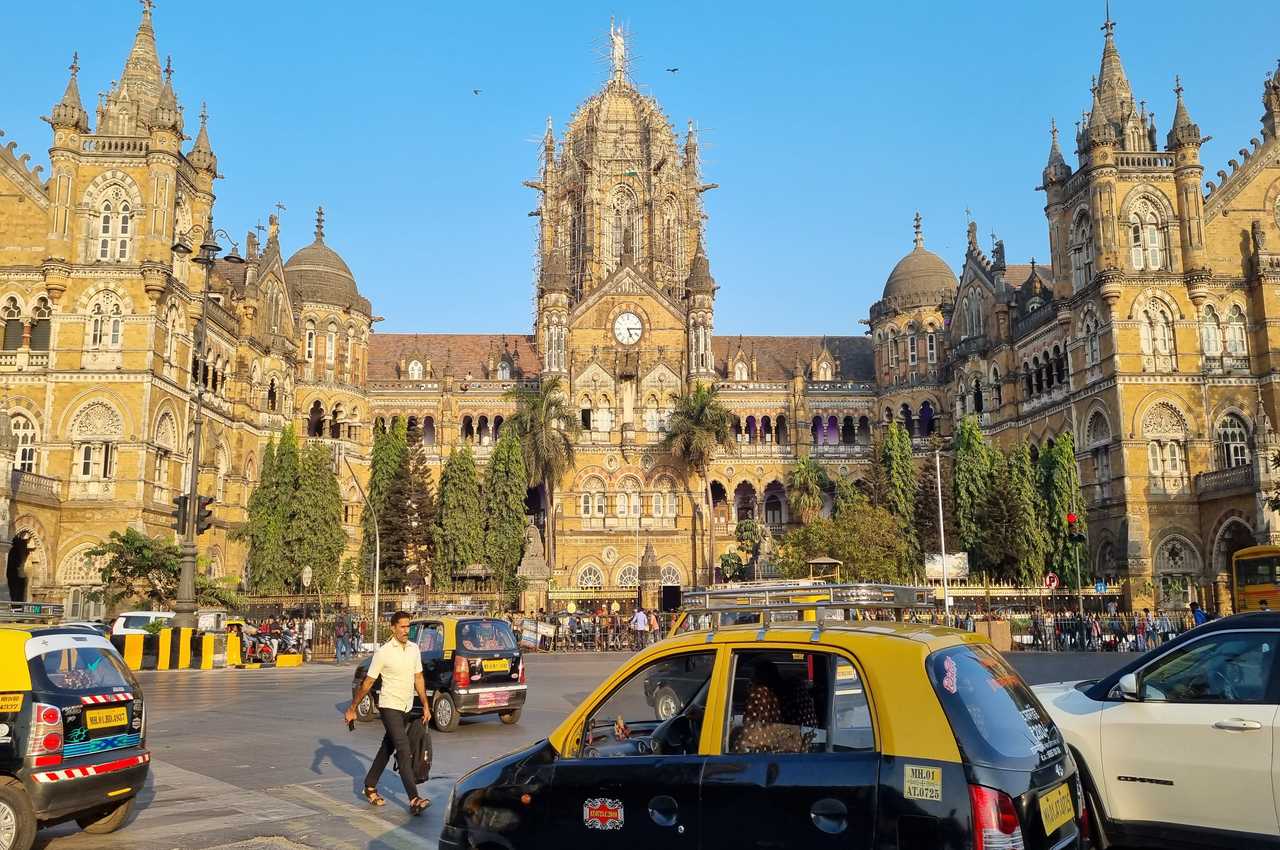
Gothic Wonder: Chhatrapati Shivaji Maharaj Terminis
The masterpiece is CSMT (Chhatrapati Shivaji Maharaj Terminus), which opened as the city’s main railway station in 1887 to celebrate the golden jubilee of Queen Victoria and for more than a century was known simply as VT (Victoria Terminal).
It was designed by Frederick William Stevens, who also designed the Western Railways Headquarters opposite the more mundane Churchgate Railway Station where nearby, on the other side of the Oval Maidan, are similarly-styled buildings: the University of Mumbai, law courts and the famous Rajabai Clock Tower, dating from 1878 and designed by George Gilbert Scott who modelled it on the tower of the UK Houses of Parliament.
Colaba Street Market
The stalls, strung out along the pavements and side streets off Colaba Causeway (now officially known as Shahid Bhagat Singh Marg), sell all sorts of souvenirs, fake watches and trinkets, bags, belts, shawls and saris.
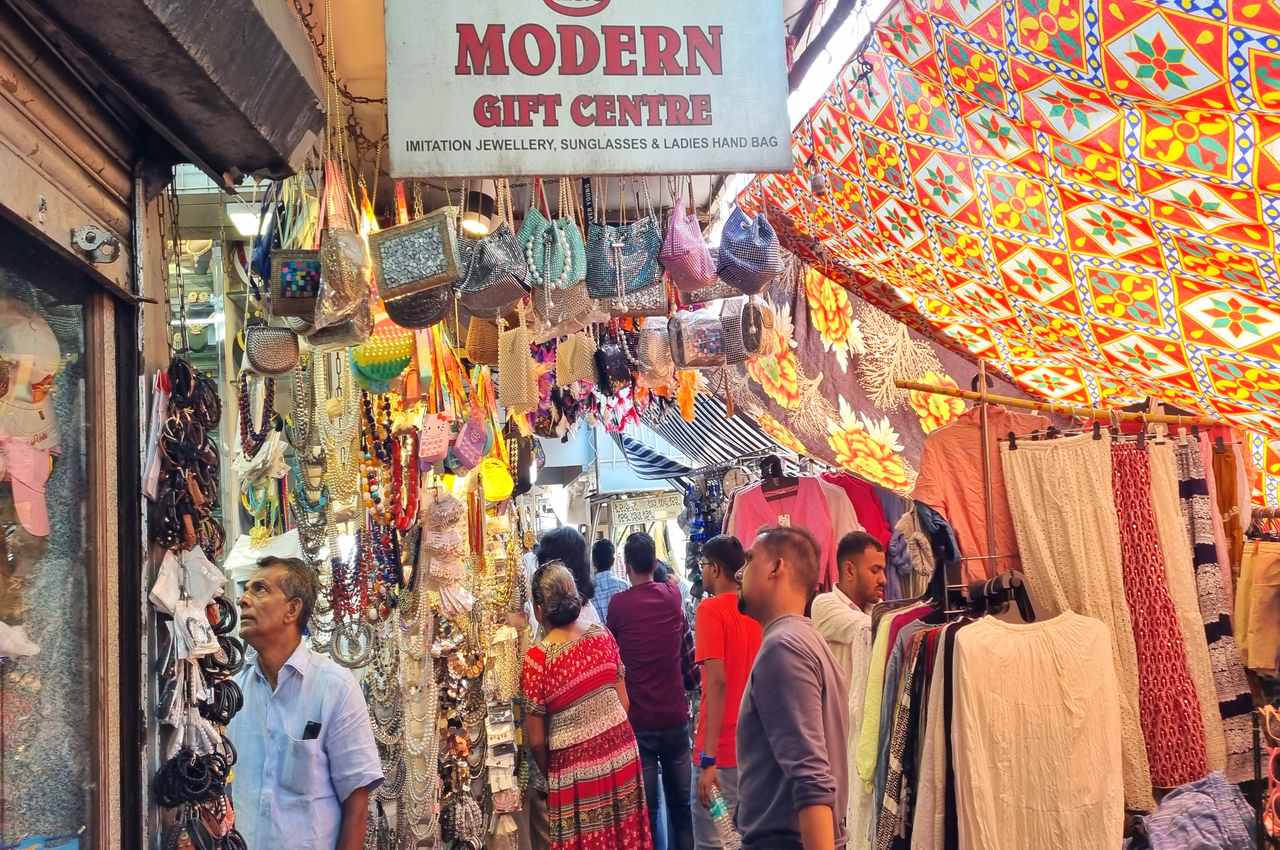
Colaba Street Market, Mumbai
The Colaba Street Market starts to come to life late morning and by mid-afternoon and well into the evening is crowded with shoppers. It is not far from the Gateway to India and the Taj Mahal Palace Hotel, with also plenty of places along the way to get a snack, drink, lunch or dinner from landmark cafes such as Leopold’s, Café Mondegar, the Olympia Coffee House or Delhi Darbar near to the art-deco Regal Cinema at the top of the market area. And if you see something you like on the stalls, don’t forget to haggle.
The post Top 10 Mumbai sights that won’t cost you a rupee appeared first on The Travel Magazine.