

What the Landscape Taught Me
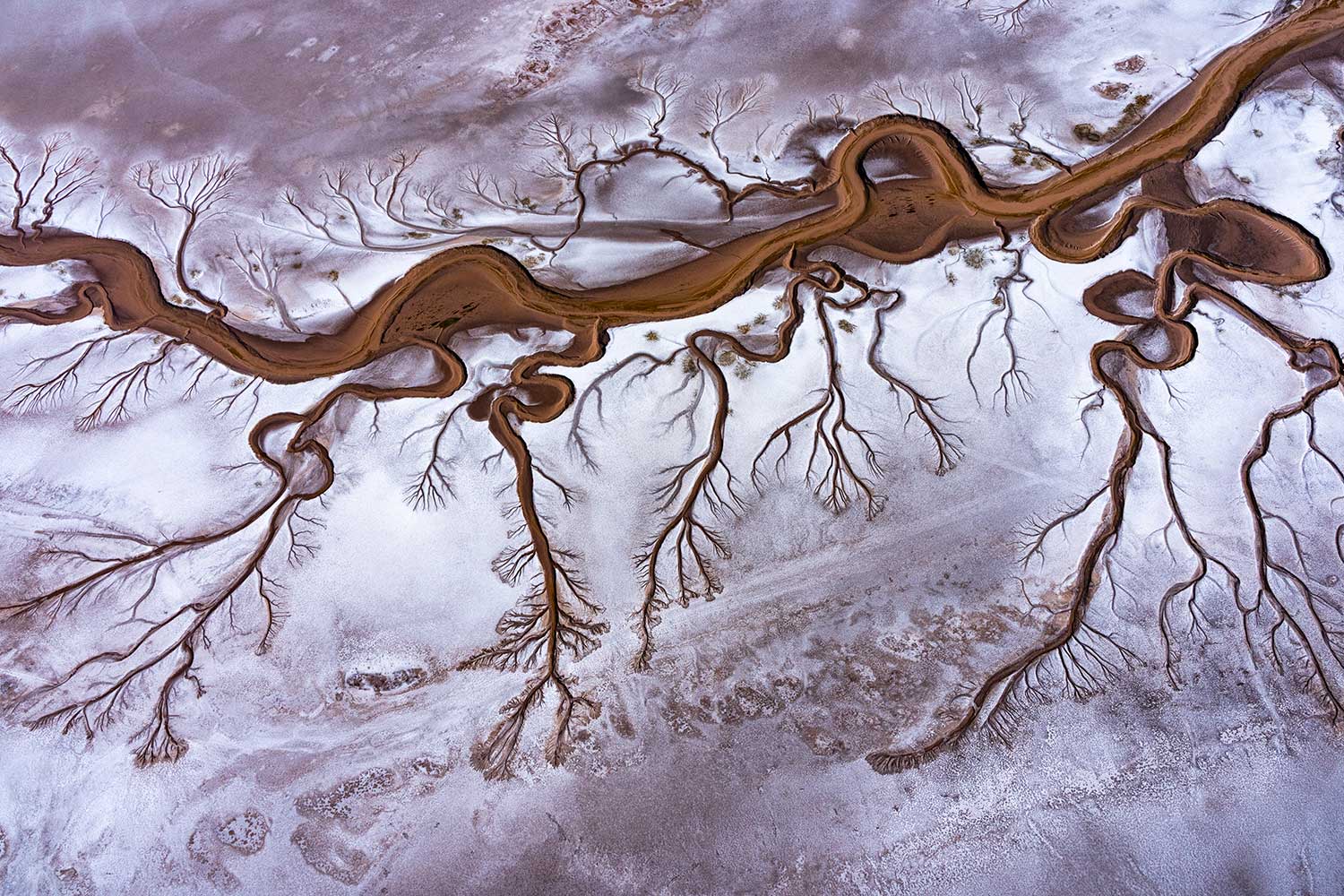
Aerial patterns of the Colorado River’s dry delta, Baja Mexico. Sony A1, Sony FE 24-105mm f/4 G OSS. Exposure: 1/400 sec., f/20, ISO 25.
Photography has taken me to some of the world’s wildest places — from hanging inside Himalayan glaciers to flying low over the Colorado River Delta in Mexico. Along the way, my camera has taught me lessons that go far beyond exposure settings or composition. It has changed how I understand landscapes, people and the stories that connect them.
One place, in particular, transformed the direction of my career.
See how this story appears in the magazine: Outdoor Photographer Vol. 2 (Digital Edition)
Photographing the Colorado River Delta
On a clear February morning, I open the window of the Cessna 182 and a blast of thick ocean air hits my face. I turn in the cramped cockpit and tell my friend and pilot, Will, to bank right. At 85 mph, the wind buffets my lens, and I clutch the camera tighter. As we start to bank, I feel weightless for a split second, suspended by just a waist belt, 1,000 feet above the earth.
Below me, tendril-like fingers braid across a bluish-white expanse that looks like tree roots merging with the arteries of a forgotten river. Leaning out the window, bracing against the airspeed, I click the shutter three or four times, capturing the Colorado River’s delta in Mexico stretching below us.
I’m struck by the abstract beauty — the mosaic of nature’s patterns woven together just north of the turquoise waters of the Gulf of California.
But one thing is missing from the frame: fresh water.
A River Run Dry
At the end of the 1,450-mile Colorado River — the same river that carved the Grand Canyon, supplies drinking water to 40 million people across seven states, and grows much of America’s produce — there is nothing left. It is a river run dry.
A high tide flows up from the south as if searching for its old friend, the Rio Colorado, partially filling the feather-like waterways that historically provided brackish habitat for countless species.
It’s not my first time here.
Fifteen years ago, I hiked 100 miles across this dusty section. I was so alarmed by what I saw that it changed the course of my photography and storytelling. Since then, I’ve spent much of my career using my lens to bring awareness to this river and other threatened landscapes.
Early on, I was lured by adventure — dangling from ropes, hanging inside glaciers on Himalayan peaks or diving under icebergs in search of my next “eye-burner” image. My camera was a passport that opened doors. I threaded assignment to assignment for magazines like National Geographic, Smithsonian and Outside during the era of big readerships and even bigger budgets.
Photography Lessons Beyond the Camera
During those exciting assignment days, my cameras became more than a passport; they became teachers.
In 25 years as a photographer and filmmaker, my cameras have repeatedly taught me lessons — not just about photography, but about life.
When documenting people, whether locally or in remote corners, I not only made better images but also had richer experiences when I approached as a human first and a photographer second.
Once, while working on a story about wildlife conservation in northern Kenya, I handed a camera to a group of Samburu women who were wary of me. In broken Swahili, I suggested they make their own images.
Within minutes, the ice broke and laughter engulfed us as the women photographed themselves — and me. In that moment, I captured an image that opened the story. One of their portraits ran as my headshot (with credit, of course).
When photographing landscapes or wildlife, my lenses taught me that listening was as important as — or more important than — chasing action and light. Many times, I heard the hit of hooves or pounce of paws before I saw the action.
In Botswana, I thought a lion was on my right when, in fact, it had backtracked and leapt into a river at full run on my left, just yards away. Thankfully, I heard the splash in time.
Returning to places years later, I’ve often struggled to repeat images because the landscapes had changed — sometimes dramatically.
Documenting that change — glacier to no glacier, river to sand, meadow to parking lot — creates powerful “then and now” portraits of impact that a single image cannot.
Why Storytelling Makes Landscape Photography More Powerful
In today’s image-saturated world, where everyone has the tools to make extraordinary photos, my lenses have taught me one of the greatest lessons: striking images are important, but well-documented stories endure.
Without story, even beautiful photos can fade into the mix. But images that both capture attention and tell a story of change — good or bad — connect us with greater impact.
One story I’ve focused on for decades is water in the American West: its importance and scarcity. That pursuit is what led me to the seat of that Cessna 182, torso hanging out the window over the dying Colorado River Delta.
The river continues to struggle with drought, climate change, over-allocation and too many demands. And, like many issues of our time, it also battles apathy.
My hope is that telling the river’s story — from boat-flipping rapids and alpine trickles to goliath dams, mines, power plants, sprawling cities and, finally, its vanishing delta — will remind us of water’s true value. Through it all, I try to find “the pretty amidst the gritty,” because there is art in everything, if you look.
There are times when I want to move on to lighter subjects, but I keep digging. Stories require time and dedication. Sometimes, those with long and painful histories are even more vital in today’s world of short attention spans.
“When the well is dry, we know the worth of water,” Benjamin Franklin once said.
As we bank the plane again, circling the parched delta, I capture more frames, reflecting on the value of this lifeline running dry.
Hopefully, this ongoing body of work around one iconic river — and the freshwater it carries far and wide — will remind us, and decision-makers, of a lesson we cannot forget: Water is life.
Not just for us, but for the river itself and the wild ecosystems it sustains.
Pete McBride is the author of The Colorado River: Chasing Water and a Sony Artisan of Imagery. Visit petemcbride.com to see more of his work.
Subscribe to Outdoor Photographer.
The post What the Landscape Taught Me appeared first on Outdoor Photographer.