
Marriott Victoria & Albert, Manchester, Hotel Review
The Manchester Marriott Victoria & Albert Hotel is a former cotton warehouse that has traded one kind of Manchester commerce for another. Where once this building dealt with the relentless movement of goods through the world’s first industrial metropolis, today it’s focused on a rather different commodity: music, art, theatre, museums and its extraordinary creative present, providing shelter and a base for visitors looking to really get into this unique, always engaging city.
Who for
The obvious guests are weekend visitors, business travellers and anyone attending one of the many events that now fill this part of the city. But the hotel’s location particularly rewards travellers who arrive with a cultural agenda.
During our stay, Manchester was in the middle of its annual Manchester Psych Fest, a one-wristband; access-all-venues city festival you can easily traverse on foot, which made the V&A feel almost purpose-built for the occasion – but more on that in a moment.
Rooms That Let Manchester Do The Talking
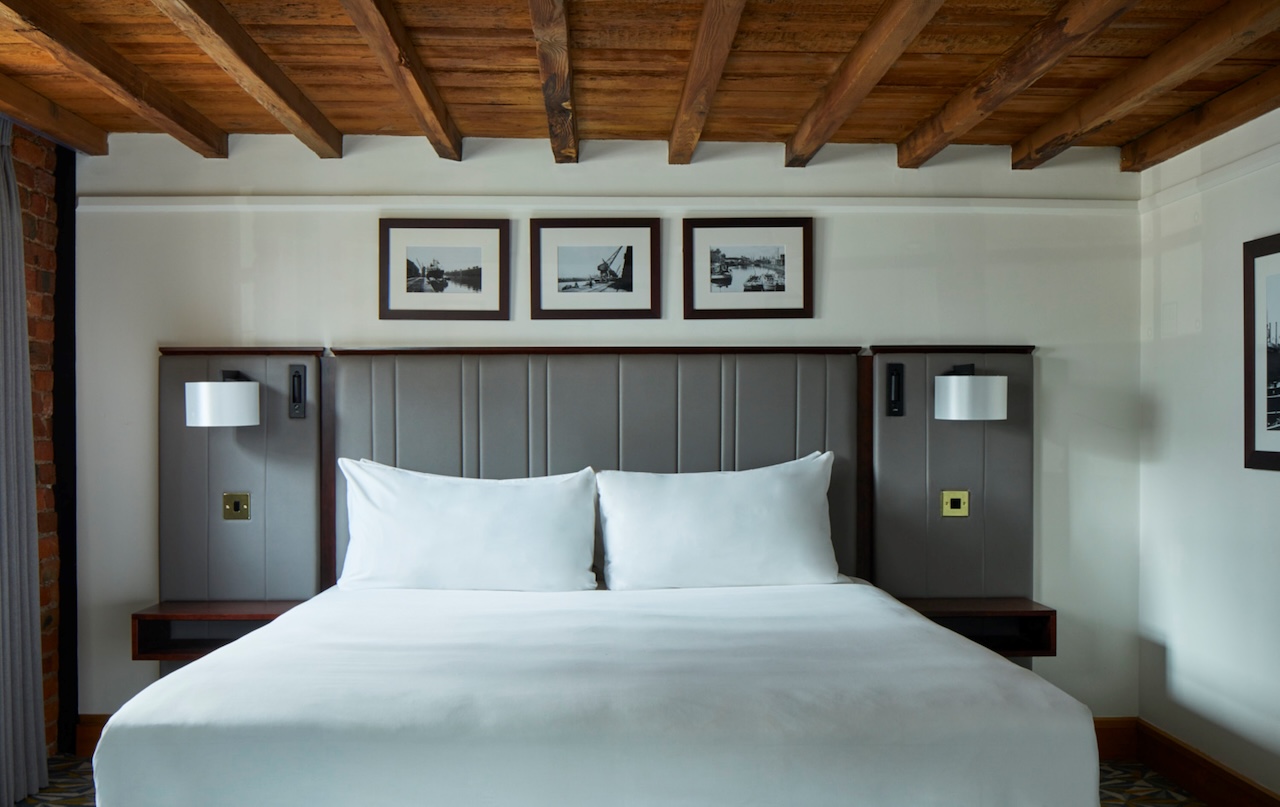
The guestrooms are spacious and relatively restrained, allowing the building itself to provide most of the atmosphere. Exposed brickwork, visible beams and views towards the canal and River Irwell supply the historical character, while the contemporary furniture and fittings are deliberately unobtrusive. It is a sensible balance. The building does not need faux-industrial decoration when it has spent almost two centuries being industrial.

Dining With A View Of The River
The V&A Restaurant follows a similar philosophy. Its light industrial aesthetic nods towards the building’s past without attempting to turn dinner into a heritage attraction, making it feel particularly well suited to international visitors looking for an introduction to Manchester without sacrificing the familiarity of a conventional hotel restaurant.
The food is similarly accessible, drawing on recognisable British dishes and executing them well. A baked Camembert with nduja and rocket made an indulgent opening, followed by steak and chips that delivered exactly what the combination promises. A simple fruit salad provided a suitably uncomplicated finish.
It is not trying to reinvent British cooking. Nor does it need to. After a day spent walking around museums, galleries and concert venues, there is something to be said for food that knows what it is supposed to do.

A Hotel Made For Manchester’s Music & Cultural Life
The real reason to stay here, however, becomes apparent once you leave the building. The People’s History Museum is a few minutes away, the Science and Industry Museum is within walking distance, while the theatres and galleries around Deansgate, Spinningfields and St John’s make the city feel unusually compact. Aviva Studios, one of Manchester’s most ambitious new cultural spaces, is practically on the doorstep.
It makes the V&A an ideal base for experiencing the city’s cultural life, from its major institutions to its grassroots music scene. During our stay, this meant Manchester Psych Fest, a multi-venue festival that effectively turns central Manchester into one sprawling concert hall. One wristband provides access to a constantly shifting circuit of venues, from the Manchester Apollo, a converted Art Deco cinema, to Projekts Skate Park, where bands perform amid ramps and concrete rather than the conventional architecture of a concert hall. Other stops include the Ritz, YES, Gorilla and the Deaf Institute.

It’s an experience that neatly captures Manchester’s particular approach to culture: restless, decentralised and often occupying spaces never originally intended for it. You can leave breakfast in a former cotton warehouse, spend the afternoon in a museum or gallery, then walk across the city between venues before returning to the V&A’s historic walls at the end of the night.
The city’s musical pilgrimage sites extend beyond the festival circuit, too. A short walk from the V&A, Salford Lads Club remains a shrine for Smiths devotees, having been immortalised by Stephen Wright’s famous 1985 photograph of the band outside the building, later used inside The Queen Is Dead. The image helped turn an ordinary youth club into an international piece of music history, and is another example of Manchester’s peculiar ability to turn local places into global cultural landmarks.

Verdict
The Manchester Marriott Victoria & Albert works because its history and its location tell essentially the same story, which makes it more than a convenient four-star hotel. It is a useful base for understanding the peculiar continuity of Manchester: a city that has repeatedly converted the physical remains of its industrial past into the spaces where its next cultural movement can happen.
For a weekend spent exploring Manchester’s museums, theatres and grassroots music scene, the pairing is almost too neat. The V&A gives you the warehouse; the city supplies the culture. And, increasingly, that is Manchester’s most interesting story.
The post Marriott Victoria & Albert, Manchester, Hotel Review appeared first on The Travel Magazine.