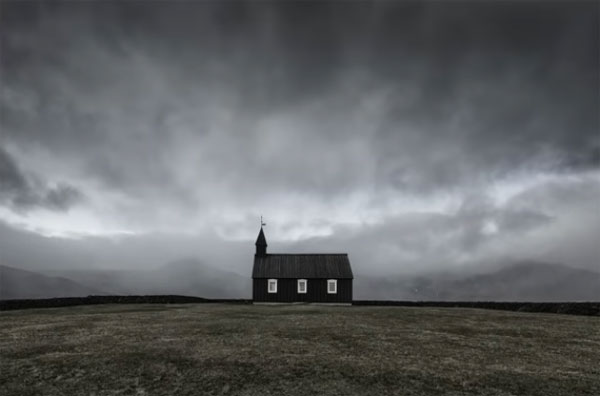
If you’re just getting started in landscape photography there’s plenty to learn for capturing dynamic images. The tutorial below will accelerate the learning curve with a very helpful checklist of the “best practices” to use.
Danish landscape photographer Mads Peter Iversen is a favorite among Shutterbug readers who appreciate his straight-to-the point tutorials and the beautiful images used to illustrate his tips. This episode is one you’ll want to bookmark for future reference.
While primarily intended for beginners, experienced shooters will also pick up some great advice while watching Iversen describe the topics on his list. As he says, “the sooner you start implementing these practices the easier you’ll make it for yourself.” So get started today.
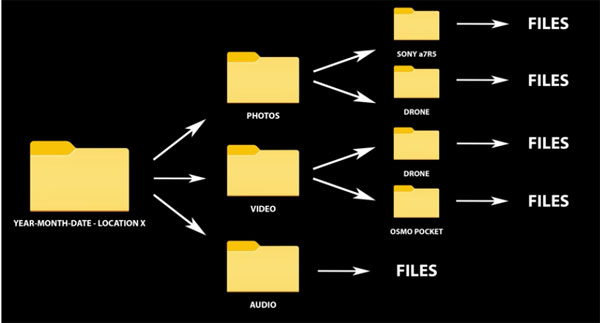
First and foremost according to Iversen is creating an effective file structure on your hard disk. While this task may seem boring, Iversen says, “Trust me: you’ll beat yourself over the head in two or three years if you lack a proper file structure.” He demonstrates his straightforward system, and it’s one you can just copy yourself.
Second on Iversen’s list is another mundane but essential task; namely, safely backing up your files. Here he insists that one copy of your images is insufficient for preventing heartaches, and he recommends having multiple backups in different places. Once again, it’s easy to emulate the method he suggests.
Another of Iversen’s best practices is the importance of configuring your camera in a way that makes sense for your style of shooting. He has a number of great suggestions, beginning with turning off all beeping sounds. Not only can this “noise” be distracting to you, but audible sounds may scare off birds and other wildlife subjects.
The video covers more important ground, including the gear you should invest in first, where to look for inspiration, and learning through constructive critiques. He also provides his take on chasing a unique style and much more.
Do you want to make perfect masks in Lightroom and get the job done in half the time? If so, you’ve come to the right place. The Lightroom hack in the tutorial below is so simple that it only takes five minutes to explain.
Instructor David Johnston is an accomplished landscape pro who regularly posts basic shooting and editing lessons designed to help nature photographers elevate their skills. His goal for this episode is “to show you a one-button click for perfect masks every time.”
If this sounds too good to be true, read on. Johnston begins with an image he captured in a Texas swamp. It’s a beautiful scene but the photo is a bit flat. His goal is to transform the dull shot into something really special using simple masking to selectively bump up contrast, tonal values, and colors in the right places.
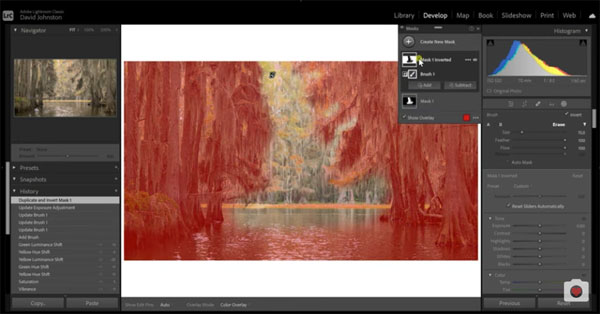
Johnston walks you through the step-by-step process that begins by selecting Lightroom’s Brush icon (you can also bring up the tool by clicking the K on your keyboard). He then describes the various options available, which include modifying the size of a Brush and choosing the appropriate Feathering value for the task at hand.
Lightroom’s Auto Mask option is another key setting, and Johnston explains why he typically leaves it on. In short, “Auto Mask is going to find those different areas as best as possible using Lightroom’s sophisticated AI technology.”
With these and other key settings in place, Johnston begins painting in the background, taking care to avoid “bleed over” on adjacent areas. As he explains, “I’m trying to brighten the background and darken the foreground trees” to make the image stand out.
Now it’s time for the one-click magic to finish the job. Instead of taking the conventional approach by creating a second mask for the foreground, Johnston demonstrates how a single button will duplicate and invert his first mask. In other words, “everywhere it wasn’t brushed in is now automatically brushed in. ”BOOM end of masking!
Johnston also explains how to do a bit of quick and easy cleanup whenever that’s necessary for achieving a perfect result.