The Hong Kong Tourism Board (HKTB) will stage its annual flagship festive event, Hong Kong WinterFest, from 18 November 2026 to 5 January 2027. Larger in scale and richer in content than ever before, this year’s event will, for the first time, extend its signature “Hong Kong Wonderland” programme to three major tourism hotspots – Central, Tsim Sha Tsui and Causeway Bay – each featuring light shows with a different theme. The HKTB is also teaming up with industry partners to roll out 100,000 winter offers across the city to boost festive spending.
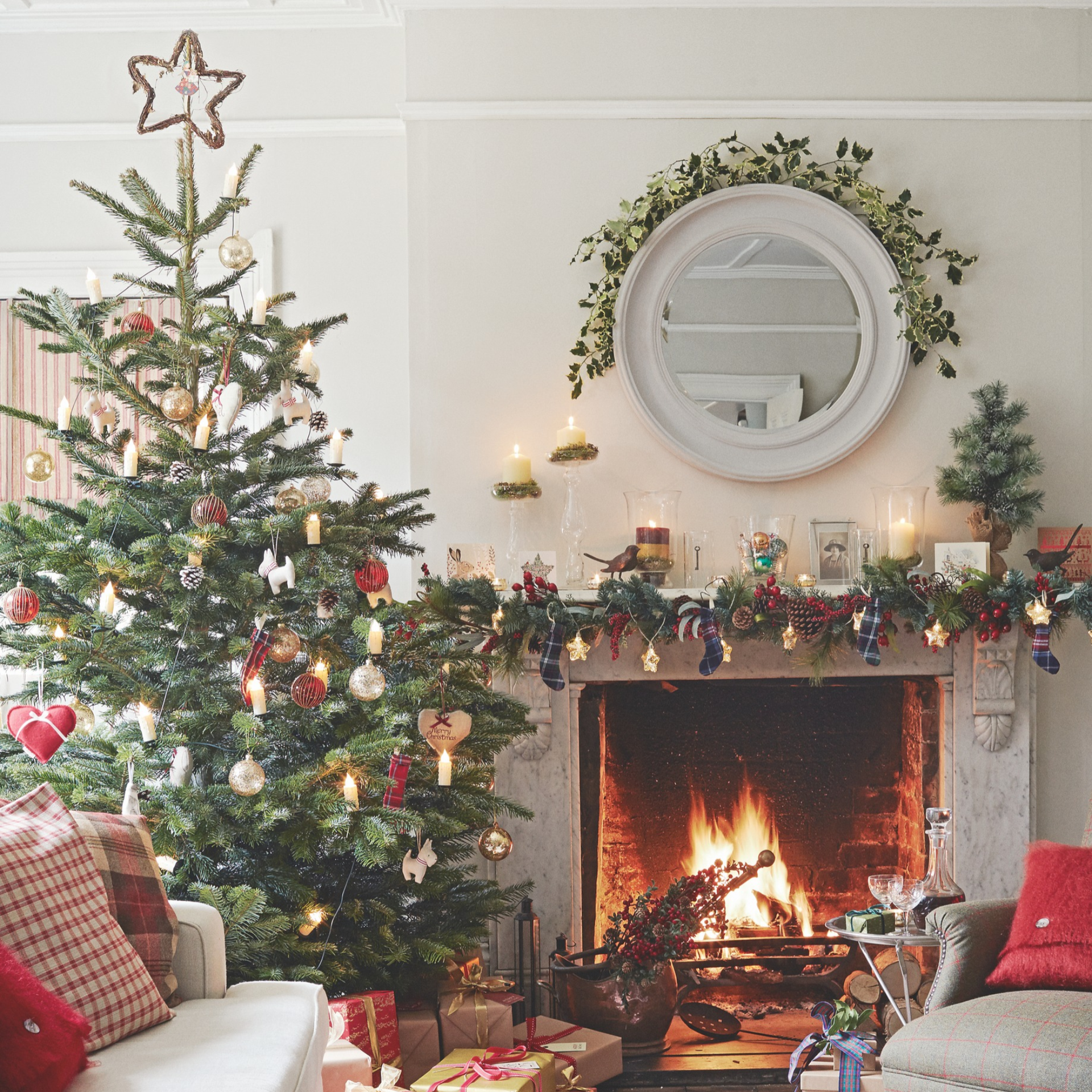
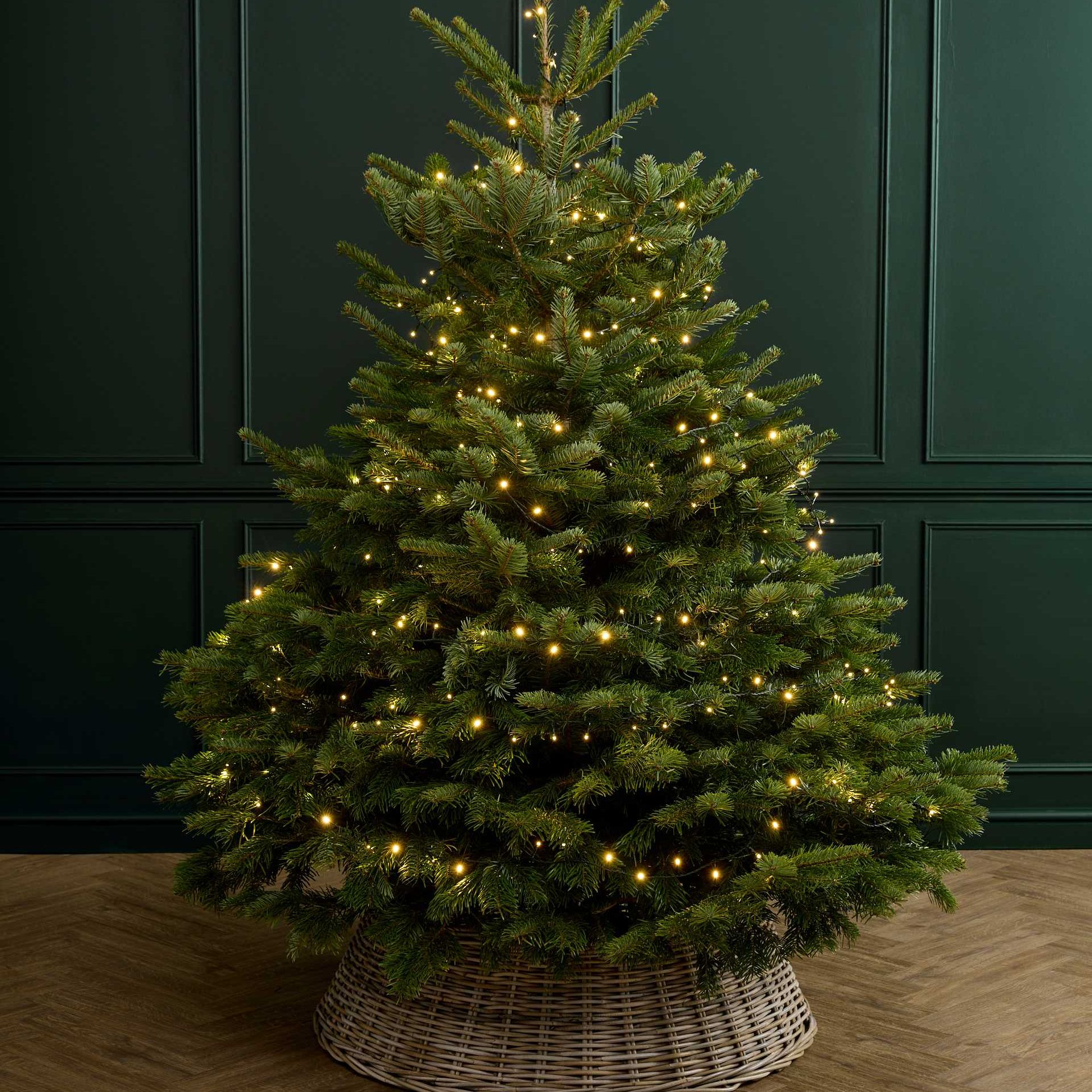
If you’ve been looking for a real Christmas tree for your home this year, Lidl has some affordable options to give your festive decor an authentic look.
Sometimes, even the best artificial Christmas trees aren’t enough to achieve the traditional look of a real tree. In fact, for many of us, heading out to choose our Christmas tree every year is an important tradition.
But if you want to buy a real Christmas tree, yet keep to a budget, a supermarket Christmas tree is a good idea. With Lidl’s real trees landing in stores on Thursday (19 November), here’s everything you need to know.
Medium Nordman Fir Cut Christmas Tree
Large Nordman Fir Cut Christmas Tree
Alongside Lidl’s artificial Christmas tree special buys, the supermarket is also offering two different-sized real trees. Choose between medium (£16.99) and large (£26.99) varieties of the Nordman Fir Cut Christmas Tree.
Lidl states the trees have been freshly cut to ensure they will last the festive season; however, if you’re feeling unsure about buying a tree from a supermarket, there are tips for buying a supermarket tree to ensure yours stays fresh and healthy. You should look out for browning needles and perform a freshness test. For this, you should feel the needles on the tree: they should be bright green and flexible and stay firmly attached to the branch when touched. You must avoid dry or brittle needles.
My main qualm about Lidl’s real trees is that there is no information on exactly how large the two sizes are. They’re simply listed as medium or large. I assume this is because you can’t control the size of a real tree; however, it means you will have to go into the store to assess which size is best suited to your home. However, considering the medium tree is £16.99, compared to the large tree standing at £26.99, I do expect there to be a significant height difference.
(Image credit: Future PLC/ Brent Darby)
Lidl isn’t the only supermarket you should check to find a real tree. M&S has a wonderful range of festive plants, including real Christmas trees. Their Real Full Size Christmas Tree with Lights is a pricey £150, but stands between 210 and 24cm tall and has both twinkling lights and a stylish tree skirt included.
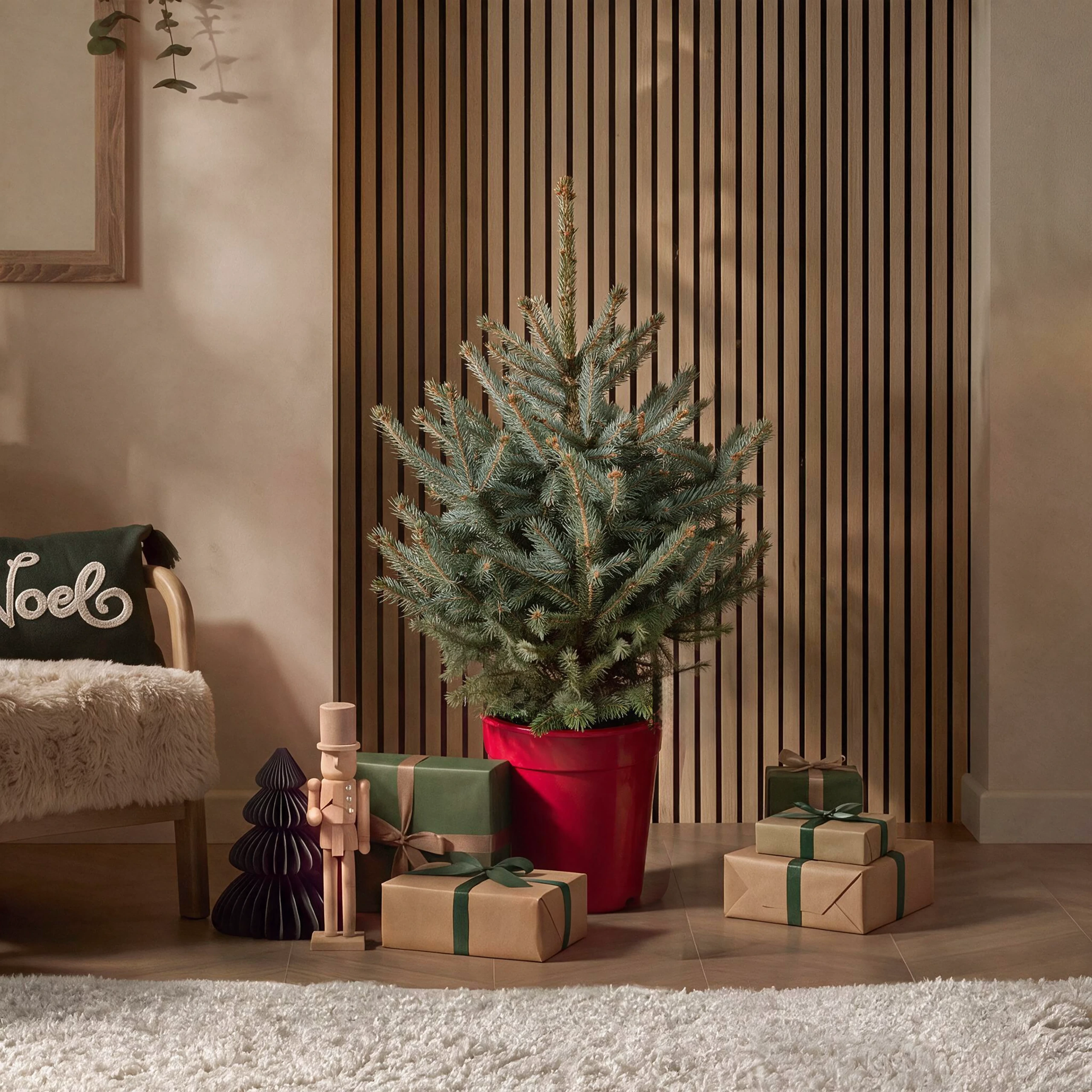
If you’re on a tighter budget, shops such as Tesco and Sainsbury’s also offer great deals on their trees. B&Q is another great place to look for real trees, and you can shop both in-store and online, making the process easier. Here you can even pick up pot-grown trees (like this Nordmann Fir, £59.99), which can be reused next Christmas, too.
Alternatively, here are a few more styles you can shop online.
Carbeth Plants
Nordmann Fir Pot Grown Christmas Tree
Flower Market
Real Full Size Christmas Tree With Lights
B&Q
90-100cm Blue Spruce Real Pot Grown Christmas Tree
Real Christmas trees look beautiful, and are perfect if you want a traditonal festive look. Lidl is proving to be one of the best places to find them on a budget, as long as you remember to check their quality in store first.
Over the past few years, wellness has become something that most of us are striving for in life. The rise of self-care rituals has encouraged us to pay more attention to how our home decor ideas make us feel, as well as how they look.
This is what sensory design is all about. It’s an approach to interiors that looks beyond appearance and aesthetics, asking us to tune in to how we feel to create a space that responds directly to our sensory needs.
‘We are a nation that has been programmed to like something based on how it looks,’ explains Pippa Jameson, interior stylist, author and founder of The Sensory Home. ‘But, how we respond to something actually varies massively from person to person.’
(Image credit: QVCUK x The Sensory Home / Jon Day)
‘My subconscious experience with interiors has always been influenced by how much our environment can affect mood, productivity and behaviour,’ explains Pippa. But this understanding deepened following her experiences with neurodivergency.
While conversations around sensory-led design often focus on neurodiverse people, Pippa ultimately believes it’s something we can all benefit from. ‘Sensory design is relevant for individuals with sensory sensitivity, but it’s also important to bring it into the mainstream.’
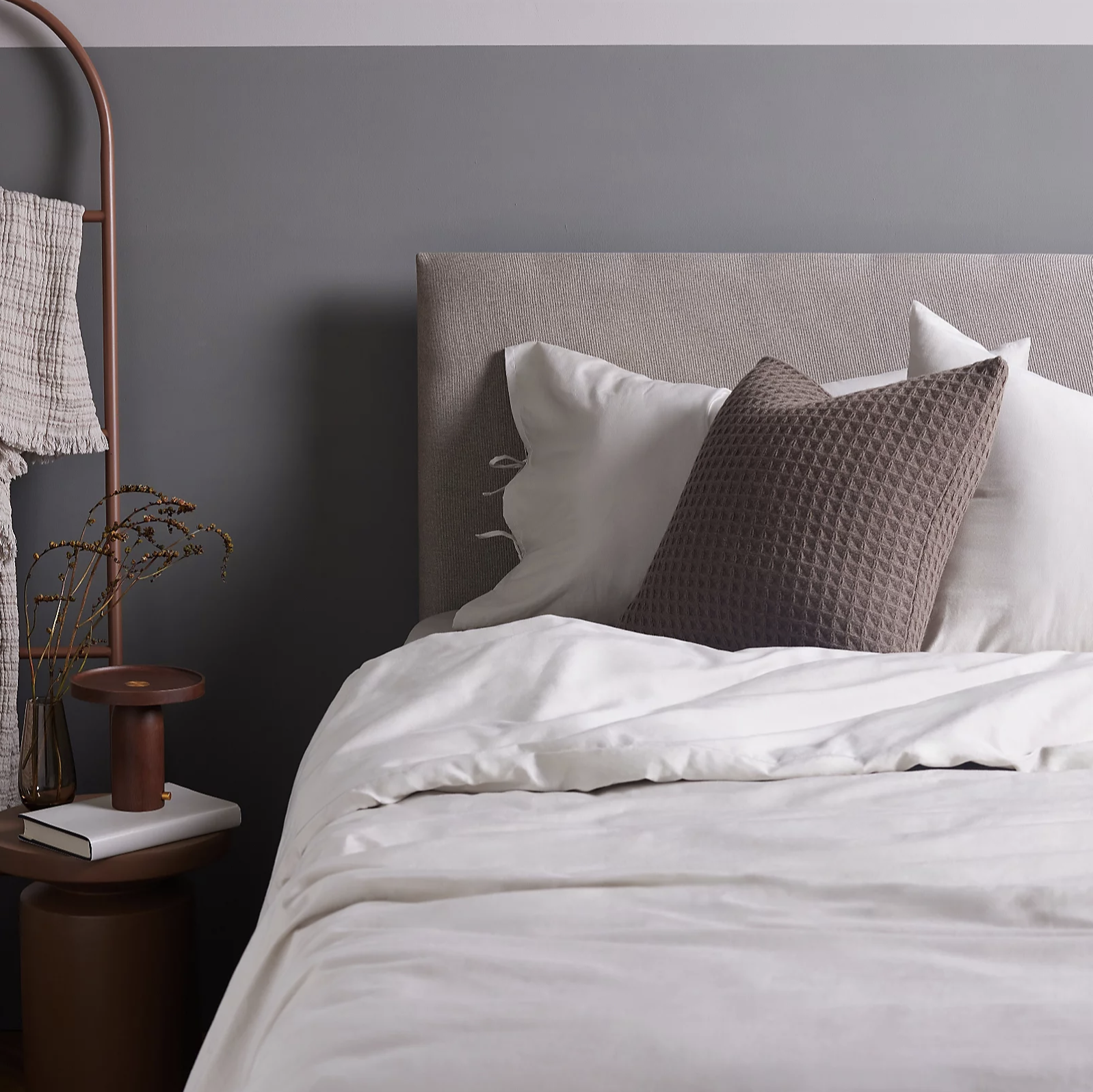
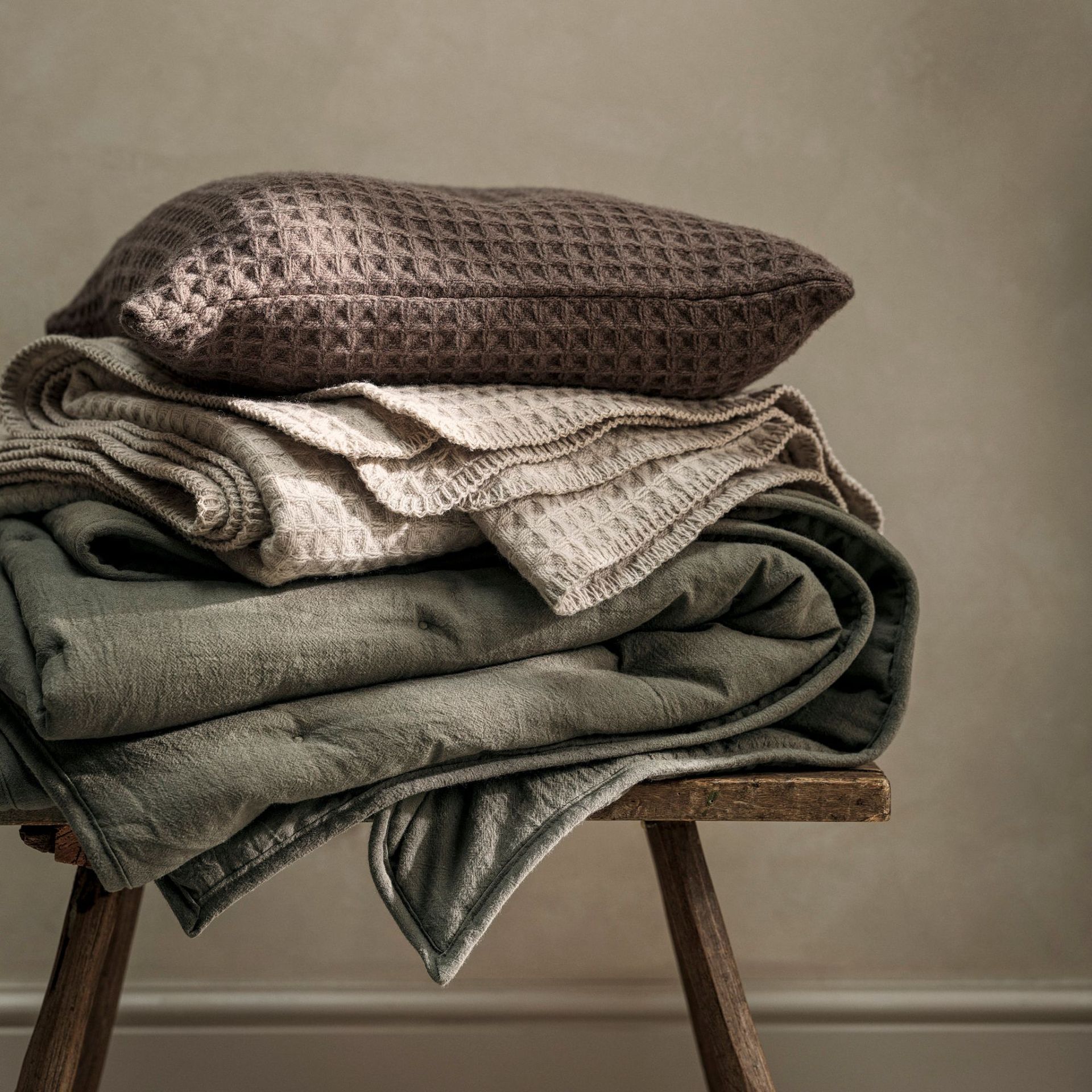
Her collection with QVC does exactly that. ‘It’s affordable pieces for everyday living, with a sensory-led approach,’ explains Pippa. The 10-piece collection is made with a focus on natural materials, tactile design, and muted colours. From bedding and throws to cushions and storage solutions, it’s a range that can seamlessly slot into any existing scheme, while providing strong sensory benefits.
Here are some of the stand-out pieces that will help you create a space that really works for you.
Bedding
Everyone knows that a good night’s sleep is vital for our wellbeing, so it’s no surprise that this collection features a lot of bedding.
(Image credit: QVCUK x The Sensory Home / Jon Day)
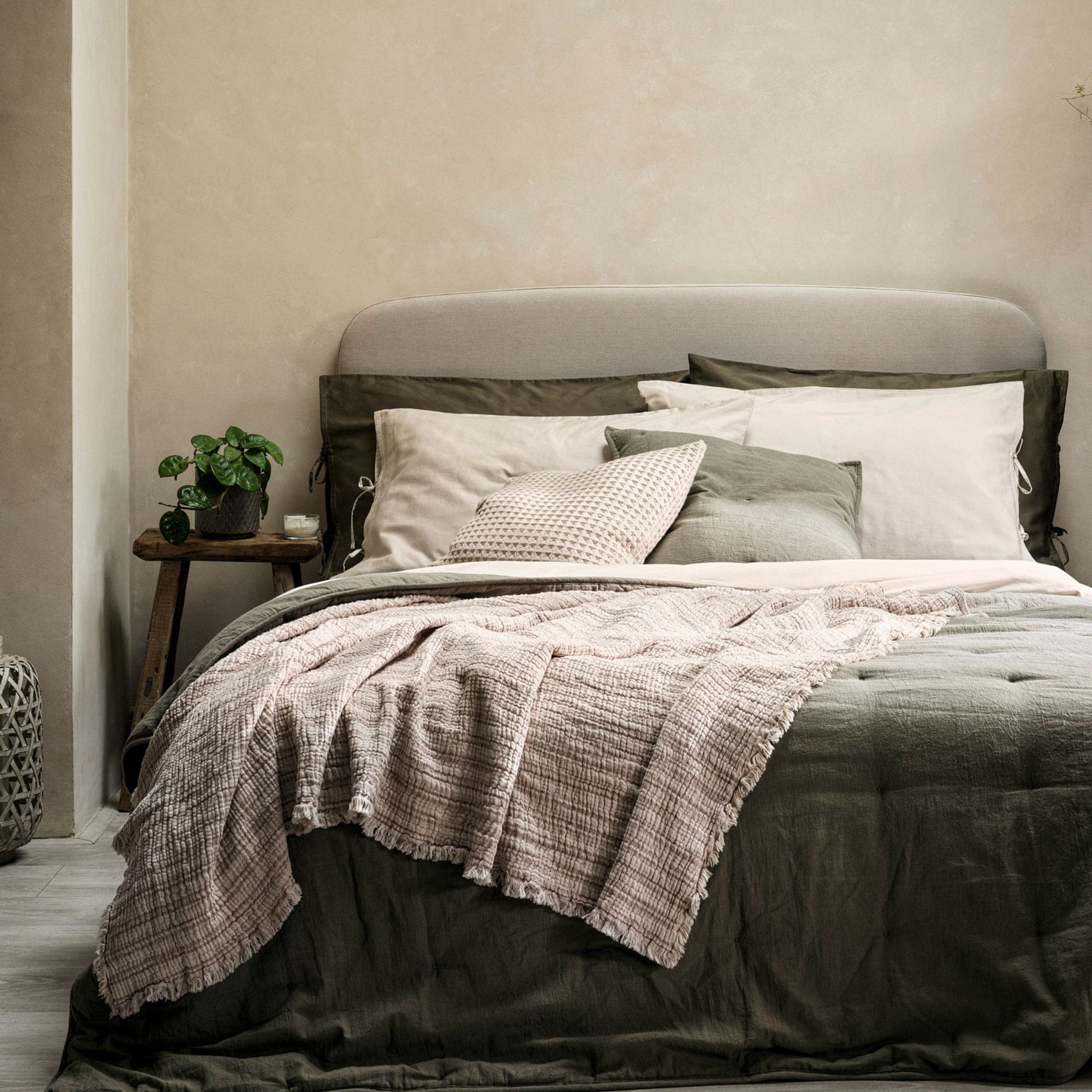
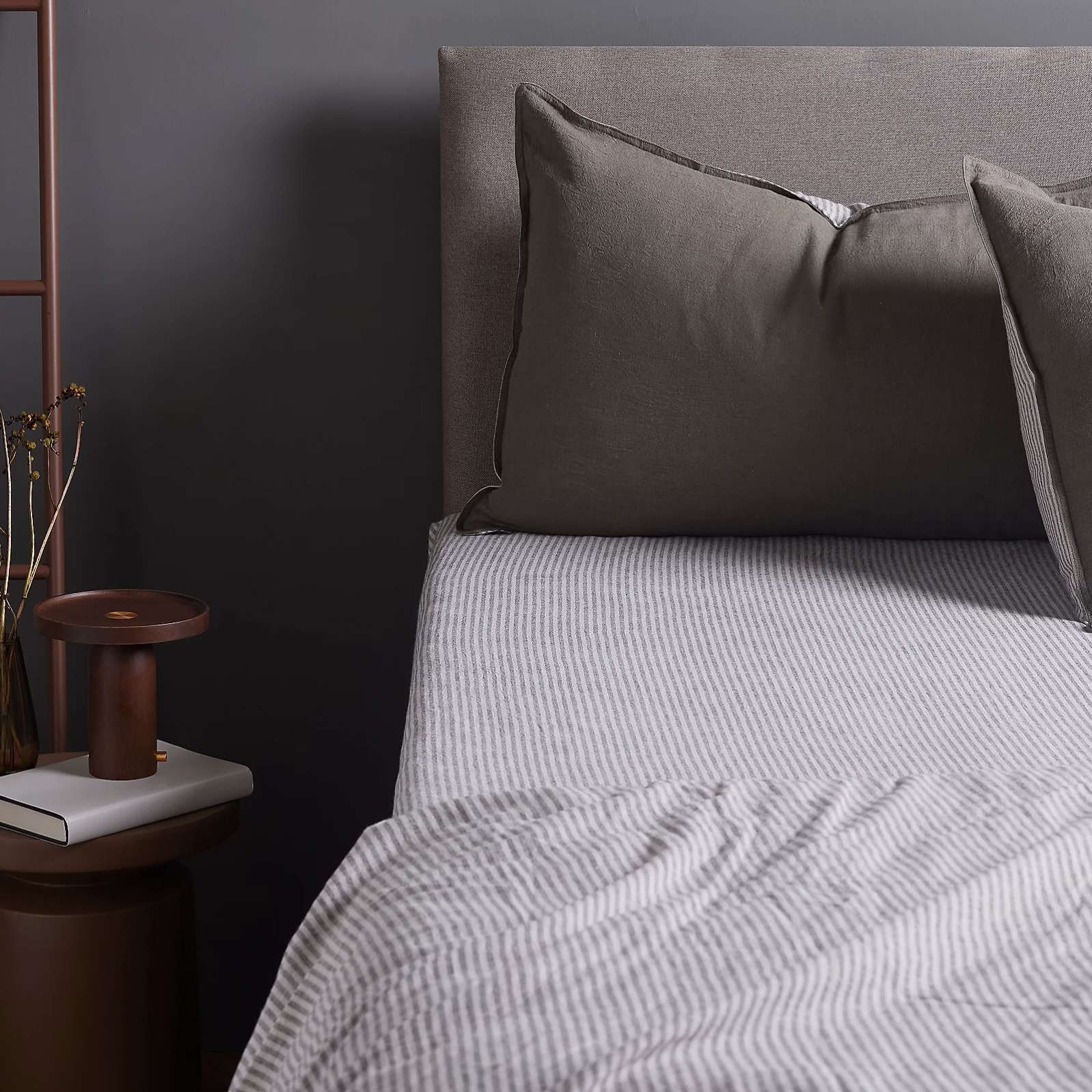
The best bedding should instantly elevate your sleep space, but it should also provide a comforting retreat at the end of the day. With four different sets to choose from, there is something for everyone in this collection. ‘We often buy bedding for how it looks, without thinking about the functionality and properties that help you with the switch from day to night,’ explains Pippa. ‘Because of this, texture and materiality is an unsung hero when it comes to routines, rituals, and sleep.’
With a focus on natural materials, the bedding sets have been designed with comfort and breathability in mind. There is no one-size-fits-all, but the use of cotton, wool and linen can aid individual sleep experiences.
QVC
The Sensory Home Organic Washed Cotton Bedding Set
QVC
The Sensory Home Linen Cotton Blend Fitted Sheet
‘There is a place for synthetic fabric, but most of the time, they just don’t carry those breathable properties,’ explains Pippa. ‘Some of us might overheat, some of us get really cold, but the natural materials used have that ability to let you breathe, but also trap heat as well,’ she adds.
Blankets
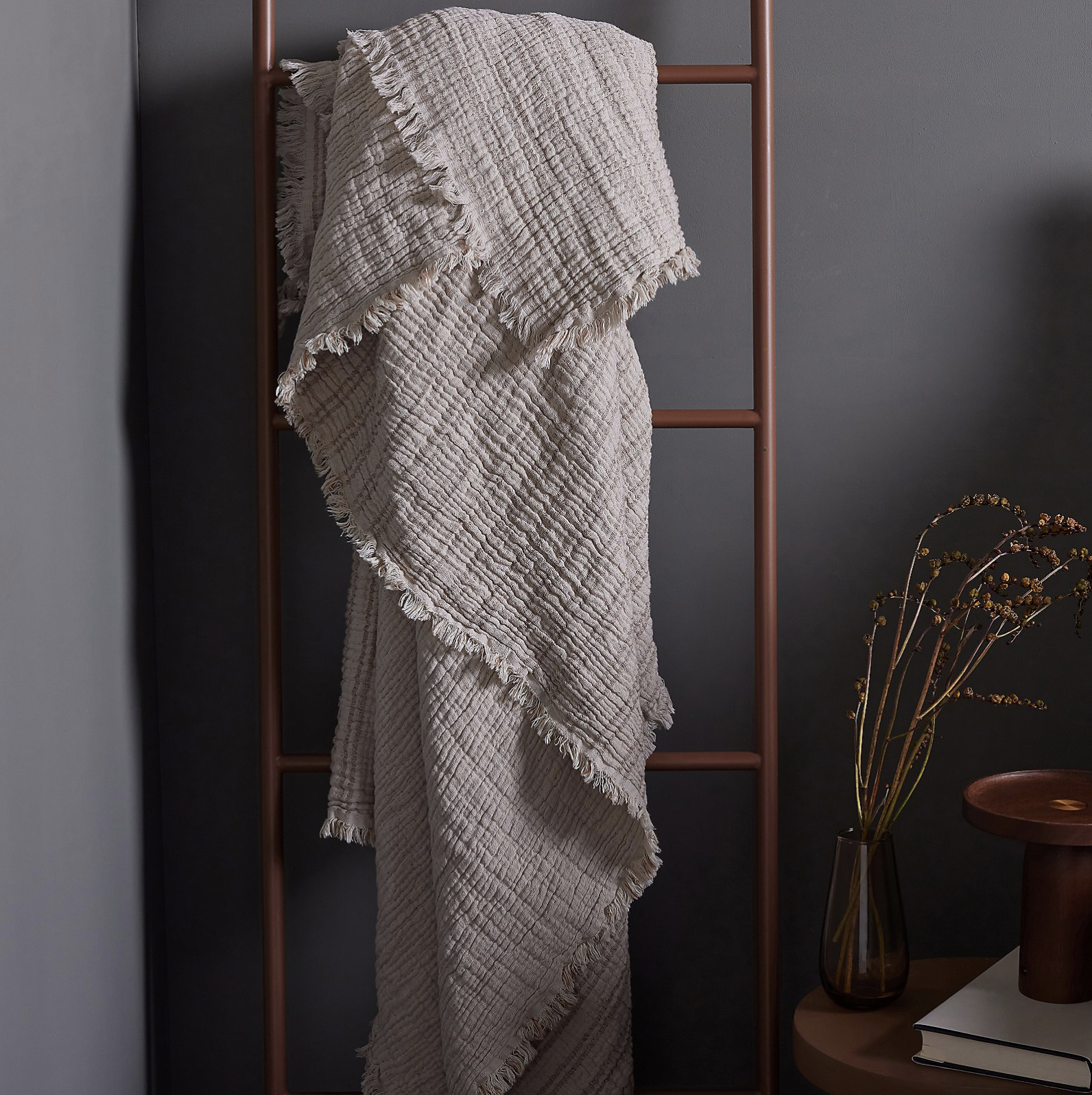
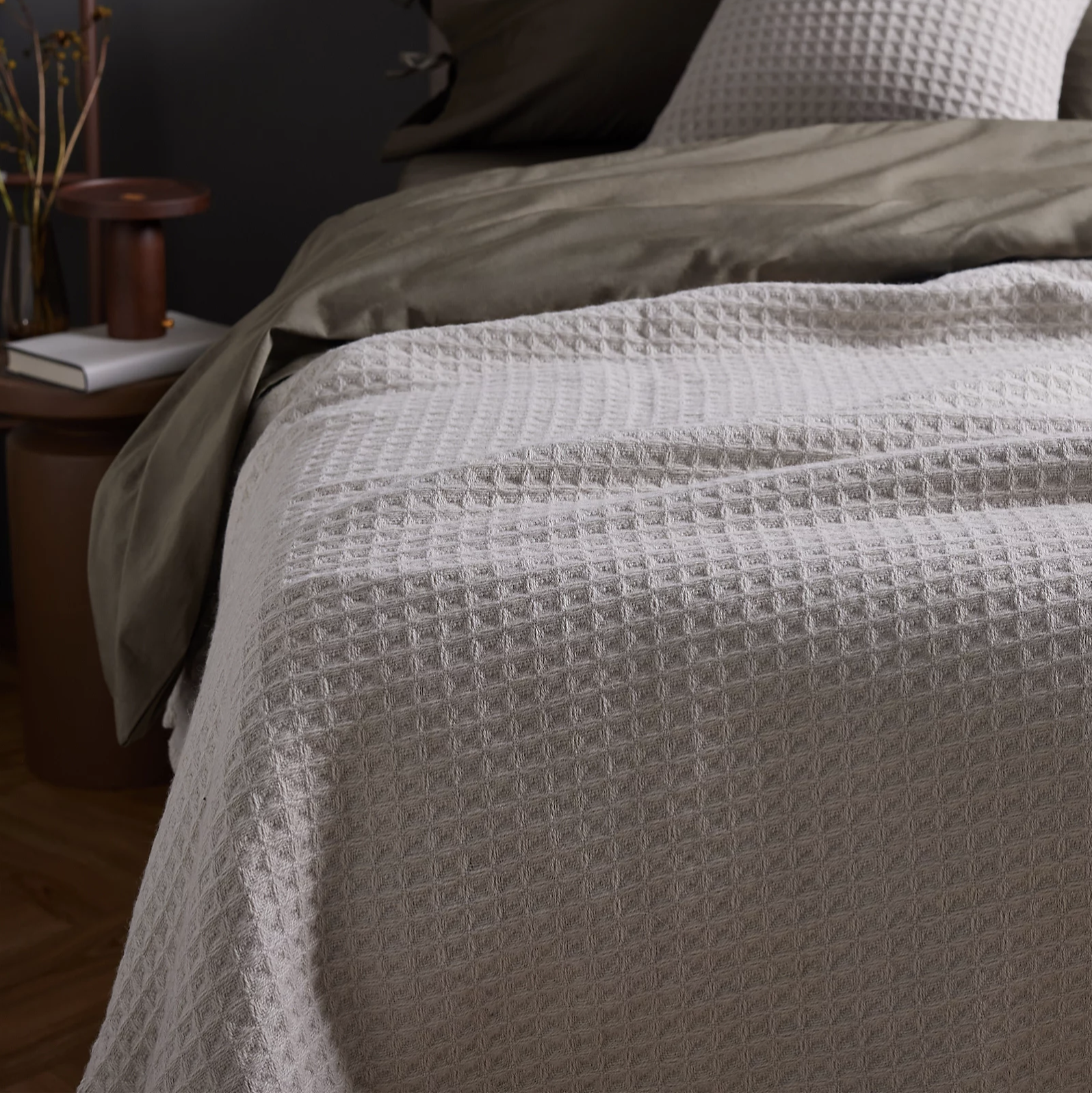
Alongside the bedding, there is an array of tactile blankets and throws to choose from. ‘Materiality and touch was the starting point for this collection, so I was constantly asking: “how does it feel?”’ explains Pippa. ‘Based on that, the muslin throw has become a multi-functional hero product.’
Made from triple layers of muslin, it has a soft and foamy feel that creates a sense of comfort, with a frayed edge for added texture. Whether you use it as the finishing touch to dress your bed, or layer it on the sofa in a relaxing living room, it’s guaranteed to provide a comforting sensation.
(Image credit: QVCUK x The Sensory Home / Jon Day)
The collection also features a bamboo weighted blanket, designed to create a gentle pressure for those who use it. ‘I do some work with individuals that benefit from a cocooning, grounding feeling during sleep,’ says Pippa, ‘and there’s real evidence that gentle weight can actually make you feel more relaxed.’
While the inspiration for this blanket links to sleep aides, it can also provide comfort in day-to-day life. ‘Having one downstairs in the living room can work well too,’ suggests Pippa. ‘It’s a really nice way to let the body decompress at the end of a really busy day.’
QVC
The Sensory Home 100% Cotton Striped Muslin Throw
QVC
The Sensory Home 100% Wool Throw
Storage solutions
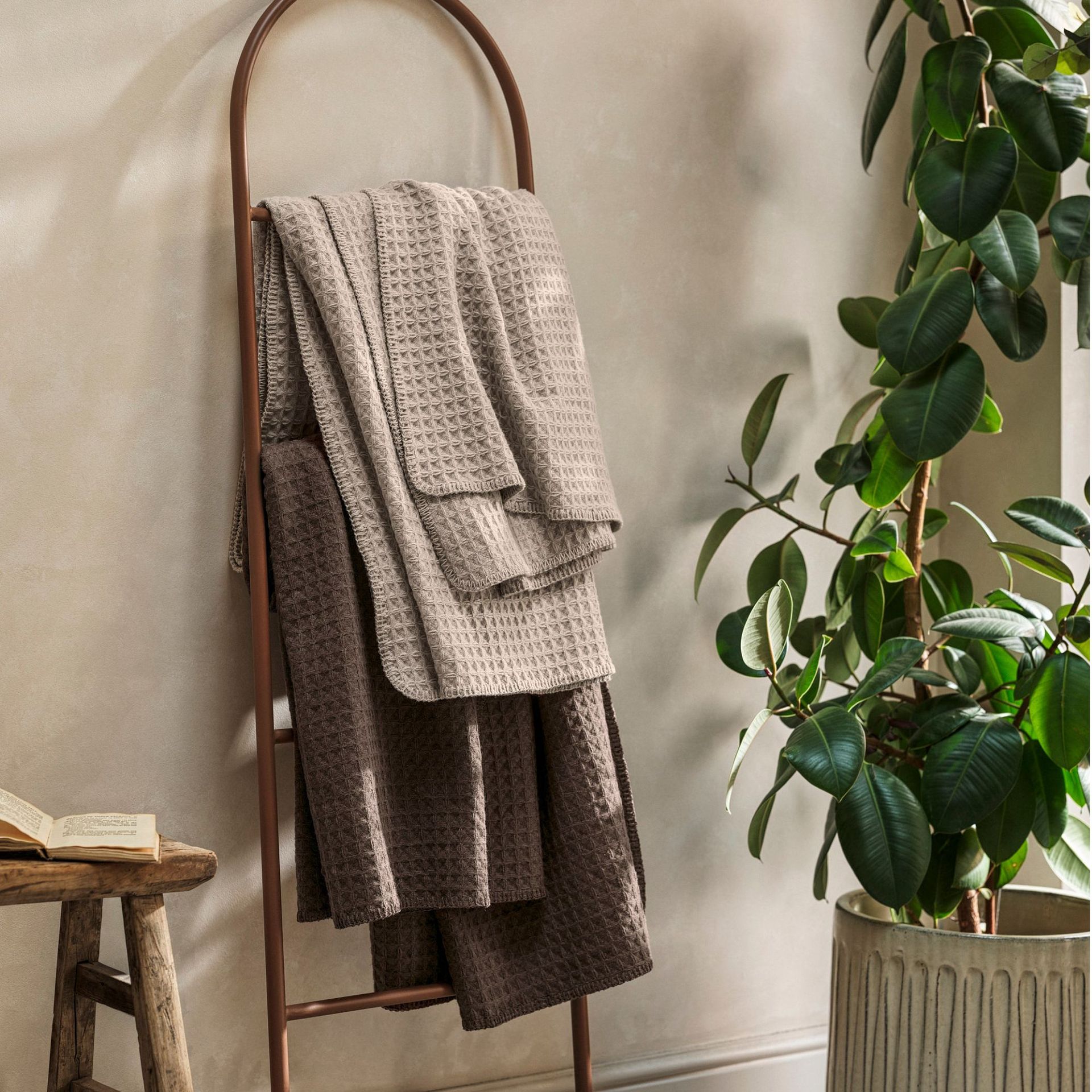
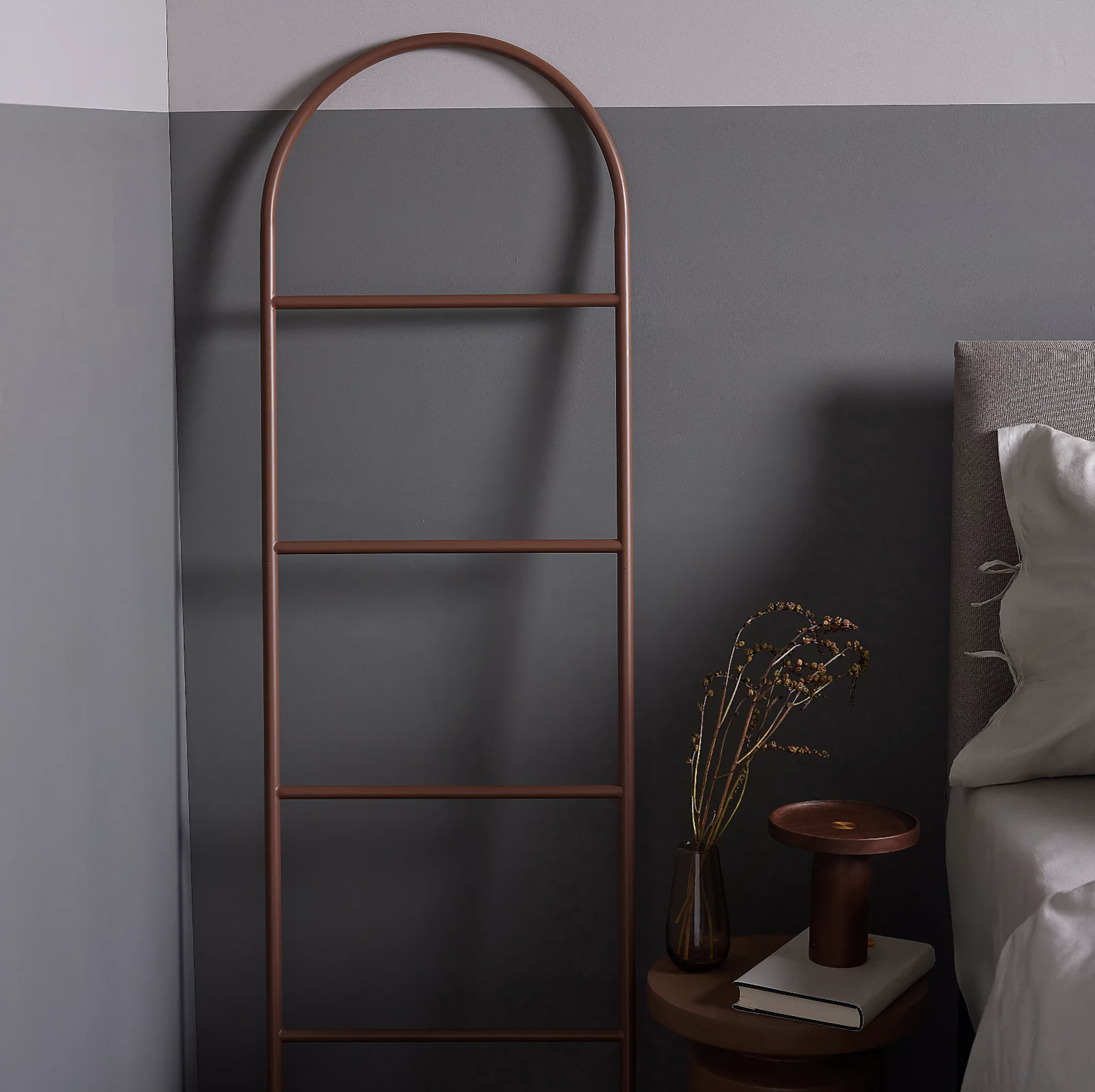
While the majority of the collection focuses on soft textures, it’s important not to forget the benefits that decluttering can have on our mood and sensory experience. That’s why Pippa chose to include a stylish storage ladder within the QVC collection.
‘When my children were younger, there was a lot of mess and overwhelm in the bedroom which became a trigger and stress point,’ recalls Pippa. ‘I found it helpful to quickly pick stuff up off the floor and place it onto a hook or a ladder.’
‘It provides a quick fix when you’re exhausted, and creates a kind of visual clearance,’ she explains. ‘But it also looks lovely, so it combines beauty and functionality.’
QVC
The Sensory Home Storage Ladder
It’s this exact combination that makes the collection work so well. The classic palette can work effortlessly within your home, while the textures and materials add the calming element that can help to settle our senses and create an at-home sanctuary.
This collection feels like a natural next step for both QVC and The Sensory Home. While The Sensory Home has already released a book and a paint collection with Graham & Brown to make sensory design accessible, QVC has established itself as a retailer that advocates for wellness.
‘QVC has got such a huge investment in wellbeing now, and they have loyal customers who really care about their environment and how they feel,’ says Pippa. ‘It was like a perfect marriage.’
The Sensory Home x QVC sensory homeware collection is available to shop now.
If you enjoyed reading this, sign up for the Ideal Home newsletter for all the latest home decor trends and inspiration delivered straight to your inbox
Who doesn’t love a little home organisation? Molly Mae’s colour-coordinated wardrobe is just the right amount of neat and tidy to calm the mind – and this is how you can do it too.
Molly Mae is famous for her neutral and organised style, and her example of how to organise a wardrobe is a brilliant motivator for anyone who has lost control of this space.
Whether you’re organising a small wardrobe or a grand walk-in model, Molly Mae’s colour-coordinating method ensures your garments are easy to find and organise – perfect for those mornings when you are in a rush. Here’s how to get the look.
This is not the first time Molly Mae’s organisational skills have impressed me. Her beautifully organised kitchen pantry is any minimalist’s dream; meanwhile, her recent guest bedroom transformation shows she is a master of the luxury hotel look. So, it makes perfect sense that her wardrobe is just as beautifully organised and luxurious-looking.
From her Instagram post on her home Instagram account, @mollymaison, it’s clear Molly has opted to organise her clothes by colour, creating a dreamy transition from light to dark.
(Image credit: Future PLC/Georgia Burns)
‘Outside of just being aesthetically pleasing, it makes finding things much easier. You know exactly which black jumper you want to wear… You know exactly where to find it. It also makes it much easier to spot what you’ve already got and what you might need more of. If you’ve got eight almost identical beige jumpers hanging together, you’re probably going to think twice before buying another one,’ comments Liam Witham, CEO and organising expert at PSS International Removals.
‘It’s obviously not a necessity, and it’s not worth obsessing over making your wardrobe look the same as hers, but I’d absolutely recommend borrowing some of the principles behind Molly-Mae’s wardrobe. If you organise your clothes around how you actually use them, e.g. putting your work trousers that you wear every morning where they’re easiest to reach etc., it just makes getting dressed and finding things easier. I’d start with grouping clothes according to type and how often you wear them, then organise each group by colour.’
How to get the look
Now we don’t expect you to completely colour-coordinate like Molly Mae (unless you want to, of course), but there are a few pointers you can take away and apply to your own home.
(Image credit: Future PLC/Tim Young)
‘Molly’s Mae’s setup really is wardrobe goals, and I’d like a fraction of the organisation she has in my own! Of course, the average person doesn’t have this kind of space to recreate this perfectly at home, but using the right hangers is the first step,’ says Lauren Bradbury, Ideal Home’s Cleaning Editor and in-house decluttering expert.
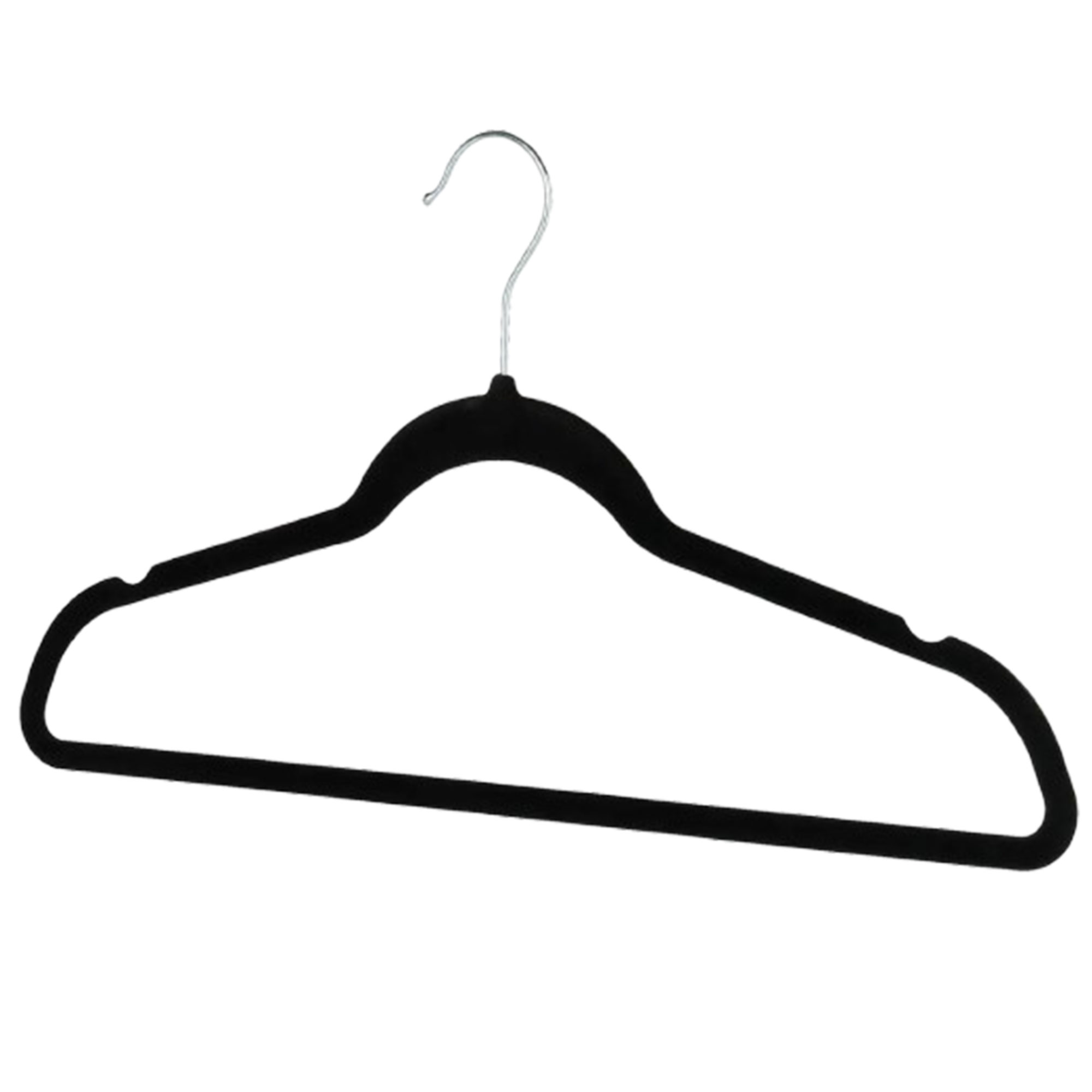
‘This means using specific trouser hangers for your trousers, and suit hangers for your top halves. It looks like Molly Mae has used wooden hangers – which typically aren’t favourable in smaller wardrobes with limited space – so I’d suggest using smaller velvet hangers like these Argos Home Set of 30 Velvet Flocked Hangers.
‘The key here is to use the same hangers throughout (no, don’t go mixing velvet hangers with plastic and wooden ones), as this will ensure proper spacing and provide a seamless, streamlined look. If you want to go down the colour-coded route as she has, that doesn’t require any extra products… just a lot of patience!’
Organise your wardrobe
Argos Home
Argos Home Set of 30 Velvet Flocked Hangers
Lauren recommends using flocked hangers in smaller wardrobes.
Living and Home
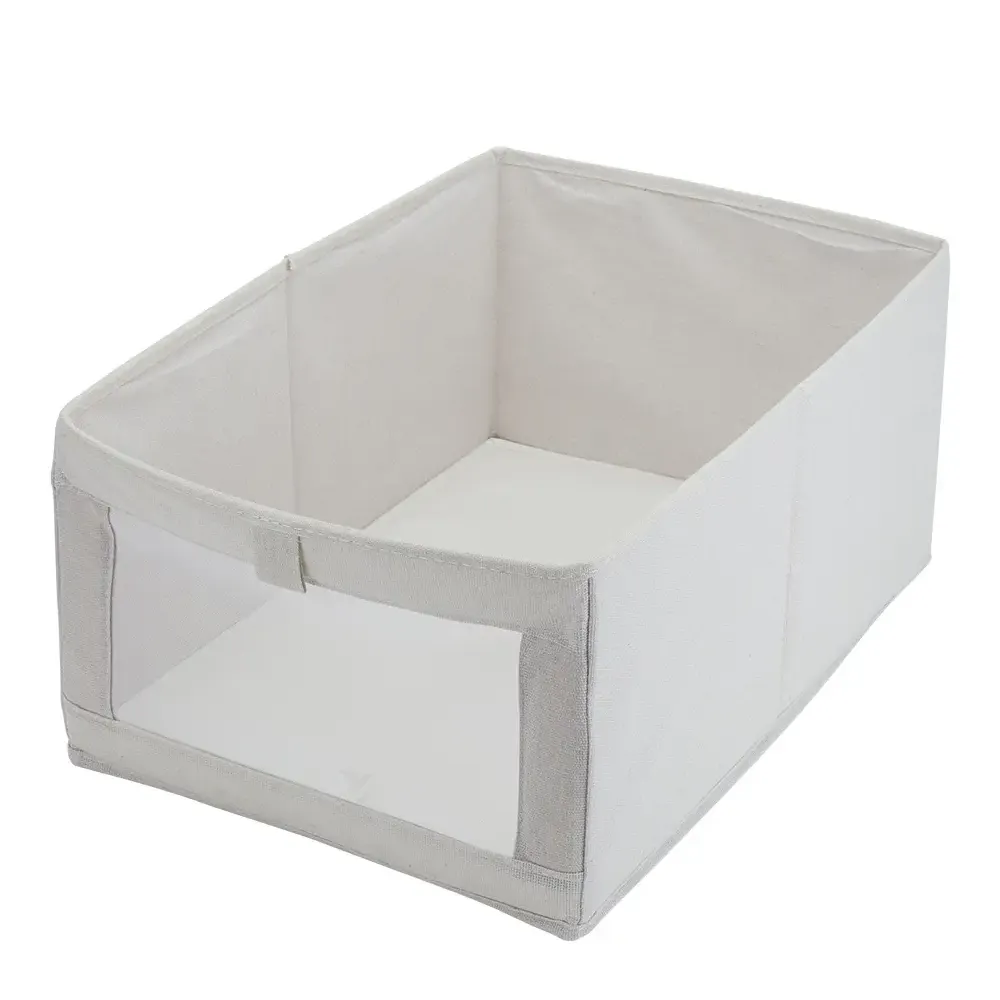
Foldable Fabric Clothes Jeans Storage Box
These neutral baskets are perfect for holding your jeans and trousers.
TidyIsles
Tidyisles Wardrobe Storage Organiser
This storage organiser is great for making the most out of the empty space at the bottom of your wardrobe.
I feel both jealous and inspired by Molly Mae’s organised wardrobe, ready to try her colour-coordinating method for myself. How about you?