Raffles Grand Hotel d’Angkor, the luxury hotel on the doorstep of ancient Khmer archaeological sites, will host a special four-hands dinner on Oct. 16, uniting the talents of the hotel’s Executive Sous Chef Dorn Doeurt and guest Chef Seng Sothea.
The two chefs are both proudly rooted in the cultural heart of Siem Reap and are coming together to celebrate the rich gastronomic heritage of Cambodia through their exceptional craftsmanship and artistry.
Language is often a barrier to travel to exotic places, frustrating when you cannot understand people and downright annoying when you miss announcements at stations and airports. Timekettle’s LiveTalk AI Translation Earbuds use artificial intelligence to turn conversations between different languages into something approaching natural dialogue. Slip them into your ears, connect them to your phone and let the software do the linguistic heavy lifting.
Design
Timekettle LiveTalk AI Translation Earbuds
The first thing to appreciate about LiveTalk is that these aren’t conventional in-ear headphones. Each weighs approximately 6.9 grams and uses an open-ear, ear-hook design, sitting outside the ear canal rather than being pushed into it. This should appeal to anyone who finds traditional earbuds uncomfortable over long periods.
The open-ear arrangement has another advantage for travellers. You can remain aware of traffic, station announcements and the general hubbub of daily life while listening to translated speech. The compromise is that open-ear headphones generally provide less isolation from surrounding noise than sealed earbuds.
Four Ways to Communicate
LiveTalk’s principal attraction is its versatility. Powered by Timekettle’s Babel OS 3.0 translation system, it offers four modes intended to cover everything from a quick conversation with a taxi driver to an international business meeting.
Face-to-face mode is the obvious choice for travel. Imagine checking into a small hotel where the receptionist speaks little English. You select the relevant languages in the app and speak normally, with translated speech delivered through the earbuds. The idea is to avoid constantly passing a phone back and forth, making the exchange feel more personal.
Live listening mode is designed for lectures, guided tours, presentations and conferences. Rather than interrupting a speaker to ask for clarification, you can listen to translated speech through your earbuds while following the original presentation.
Voice-call translation extends the technology to remote conversations, including international calls. The person at the other end doesn’t need to own a pair of Timekettle earbuds, which makes the feature more practical for communicating with hotels, tour operators or overseas colleagues.
Finally, multimedia translation offers translated subtitles for videos, podcasts and other supported content. This broadens the device’s appeal beyond travel, potentially helping students and professionals follow foreign-language material.
Translation
Timekettle LiveTalk AI Translation Earbuds
Timekettle claims support for 54 languages and 108 accents, with 25 offline language pairs. That is an impressive range for a travel accessory, although language coverage isn’t the same as guaranteed fluency. AI translation works best when speech is reasonably clear and the conversation follows a predictable pattern. Asking for directions, ordering a meal or discussing a hotel booking is relatively straightforward. A fast-speaking local guide using regional expressions, however, presents a much harder challenge.
Idioms, humour, slang and culturally specific references can also trip up automated systems. A translation may sound convincing while subtly changing the meaning, which is why users should remain alert to errors. For everyday travel, the most realistic expectation is that LiveTalk can make communication easier rather than eliminate every misunderstanding.
Timekettle advertises up to 35 hours of total battery life, including the charging case, and says a ten-minute quick charge can provide around two and a half hours of use. These figures are attractive for travellers who spend long days away from their accommodation.
The inclusion of music playback makes LiveTalk more versatile than a dedicated translation gadget. Six pre-set equaliser settings allow users to adjust the sound, while a dedicated translation setting is intended to emphasise speech intelligibility.
Verdict: A Useful Travel Companion
Timekettle LiveTalk AI Translation Earbuds offer an intriguing glimpse of how artificial intelligence might change the way we travel. Their open-ear design, broad language support, offline options and four translation modes make them an appealing proposition for frequent travellers.
Timekettle LiveTalk AI Translation Earbuds cost £129, with support for 54 languages, 108 accents and 25 offline language pairs. The Free plan includes 200 minutes of translation, with additional Pro and Unlimited subscription options available.
My failure to get a flight to Edinburgh for a meeting meant I had to look for other alternatives. The Caledonian Sleeper was ideal as it arrived in the city at 07:30 which gave me time to explore the city before my meeting at midday. Making the booking was easy, and I selected a classic room with bunk beds rather than the seated coach. I had already checked that my hotel, Meininger, would store my luggage for me.
View of Edinburgh Castle from Princes Street in Edinburgh
I was booked in Club Class which included the lounge on Platform 1 at Euston Station I time my journey into London to arrive at Euston Station when the lounge opened at 20:45. The information I received with confirmation of my booking advised me to arrive early as the lounge can sometimes get full and entry would be refused if that happened. I was one of the first people to arrive in the lounge and was soon tucking into some delicious cakes with a cup of tea (all complimentary). The lounge also offer a menu of snacks and alcoholic drinks (charges apply).
The Dining Car on the Caledonian Sleeper
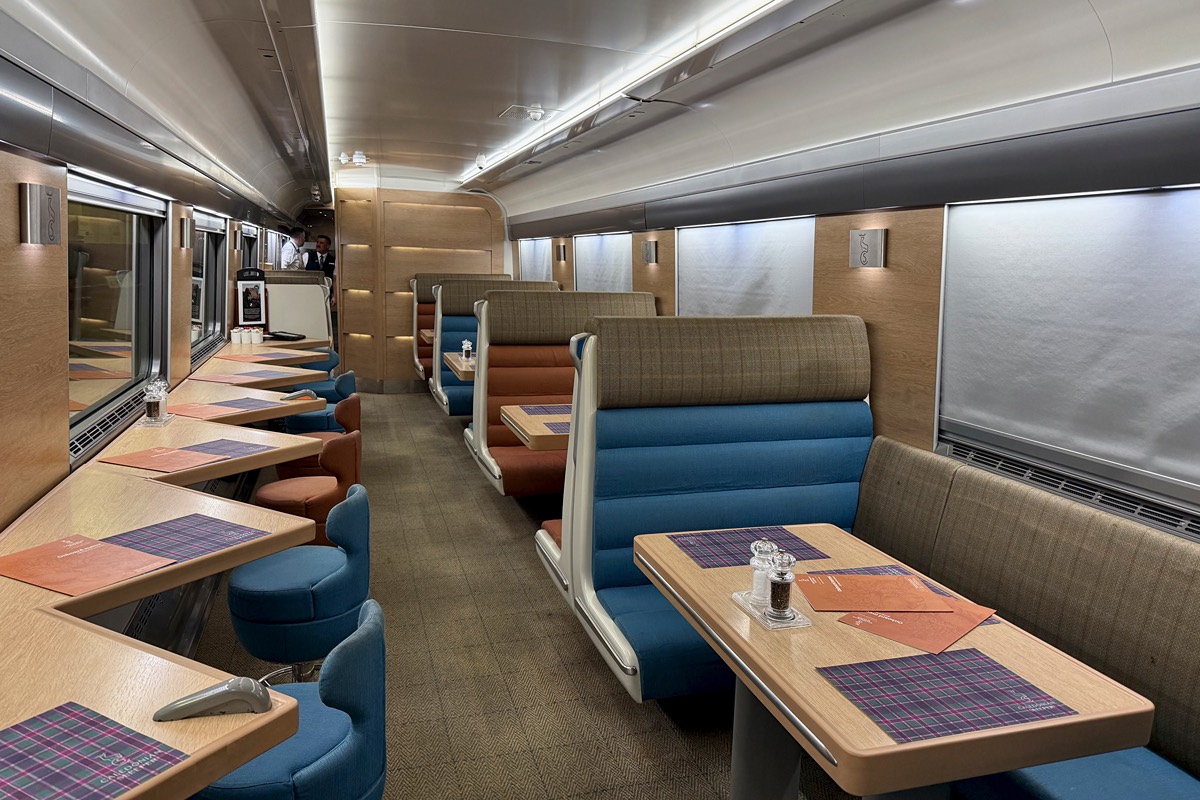
My pre-trip information also suggested a quick visit to the dining car for dinner (included). Just before boarding time, I had a wander along the platform to work out where my cabin was in relation to the dining car – as far as it could be. I pointed this out to a member of staff and asked if the best solution was to put my luggage in my cabin and then walk along the platform to the dining car. There was at least an hour between boarding the train and setting off. He agreed that was the most sensible solution and reminded me to fill in the breakfast … and take it with me to the dining car.
I then took up my position on the platform opposite my carriage and waited for the green light to start flashing. I was excited at the thought of dashing through the night – dining, sleeping and waking up in Edinburgh. The train started with sixteen carriages at Euston and then divided into two trains of eight carriages, one for Edinburgh and the other for Glasgow.
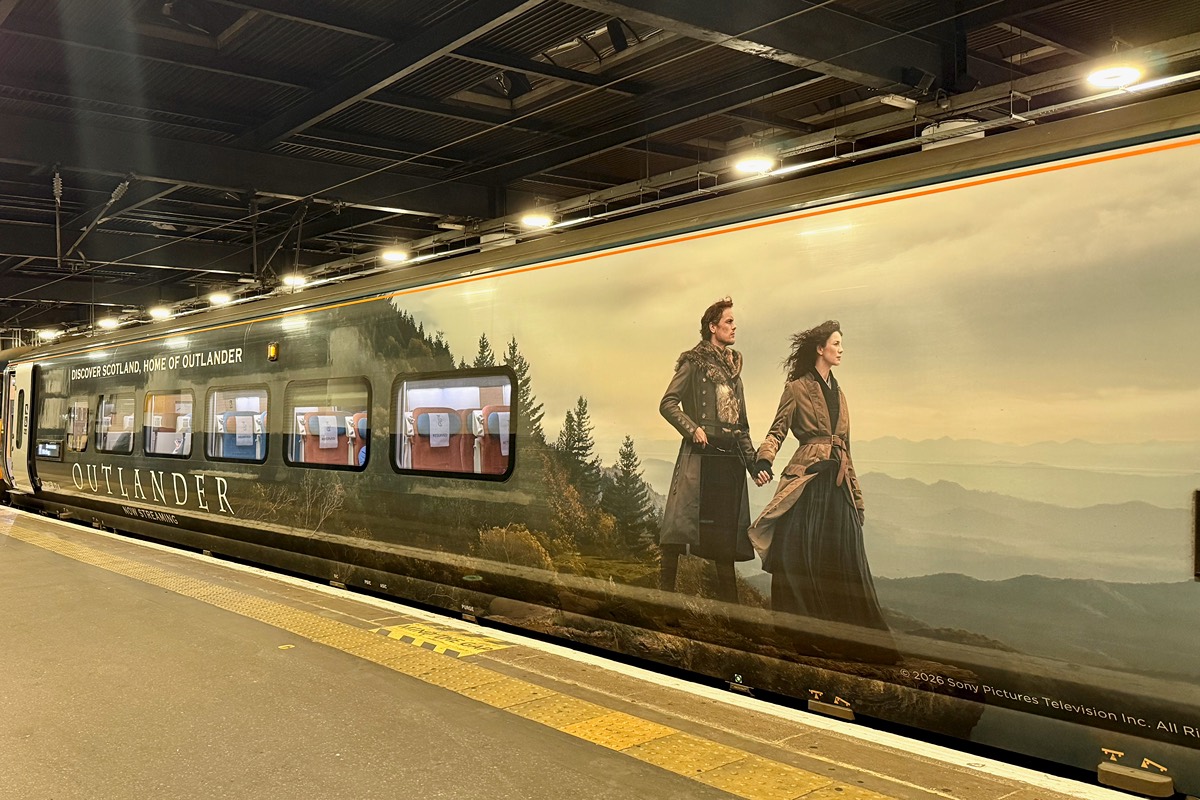
The Caledonian Sleeper at Euston
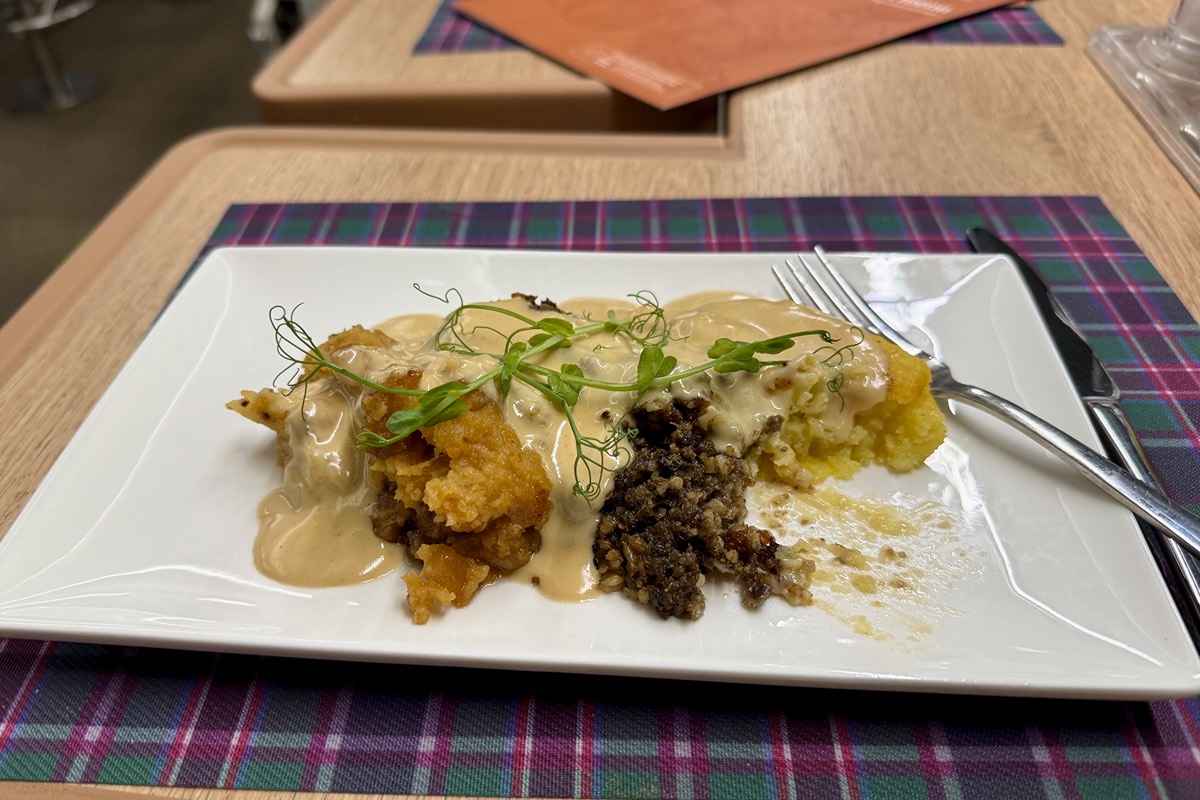
Everything went according to plan and I was soon in the dining car being greeted by the host, Tim. He found me a table, gave me a menu and took my drink order. My meal was lovely vegetable and chicken gyoza with sweet chilli sauce followed by the traditional Scottish dish of haggis, neeps and tatties. During my meal, I booked breakfast in the dining car at 06:15 the next morning. By the time I got back to my cabin, having negotiated 4 carriages to get there we still had not started moving. By the time we set off, I was tucked up in the bottom bunk and fell asleep soon after.
Haggis, Neeps and Tatties for Dinner on the Caledonian Sleeper
I slept so well I did not hear my first alarm at 05:30 and was woken by the back-up at 06:00. Just fifteen minutes to pull on some clothes and get to the dining car. But I made it and enjoyed my Americano coffee with hot milk and a Scottish breakfast. I could not linger in the dining car as the next sitting was 06:45 but at least that gave me time to have a shower. Towels, shower gel and shampoo were provided. I was also able to charge my laptop and iPhone during the journey. I forgot the train was stopping in Carstairs and as it slowed down, I had just emerged from the shower. I had pulled the blind up while the train was moving but hastily pulled it down again while clutching a towel to my chest.
Twin Cabin on the Caledonian Sleeper
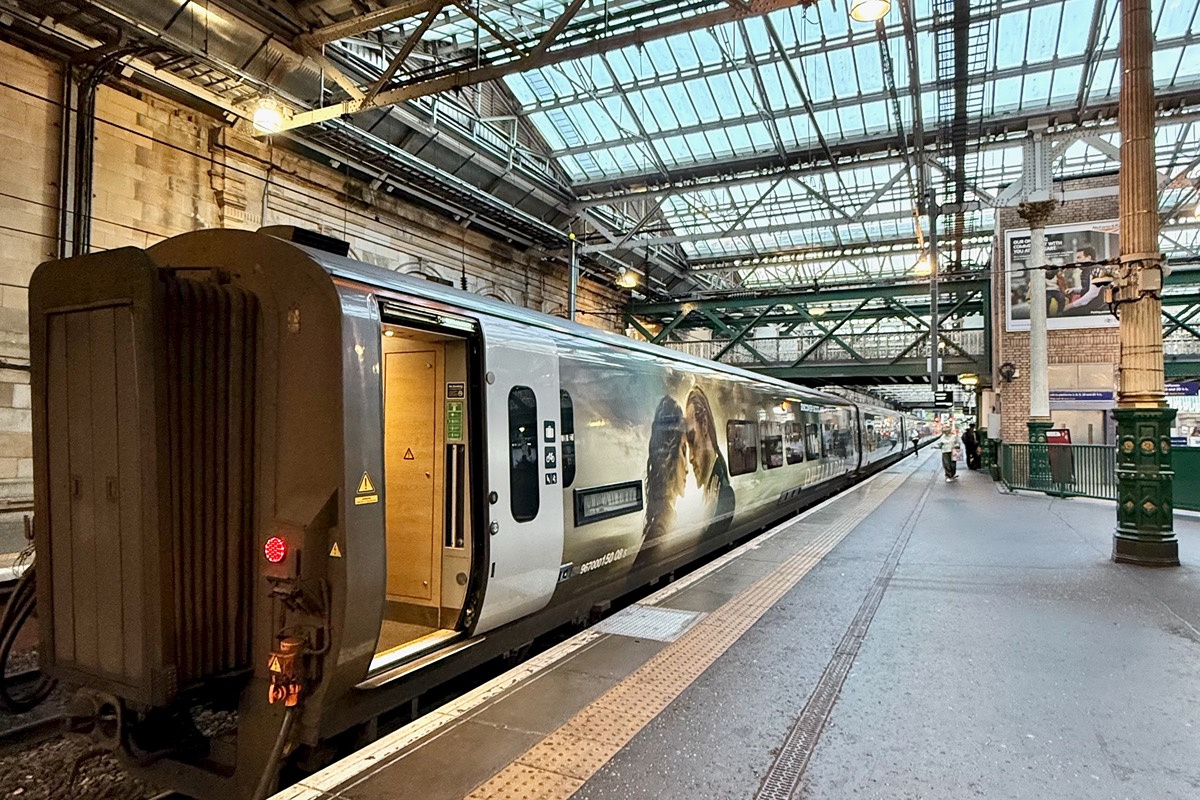
My train terminated at Edinburgh Waverley Staton and my hotel was close to Edinburgh Haymarket station so when I went through the barrier, I asked where I could get a ticket for Haymarket Station. I was delighted when I was informed that my Caledonian Sleeper ticket covered me for that journey and successfully negotiated all the barriers between me and Edinburgh Haymarket by showing my ticket confirmation for the Caledonian Sleeper. I felt refreshed after a good sleep in my twin cabin and ready to explore the area.
The Caledonian Sleeper at Edinburgh Waverley Station
How much
Prices start at £65 for a single ticket in the seated coach. For more information and to book tickets click here.
There is a particular pleasure in discovering outdoor clothing that doesn’t make you look as though you’ve just escaped from a high-altitude expedition. Much of modern trekking gear is technically impressive but can be over-engineered, covered in pockets and straps, and designed for conditions most of us will never encounter.
Nimsdai takes a rather more intelligent approach, producing clothing that is built for serious outdoor use but works equally well when the day’s walking ends and the mountains become scenery rather than an obstacle. The range includes technical waterproof jackets and trousers, down jackets, trekking trousers and baselayers.
The brand has an obvious pedigree. Nimsdai Purja was best known for his extraordinary mountaineering achievements, including climbing all fourteen of the world’s 8,000-metre peaks in record time. His name therefore comes with a formidable association with high-altitude adventure. The interesting question is whether that experience translates into clothing suitable for the day to day.
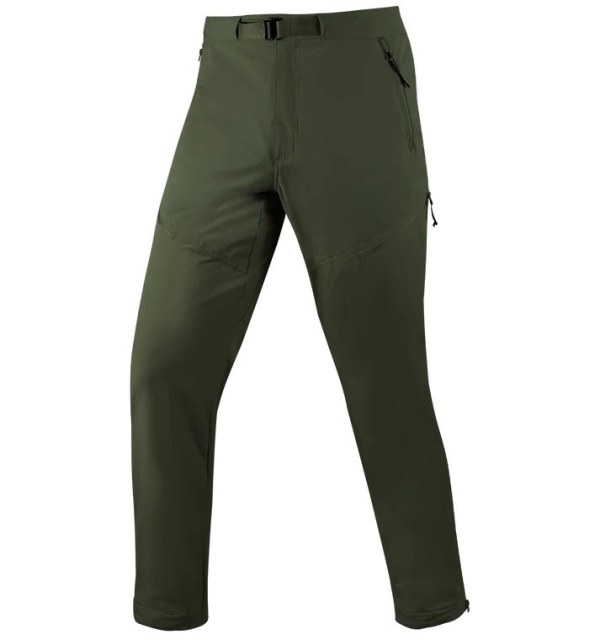
The first thing I notice about the trekking trousers is that they feel like proper walking trousers. Crafted from a highly breathable, lightweight, 70D nylon 4-way stretch fabric, they repel light rain and wind. There’s also enough stretch to allow unrestricted movement, whether doing outdoor hiking or heading into town.
The cut is practical without being baggy and zips on the hem open into a wider leg. There are also concealed gaiter anchor points for those wetter days. Nimsdai’s five pocket design keeps things sensible, providing useful storage without turning the trousers into a walking version of a tool belt. They’re also deep enough for essentials such as a phone, wallet or trail snacks
Weather is, of course, the great test of trekking clothing. No trousers are going to replace waterproof overtrousers in sustained heavy rain, but the fabric provides useful protection against light showers and damp vegetation. More importantly, they dry reasonably quickly, a useful feature when you’re travelling or caught in a shower.
I particularly appreciate the versatility. These are trousers for walking rather than simply for one particular kind of expedition. They are equally at home on a woodland trail, a long-distance path or just roaming around town, making them useful for travellers who don’t want to pack a separate wardrobe for every activity.
If the trekking trousers are the workhorse, the crewneck merino top is the quietly clever piece of the pair. Merino wool has become something of a miracle fabric for outdoor enthusiasts, and for good reason. It’s warm without being excessively heavy, regulates temperature surprisingly well and, crucially for travellers, doesn’t get smelly.
The Nimsdai crewneck takes advantage of those qualities while keeping the design refreshingly simple. Made from 100% merino, 19.5 micron / 250gsm, it looks like an ordinary, well-cut sweater rather than an aggressively technical base layer. The fabric feels soft against the skin and provides a reassuring amount of warmth without bulk.
I can wear it beneath a waterproof jacket during a chilly morning walk, but it will also pass perfectly well in a café, restaurant or hotel bar afterwards. The real test of merino, however, comes after prolonged use. Synthetic fabrics can quickly become less than fragrant after repeated exertion, whereas merino has natural odour-resistant properties.
There is something satisfying about the simplicity of the crewneck. Outdoor fashion has become increasingly complicated, with garments often covered in logos, zips and technical detailing. This is much more discreet. It looks like clothing rather than equipment.
Verdict
Outdoor clothing should make an adventure easier, not become the adventure itself. Nimsdai gets that distinction right. The trekking trousers are comfortable, flexible and robust enough for serious walking, while the crewneck merino top is the sort of versatile garment that earns its place in any travelling bag. They’re not cheap but the quality is worth the price.