Given that the sun hasn’t seemed to stop shining this summer, it would be foolish not to indulge in hosting a few get-togethers in the garden. But if your outdoor space needs a few finishing touches, don’t fear, as I’ve found nine stylish and savvy outdoor hosting essentials at Argos for under £100.
This summer, you’ll need the best parasol to offer some respite from the heat. I’d also recommend adding some garden lighting ideas, which will also come in handy to keep the party going into the warm evenings.
I’m happy to report that I’ve uncovered some budget gems still in stock at Argos that will help you be the hostess with the mostess without the expense. It pays to be a bargain hunter, and luckily, I’m willing to share all I’ve found. So, if you have any summer soirees lined up, these are the summer buys under £100 that will elevate your hosting game.
Argos Home
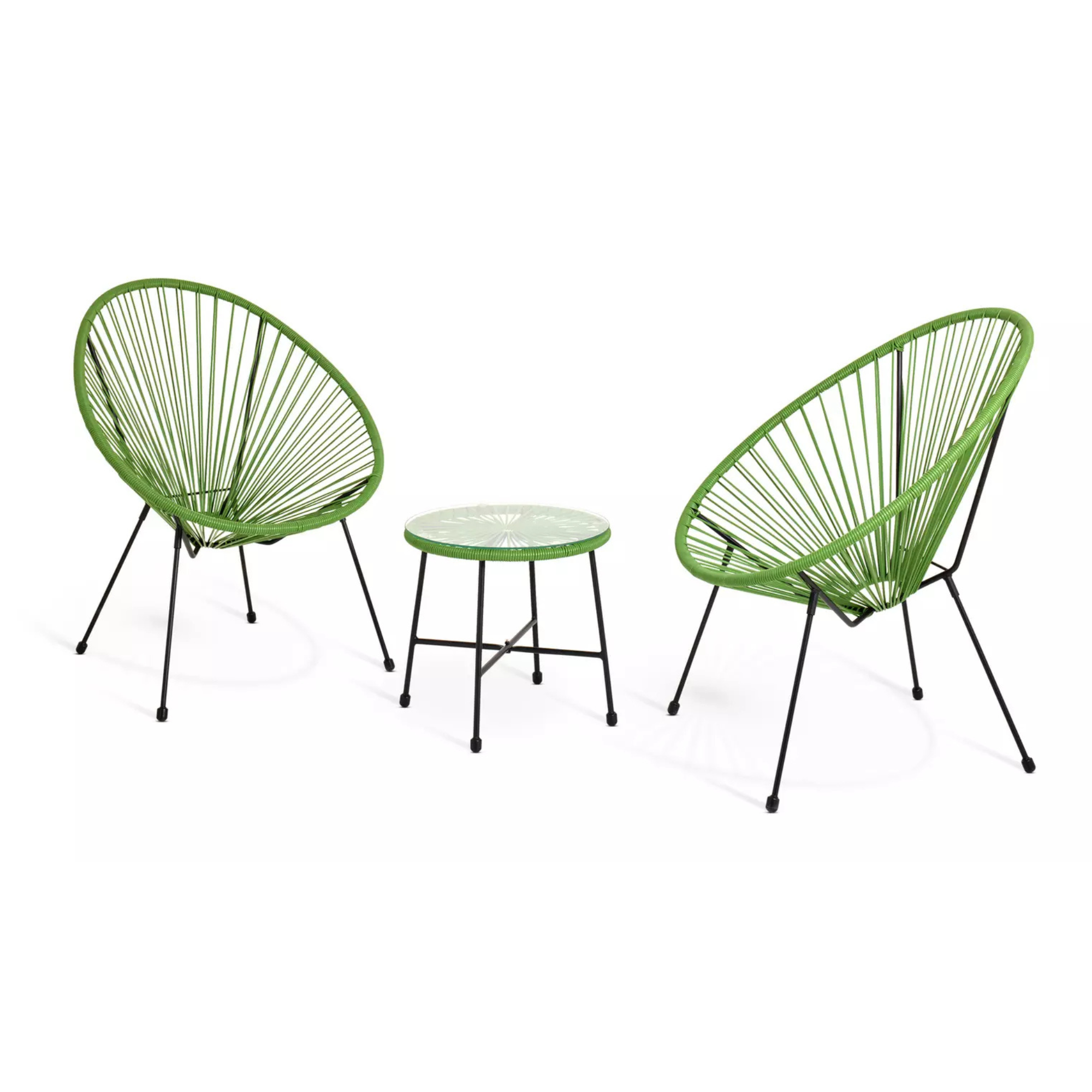
Serenity 2 Seater Metal Garden Bistro Set – Green
Colourful garden furniture is so on trend for 2026 and I can’t belive this statement set under £100. The egg shape of these seats are not only realy comfortable to sit in, but will give your patio a chic, hotel look.
Keter
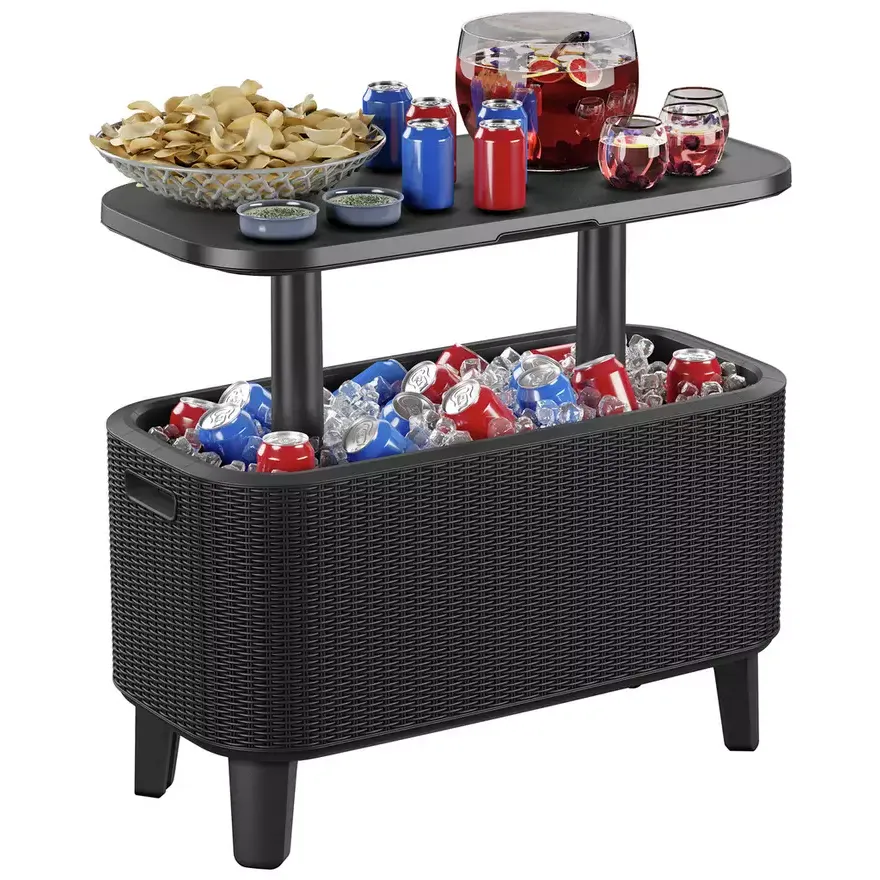
Bevy Cool Bar – 56L
If you really want to be the best host in town, how about a stylish, cool bar for your patio? It even has a handy plug to make disposing of ice water at the end of the night a breeze
Argos Home
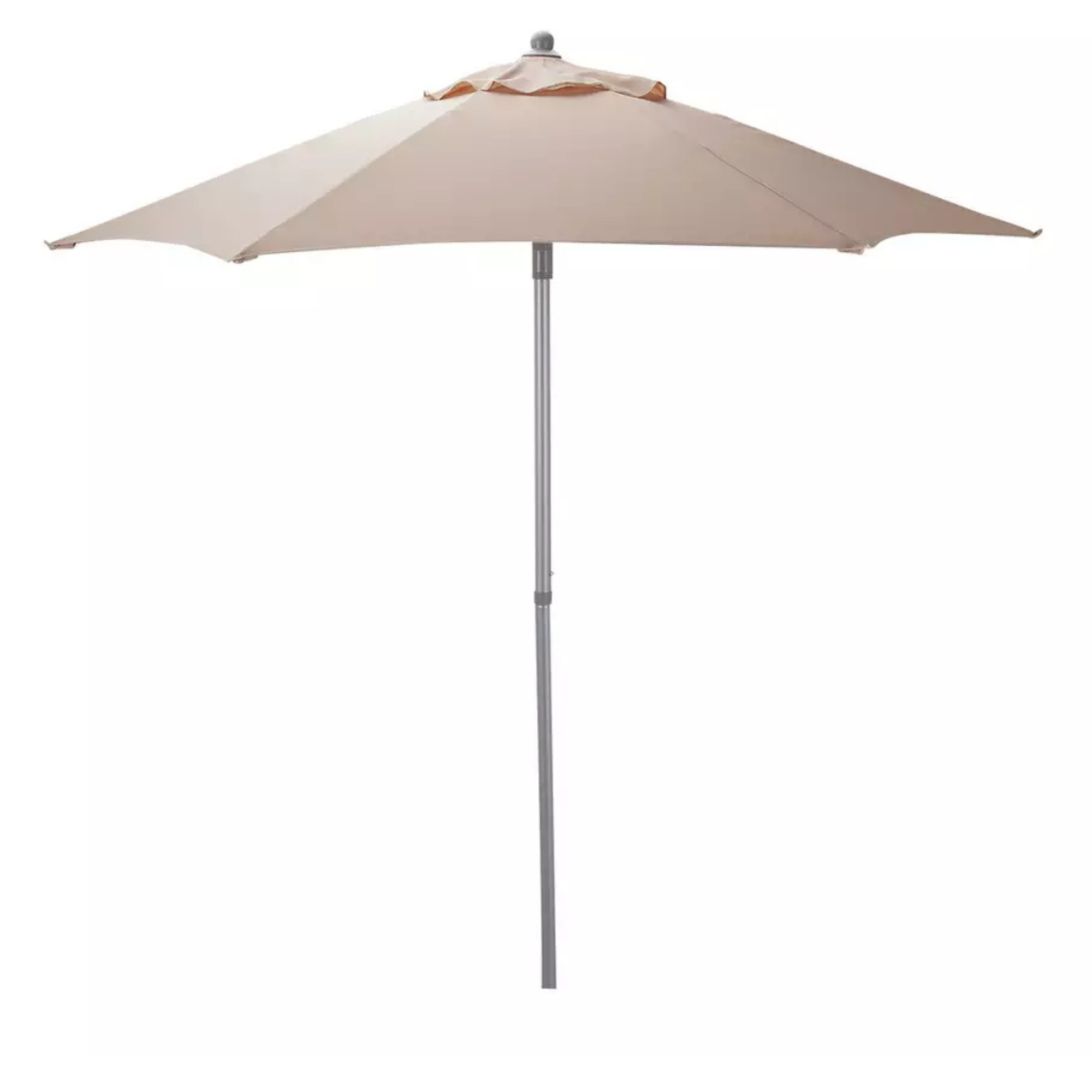
2m Garden Parasol – Cream
A garden parasol is one of the most stylish shade ideas you can offer. It shows thoughtfulness to your guests during hot weather and adds to your garden’s overall look.
Argos Home
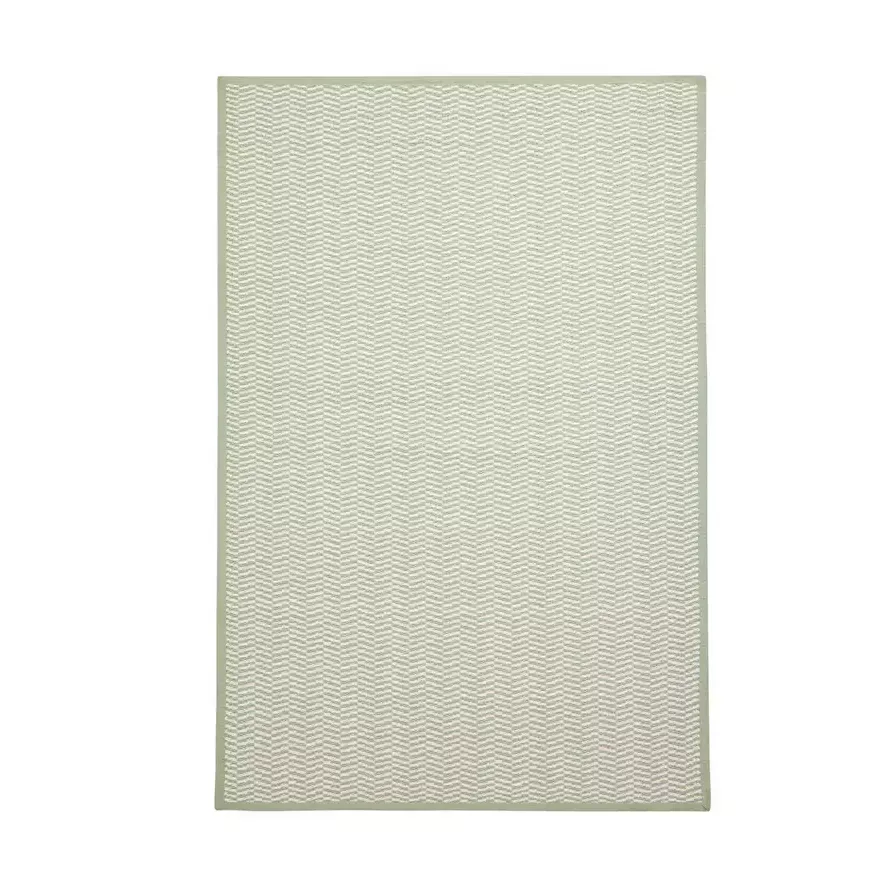
Chevron Sage Outdoor Rug – 180 x 240 cm
A garden rug will make your patio feel cooler underfoot and allow you to express your interiors style outside. This chevron is a timeless design, while the sage green colourway looks fresh and summery.
Argos Home
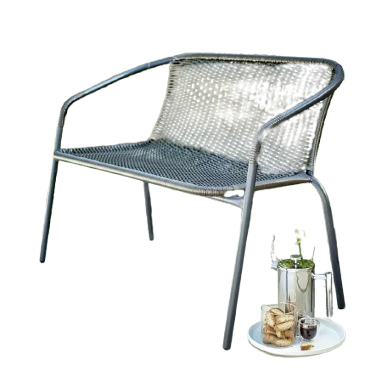
2 Seater Steel & Wicker Effect Garden Bench-Brown
For garden parties, a well-placed bench amongst your flower beds offers guests somewhere to relax and take in your garden. Plus, extra seating always comes in handy!
Habitat
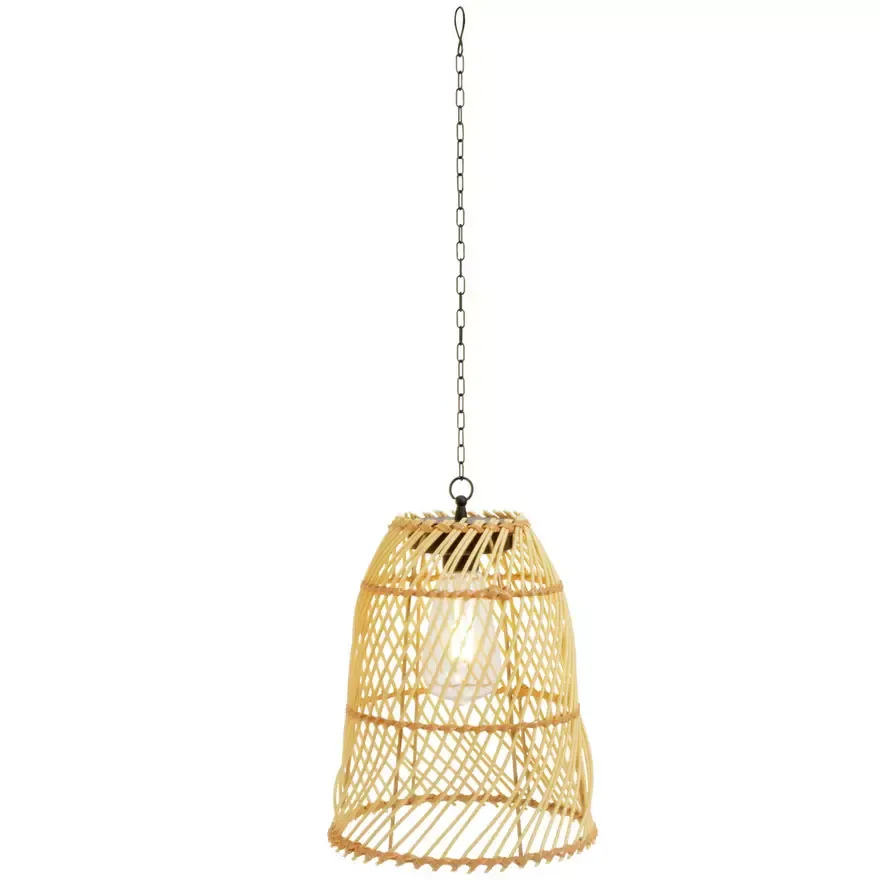
Warm White Rattan Battery Operated Hanging Light
Garden lighting is a must for any garden party – especially if it’s likely to extend into the evening. This Habitat light is one of the best-looking I’ve seen and is perfect for illuminating a patio or seating area, providing a warm glow from above.
Habitat
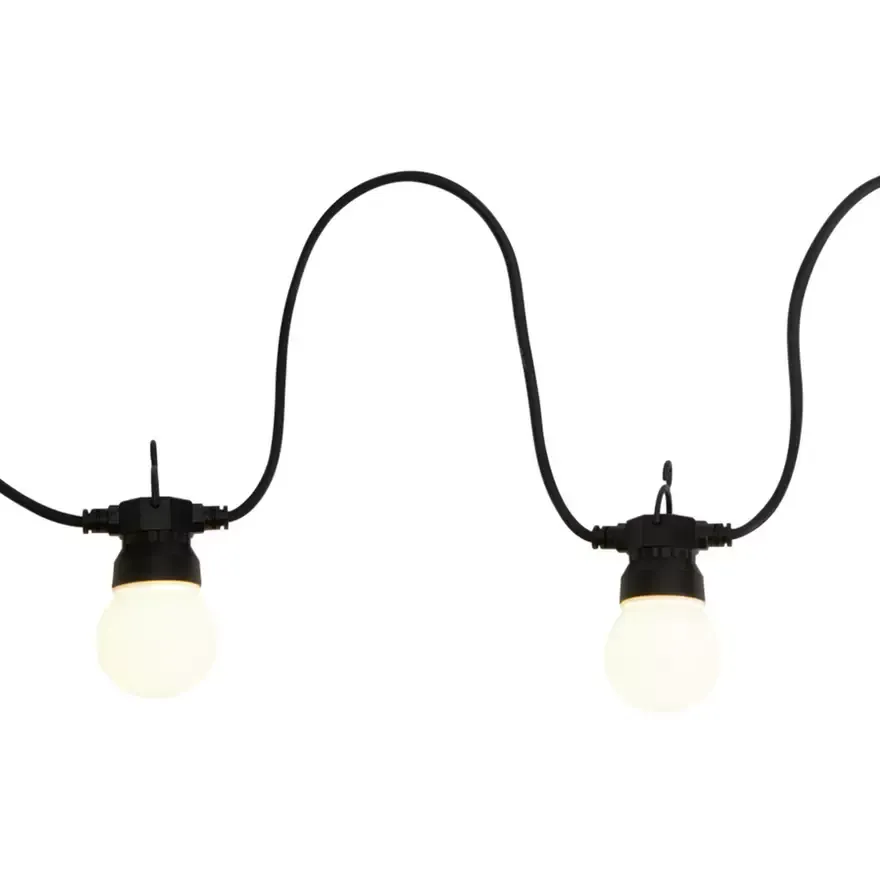
30 Warm White Festoon String Light
Festoon lighting is also a must. Ideal for creating a warm and relaxing ambience, string them along a fence or trees for a whimsical look.
Argos Home
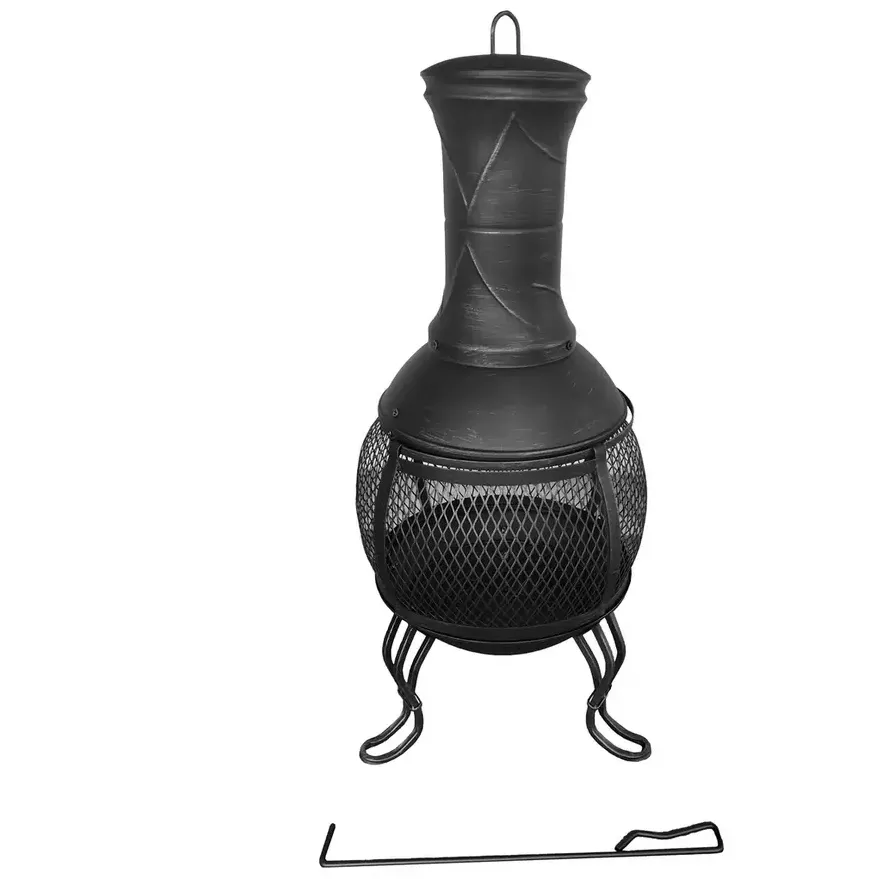
Home Medium Steel Chimenea
I know right now you’re not thinking about heating. But, summer nights can get chilly, which is why it’s a good idea to have a space-saving heater – like this chimenea – on in hand in case guests get cold.
Lifetime
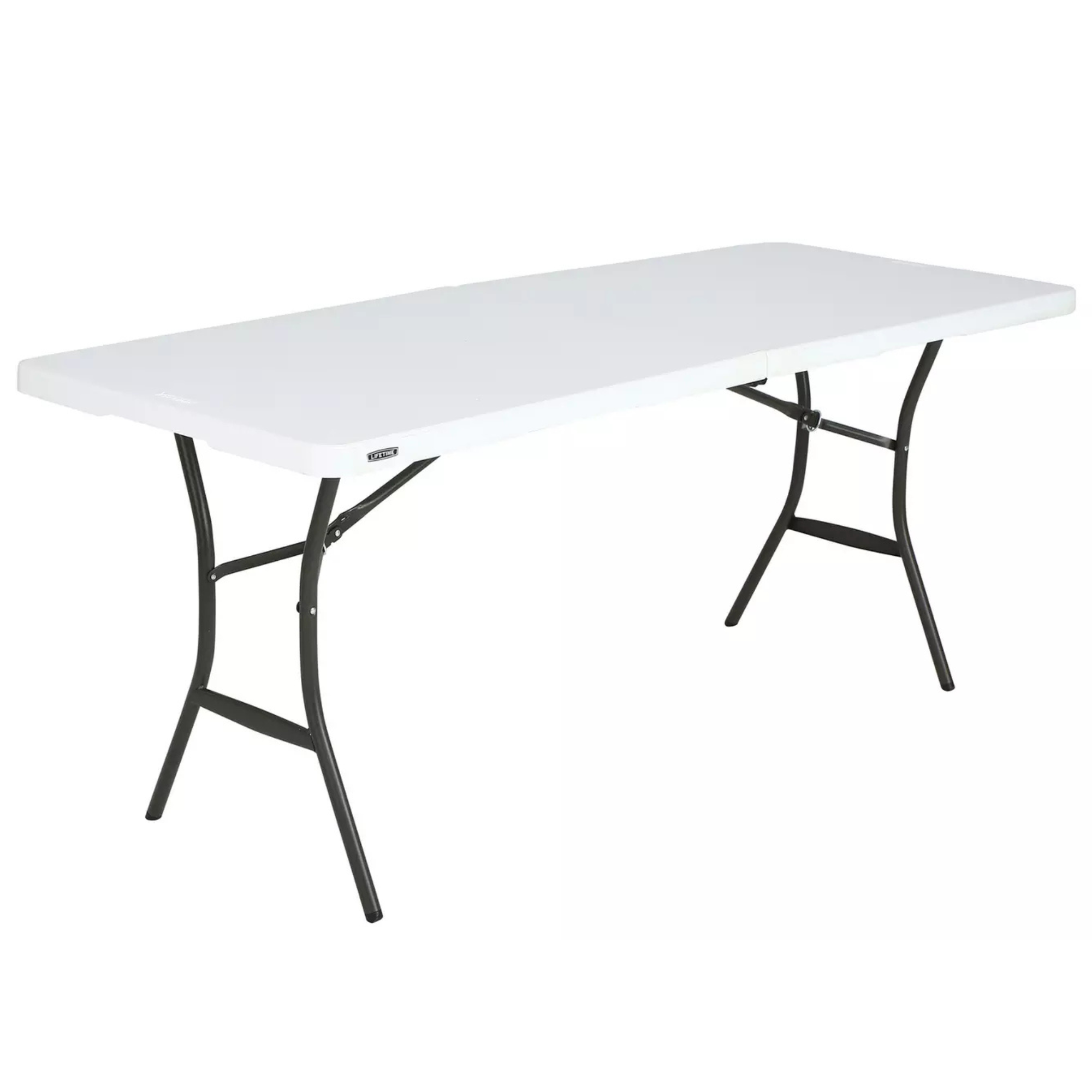
Lifetime 6ft Folding Plastic Camping Table
A more practical than pretty idea, if you’re having a BBQ or party, I’t a good idea to set up a buffet table where guests can help themselves to refreshments. It also stops crowding round your BBQ, too. It can easily be disguised with a pretty tablecloth.
It’s the attention to detail that guests remember, which is why it always pays to anticipate their needs and provide garden furniture and accessories that make a difference to the hosting experience.
One of the most practical ways to cool down during the summer heat is simply with a cool glass of water – but what if you could upgrade yours to a spa-like experience without spending more than £10?
That’s what you get with IKEA’s new KLIPPKAKTUS water dispenser (£9), which has so many clever design features to make staying hydrated a treat rather than a chore.
I’m on a mission to organise my fridge to perfection when I move into my new flat in a few weeks, and this water dispenser is being added straight to my basket in the same order as these fridge organisers. Here’s why.
IKEA
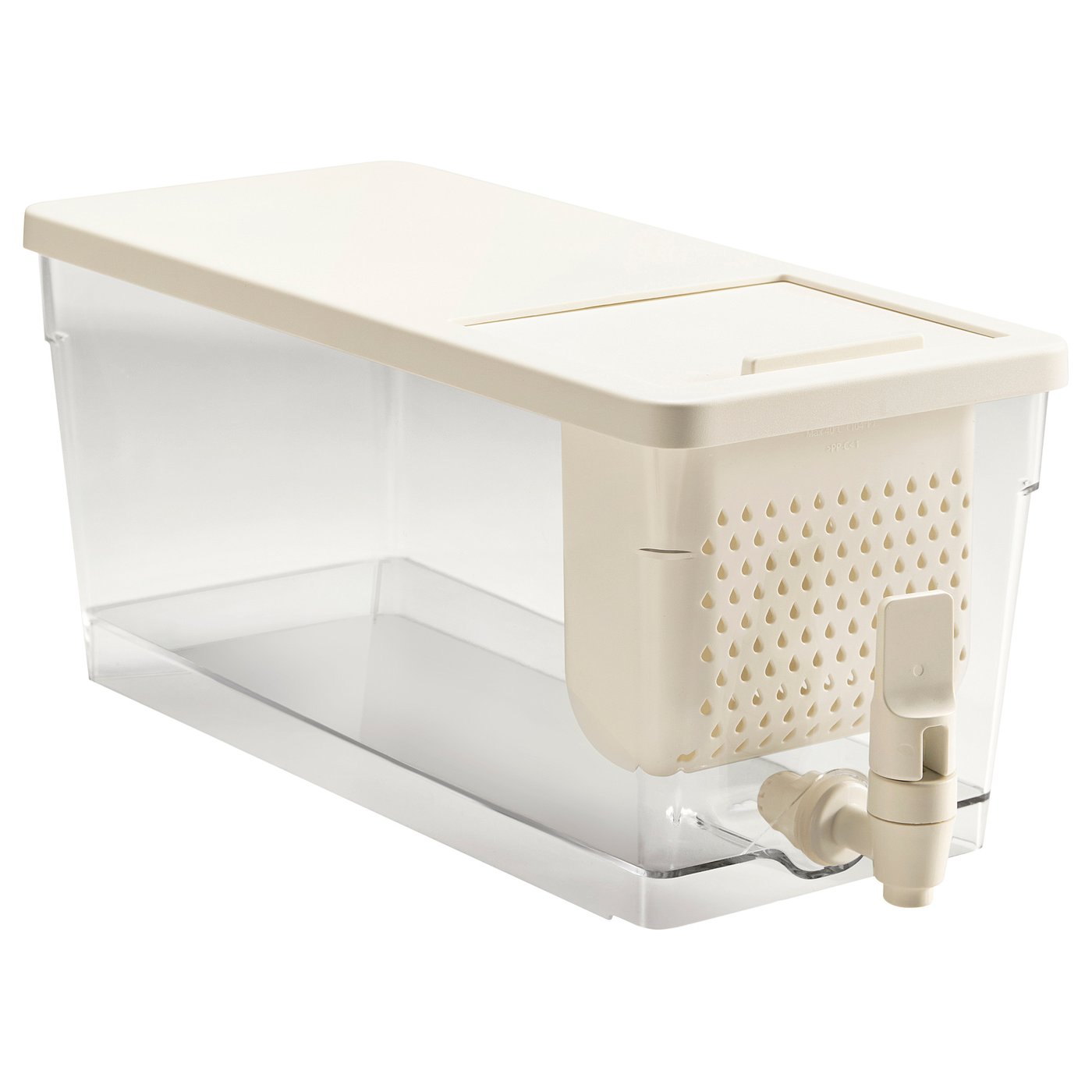
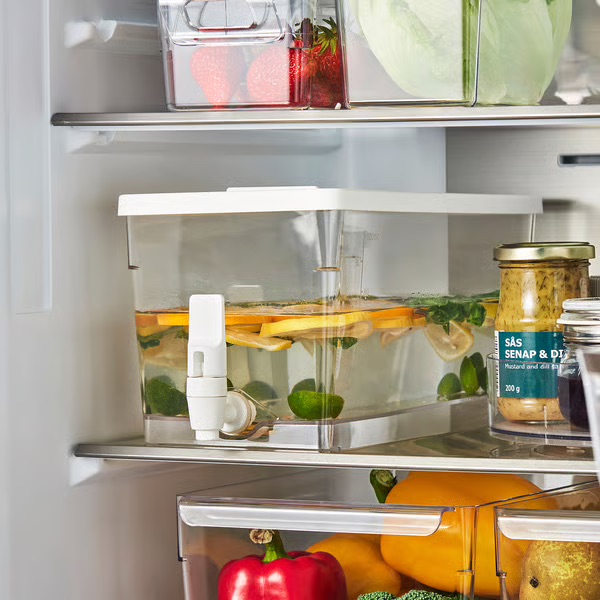
Klippkaktus Container W Tap Disp for Fridge – Transparent 4.5 L
This dispenser has a clever filter to catch anything making its way into your drink making it the perfect pick for lemon water or cold brew on tap.
Fiorky
4l Slim Fridge Water Dispenser
If you don’t live close to an IKEA and you have a Prime membership you could have this high-capacity dispenser delivered as soon as tomorrow instead.
A fridge with an in-built water or ice dispenser is obviously the pinnacle for staying refreshed at home but they’re usually pretty pricey and if you, like me, are a renter you won’t be able to install one even if you wanted to.
That’s where this clever IKEA buy comes into its own. Not only is it the perfect size to slot onto your fridge shelf but its also equipped with a healthy capacity for keeping you hydrated all day – 4 litres is more than enough to see you through a day.
(Image credit: IKEA)
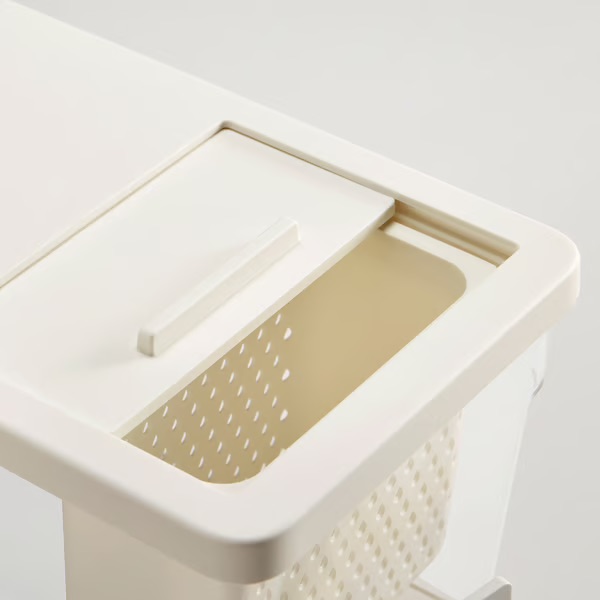
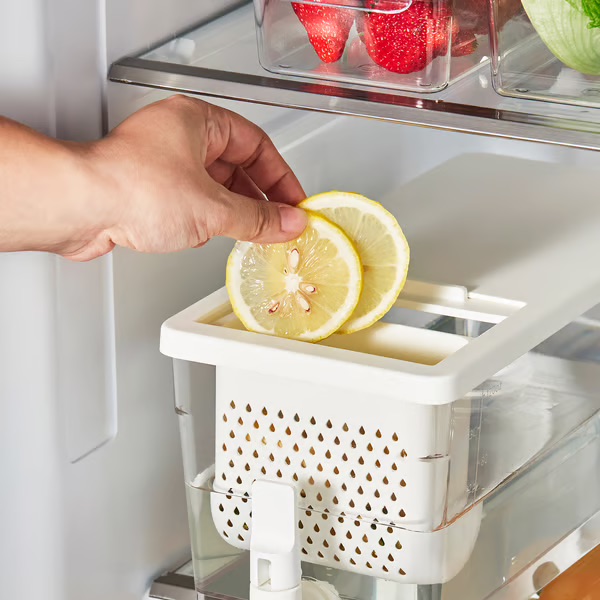
You don’t need to fill this dispenser straight from the tap every time you refill it. You can save the faff thanks to the smart pull-back opening at the front of the dispenser, which also gives you access to the in-built filter.
This filter is what gives you the ability to serve up spa-like infused water, flavoured with lemon, lime or mint, without any off-putting floating bits in it too. If you pop those into the filter compartment, you’ll get all of the benefits of your detox drink without the texture.
(Image credit: IKEA)
The tap element has more than one use, too. It’s the classic kind you’d find on a mason-jar type dispenser, which means that you can control the flow of water without much effort. According to IKEA, ‘if you want a lot of beverage to flow out, just push down on it, and if you want just a little, turn it 180° and push down until you’re satisfied.’
So far, from 89 user reviews, this KLIPPKAKTUS dispenser has a 4 out of 5 star rating from customers, with some even commenting they use it more than their built-in version, thanks to its easy-clean nature.
One reviewer comments ‘My water dispenser on my fridge was under the door shelf, and I found it got really grubby, so we decided to try this. It’s amazing – easily topped up, rarely leaks, and the size is just perfect. Love the little filter option as well, where you can add lime or cucumber to flavour your water a little.’
(Image credit: IKEA)
Having a steady flow of perfectly chilled water during the recent heatwaves certainly seems to have won a lot of IKEA fans over to this affordable buy. Below I’ve found some other Ideal Home approved fridge organisers that can help you stay hydrated during this hot summer and help you keep things tidy.
Joseph Joseph
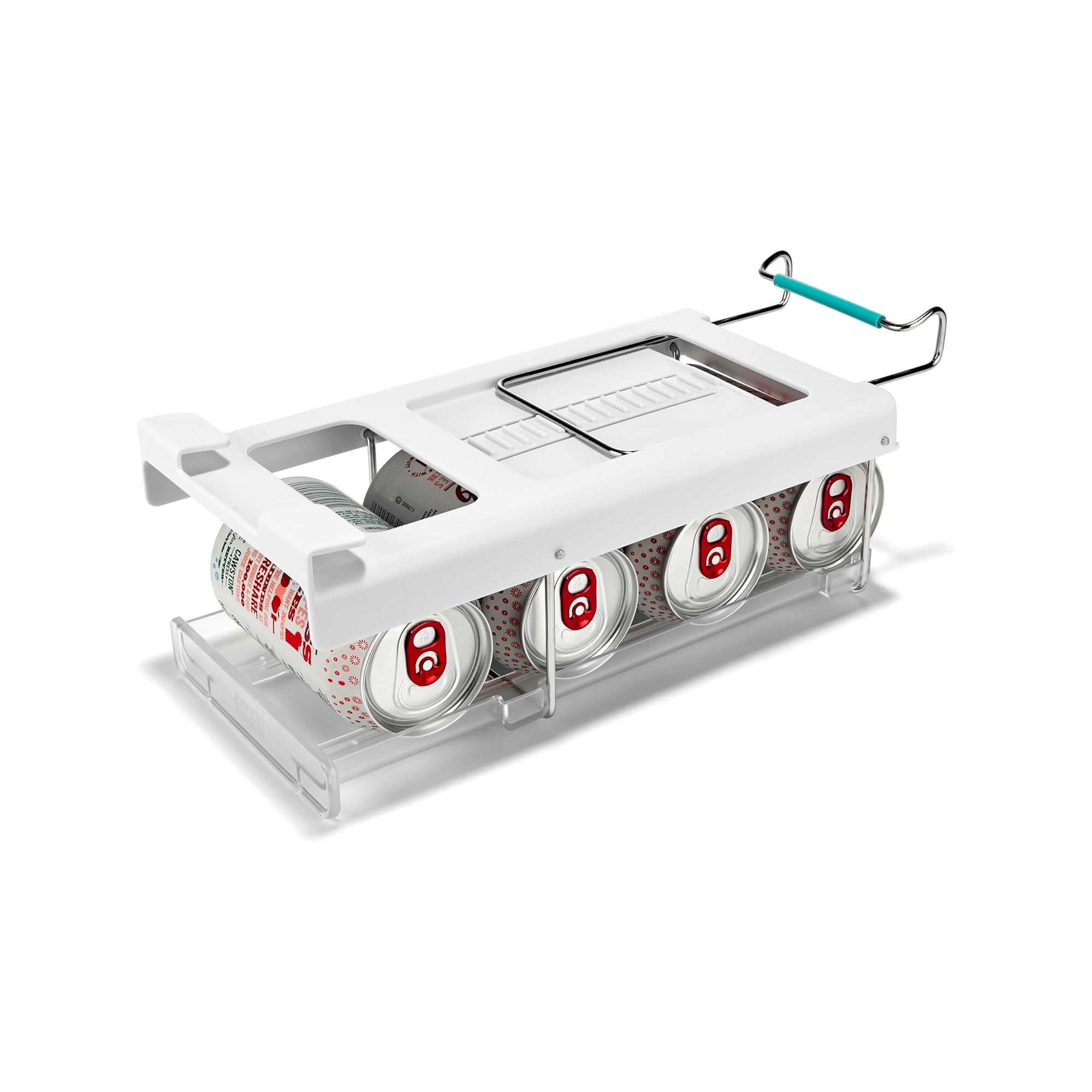
Can Organiser
As someone who has developed a recent (and expensive) dependency on Poppi soft drinks, I have ample need for this clever automatic dispenser that lives under your fridge shelf. Perfect for the summer heat or your 3pm Diet Coke break.
Kilner
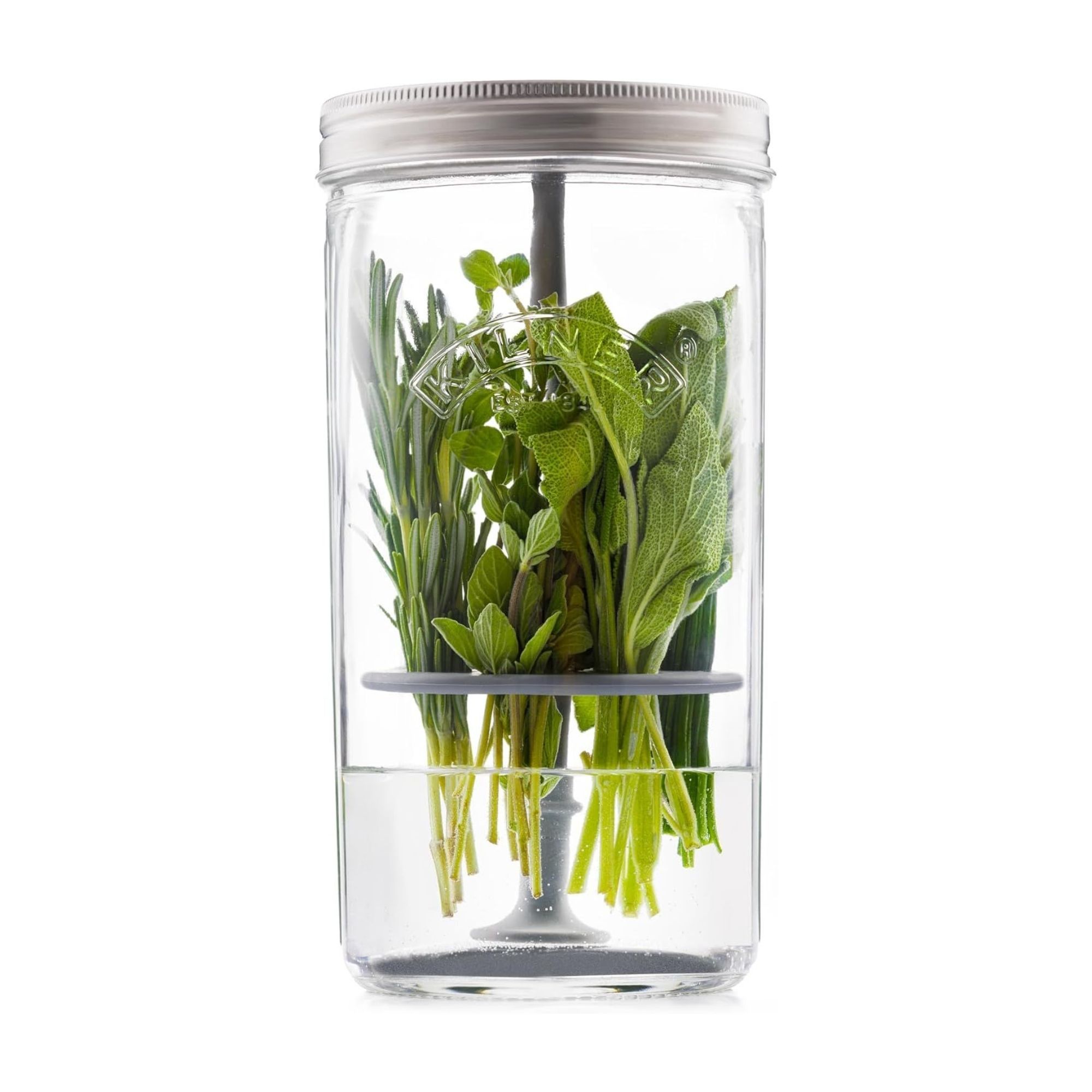
Herb Keeper Set
This twist on the iconic Kilner jar is ideal for your herbs. Keep your supermarket herbs fresh, and keep the water topped up and you’ll have the mint you need to make your infused water everyday!
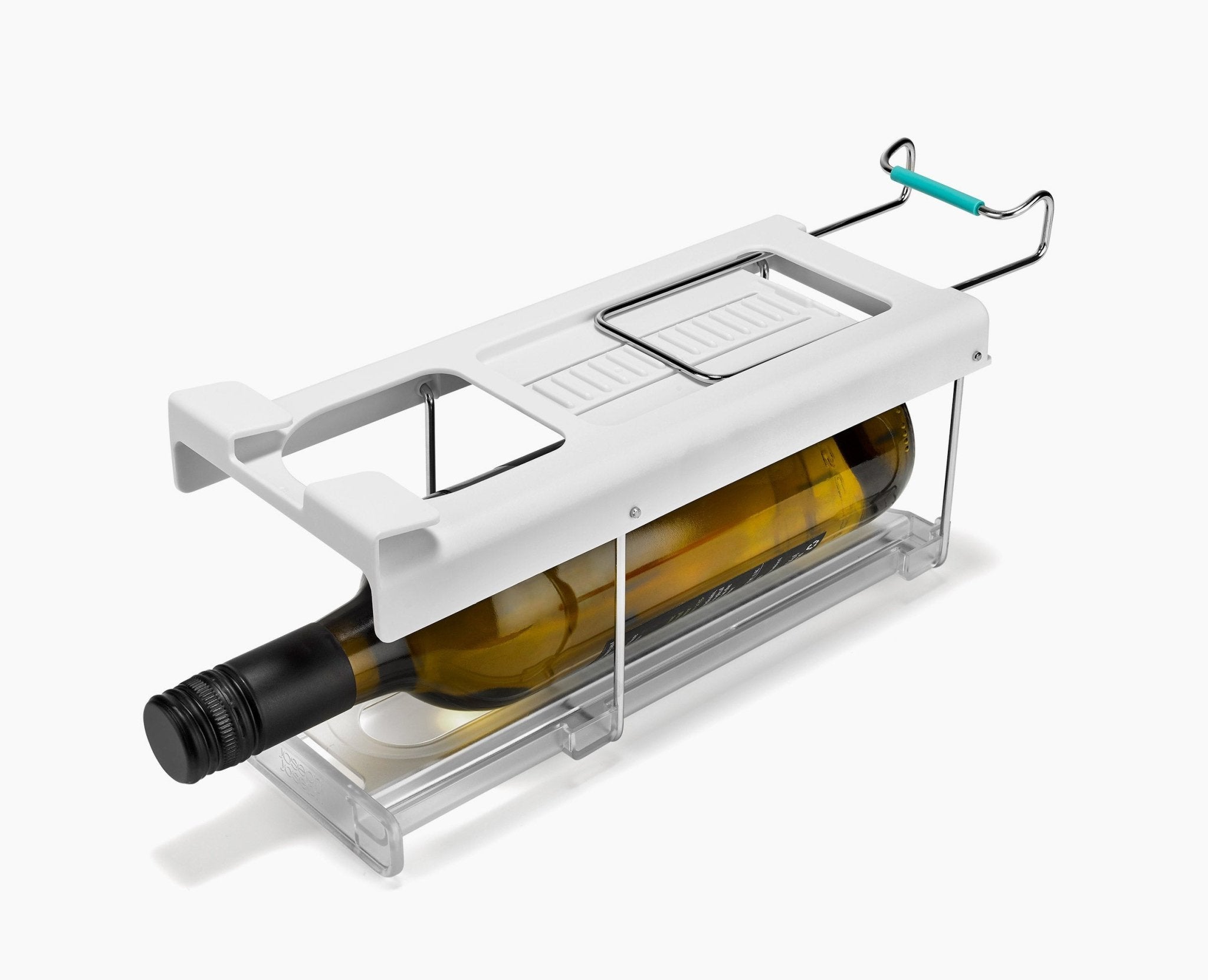
Our Kitchens Editor Holly swears by this Joseph Joseph fridge organiser range and this clever contraption, built to keep you favourite bottle of rosé perfectly chilled, couldn’t be more perfect for summer evenings.
Here’s to a more organised fridge that keeps you drinking more water this summer!
With the UK experiencing it’s third heatwave of the year before the middle of July, it’s no wonder that households are desperate for ways to keep cool.
As a result of the high temperatures, there has been unprecedented demand for portable air conditioners and fans, selling them out left, right and centre. But it’s not just portable appliances that are seeing record levels of demand. Fitted air conditioning has also see a huge boost, according to Angus Struthers, Managing Director at BOXT: ‘From 1st of May to 30th June, BOXT saw AC sales rise by 249% YoY, with increases in all regions of the UK. This was true as far north as Scotland, which saw a 233% growth YoY, and down in Brighton on the south coast, there was a whopping 1,700% YoY increase in enquiries.’
And so for those who have invested in a fitted system, headlines about air conditioning being ripped from homes under energy efficiency rules will undoubtedly be worrisome. So is air conditioning really being banned? I asked the experts for the truth behind the rumour.
Is air conditioning going to be banned in the UK?
(Image credit: Getty Images)
No air conditioning isn’t going to be banned in the UK. In fact, in response to headlines to the contrary, the Ministry of Housing, Communities & Local Government has stated: ‘There has been media coverage this week suggesting that air conditioning is banned in homes. This is incorrect.
‘Air conditioning can be installed in both existing and new homes.
‘In most cases, planning permission is not required to install it for a small home if it would not materially affect the appearance of the building from outside.
‘However, there is no blanket rule. People should speak with their local council to check the rules, and councils should take a common-sense approach.’
Where do rumours of an air conditioning ban come from?
As reported by The Telegraph, some homeowners in London have been ordered by their local authority to remove the air conditioning from their homes, in favour of more passive cooling solutions like keeping windows and curtains closed at the hottest part of the day, and opening them when it’s cooler to get some cross ventilation going.
In many cases, enforced removal like this will be down to the installations falling foul of planning and building regulation rules, which will not be the same for every area of the UK. Air conditioning rules may also be stricter in highly populated urban areas, like London, as Michael Whittall, Sustainability Manager at Fairview New Homes, explains: ‘Air conditioning may make individual homes cooler, but we also have to recognise the wider impact it can have on our cities and communities. Air conditioning systems work by removing heat from inside buildings and releasing it outdoors. When this happens at scale, particularly in dense urban areas, it can contribute to the urban heat island effect – adding to higher outdoor temperatures and increasing heat stress in cities.’
There are also concerns about what a widespread uptake of air conditioning may mean for the National Grid, with researchers from Loughborough University telling the BBC that it won’t be able to cope with the additional demand. According to Kian Milroy, Renewables Electrical Engineer at Heatable: ‘There is a legitimate concern about millions of inefficient air conditioning units being switched on simultaneously during a heatwave. Modelling by researchers at Loughborough University found that, under its highest domestic uptake scenario, air conditioning could add around 7GW to Britain’s evening peak electricity demand by 2050.’
(Image credit: Getty Images)
But Martyn Bridges, Director of External Affairs at Worcester Bosch, argues that this wouldn’t be grounds for a ban: ‘It is highly unlikely that grid capacity concerns will lead to a ban on domestic air conditioning. Much of the UK’s electricity grid is already being upgraded anyway to accommodate the wider electrification of transport with EVs and heating with heat pumps.
‘Furthermore, a typical domestic air-to-air heat pump uses around 1.2 kW/hr of electricity—which is less than a standard washing machine or dishwasher. Given this relatively low consumption and the ongoing infrastructure upgrades, there simply isn’t a strong case for a ban.’
Kianalso disagrees that a ban is the answer, saying: ‘A more credible future is tighter standards rather than a ban. This could include minimum energy-efficiency requirements, restrictions on the least efficient portable units, better installer regulation and incentives for modern systems that provide both heating and cooling.
‘Smart tariffs and demand-response technology could also help spread electricity use more intelligently, encouraging households to pre-cool their homes when renewable electricity is abundant rather than adding demand during the evening peak.’
Do you need planning permission to install air conditioning?
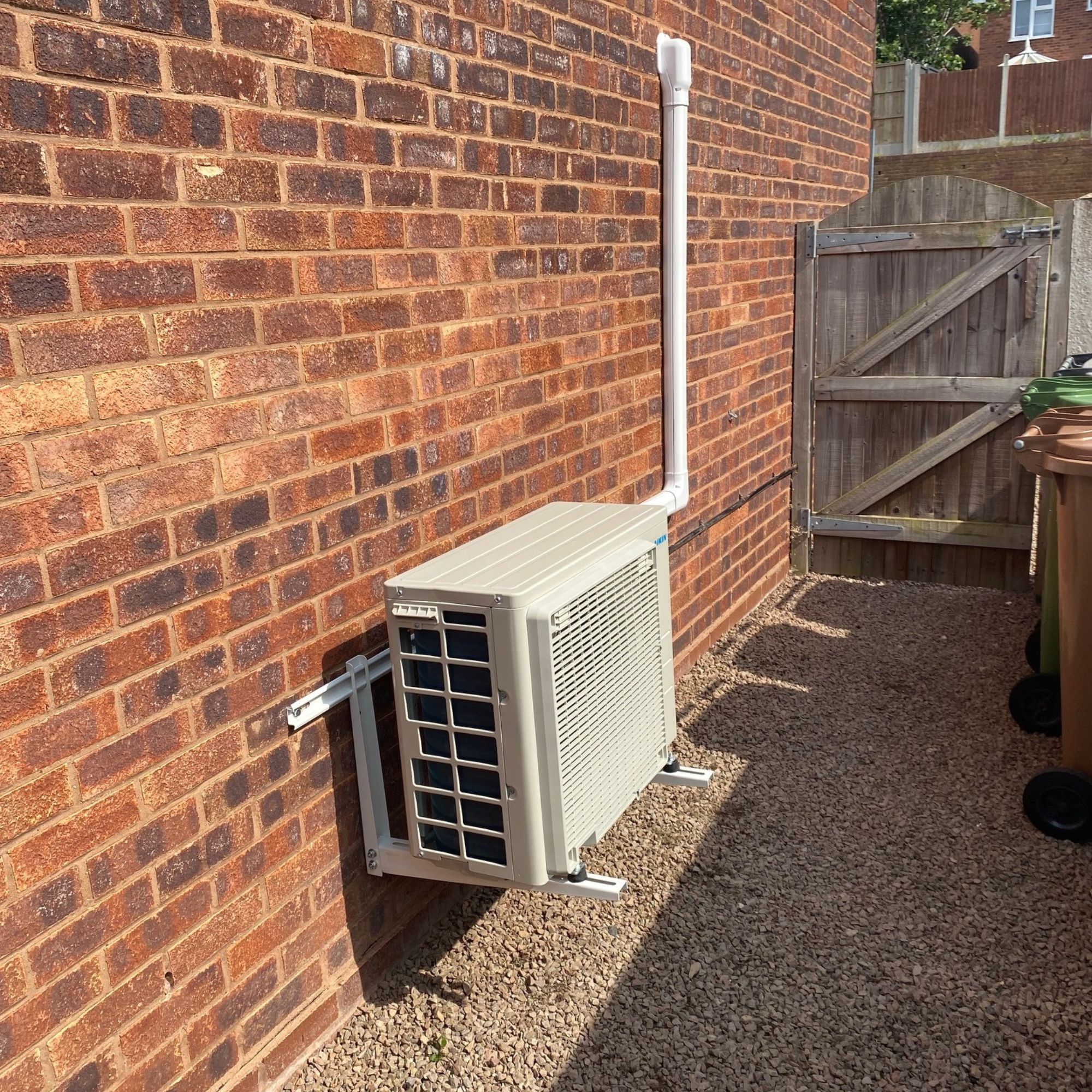
Planning rules will limit the negative impact any outdoor units of a fitted air conditioning system may have on neighbours and the local environment (Image credit: Future)
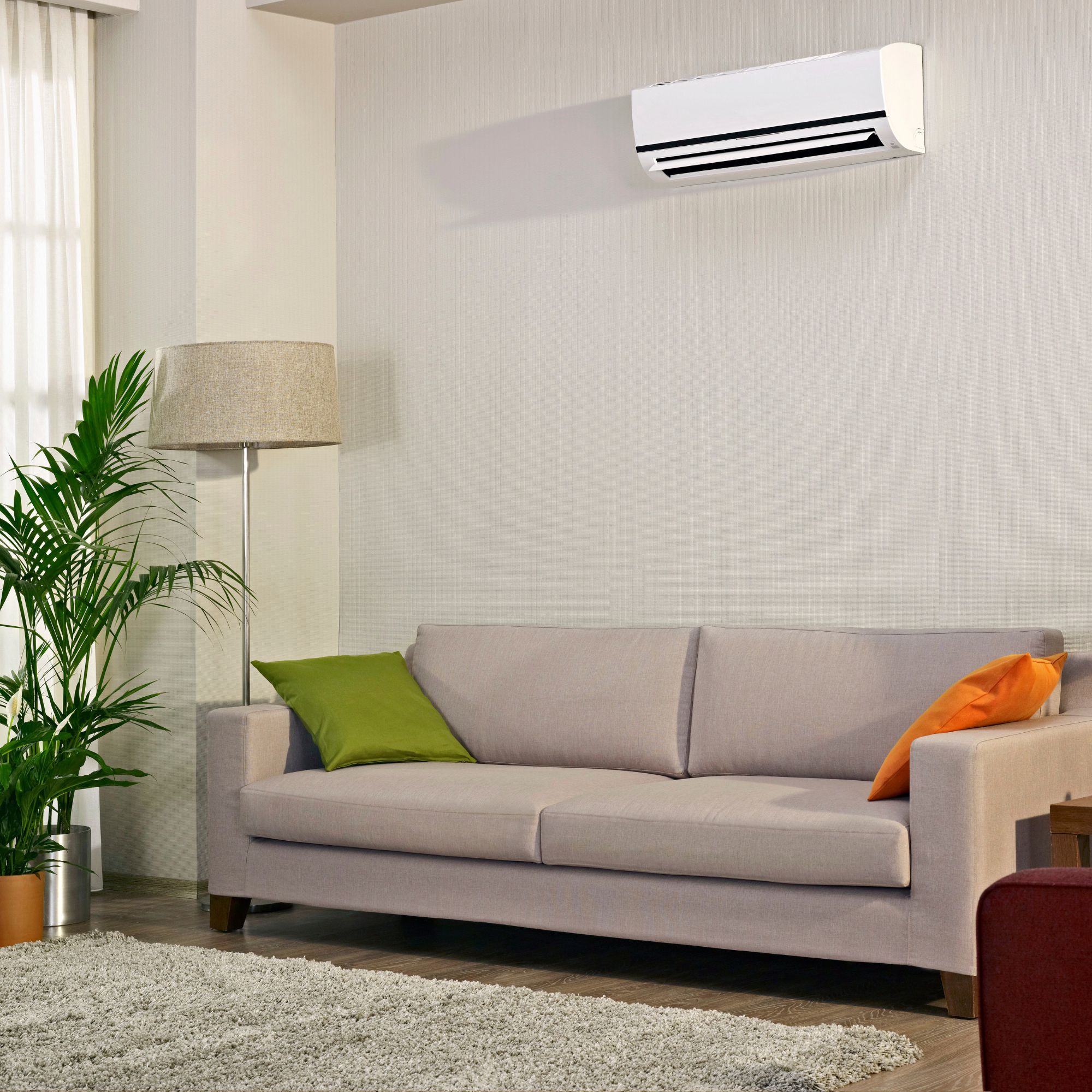
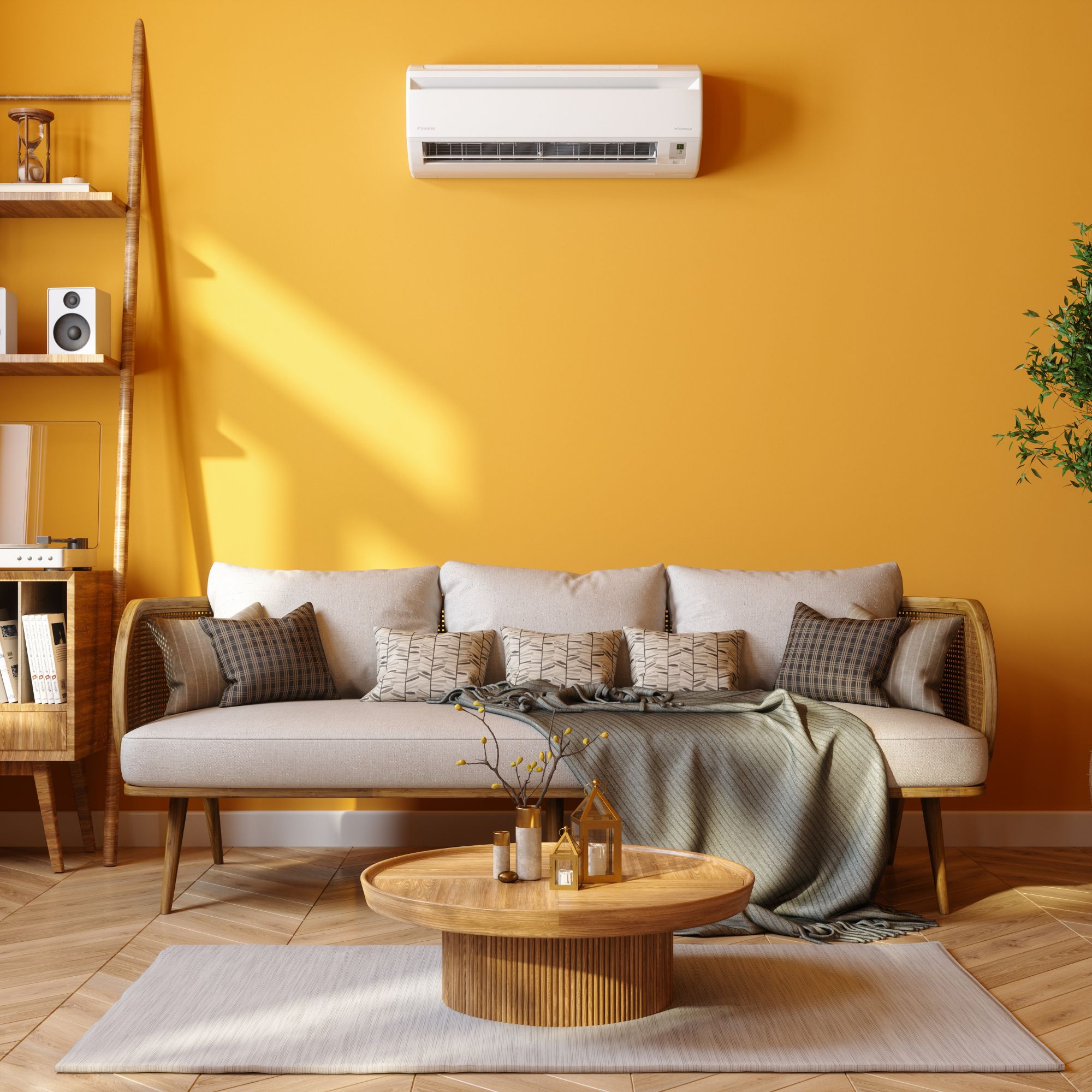
In many cases, installing an air-to-air heat pump (which is what fitted air con units are), can be done under Permitted Development as long as it can be used for both heating and cooling, and is fitted and used in a way that doesn’t negatively impact your neighbours in terms of things like noise and proximity to their property. It’s always best to double check with your local planning authority before you commit to save yourself any hassle. If you don’t check and your installation falls foul of the rules, then you may face enforcement action to remove it at your own expense.
Rules will be different if you live in a conservation area, Area of Outstanding Natural Beauty or national park. In these areas, permitted development rights may be restricted or removed altogether, meaning you’ll need to apply for planning permission. Similarly, if you live in a listed building, you will need Listed Building Consent to make changes.
Portable air conditioning units will be exempt from planning and building regulation rules, but if they are too noisy or cause issues for your neighbours, the council may intervene if they receive a complaint.
Should homeowners do anything differently?
The best thing you can do if you are planning on installing air conditioning at home, is to check with your local authority that it would be breaching any rules. That way you can rest assured that your investment won’t be short lived.
Choosing a reputable installer is also important and they should also be well-versed in the installation requirements under the planning rules.
If you already have air conditioning installed and it turns out you should have sought planning permission, then you could try applying for retrospective planning permission, although there is no guarantee that this will be granted.
If it looks like a fitted system won’t be feasible for your home, you could invest in a portable air conditioner when stock is replenished. Until that time, you could also try the tricks to supercharge your fan’s cooling power, and opening all your windows when it’s cooler outside to help freshen up and cool down your home.
If you enjoyed reading this, sign up for the Ideal Home newsletter for all the latest home decor trends and inspiration delivered straight to your inbox
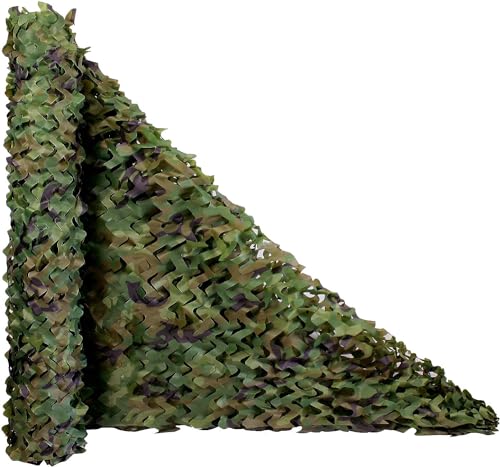
If you’re struggling to cool your home, then an unusual cooling hack is being recommended by experts to help prevent excess heat and light from reflecting into your home – and all you need is a camo net (£9.49, Amazon).
Perhaps one of the more bonkers methods I’ve spotted, using a camo net to cover windows or create a shady awning, is an easy way to help cool a room. Here’s why.
Fousam
Camo Netting
The camo net cooling hack
‘Camo nets can be a surprisingly effective and affordable way to keep parts of your home cooler because they create shade before the sun’s heat reaches your windows or roof. In cases where there is a heatwave, large windows, skylights, and conservatories will act as greenhouses, letting in sunshine which, in turn, heats your walls, floor, and furnishings,’ explains Max Wilson, co-founder at Pocket Storage.
‘Because they’re lightweight and come in large sheets, they can be draped over skylights, stretched across conservatories, fixed above south-facing windows or used to create a temporary awning over a pergola or patio. The idea is not to cool down rooms that have become overheated but to prevent the heating of those rooms at all.’
‘After the sun’s rays have passed through the glass, a large percentage of the heat is contained within the home, which explains why shutting the curtains or blinds once the sun’s rays have entered can be less effective than one might think. External shading prevents the solar heat from even reaching the glass,’ says Max.
‘As opposed to a plain tarpaulin, a camo net has gaps in its weave, which allows the wind to blow through freely while still being able to filter out the harmful rays of light from the sun. This gives you shade without shutting out any natural light or trapping a pocket of hot air underneath. It is very much like being under a big tree that makes things cool but allows the wind to blow through.’
(Image credit: Future PLC/Dominic Blackmore)
If you’re on a budget or renting, a camo net is a good way to create shade without making any permanent or expensive drawbacks; however, Max is keen to point out that it should be used alongside other cooling methods.
‘I would not depend upon it as an absolute remedy. The effectiveness of this technique is maximised when used along with other cooling methods. The windows, curtains, and blinds must be kept shut at the time when it gets too hot outside. When the temperature begins dropping in the evening, the windows should be opened on opposite sides of the house to allow fresh air to flow inside and expel the heat collected within the house,’ he said.
‘If you are buying a camo net for cooling purposes rather than camouflage, it is recommended that you buy a lighter-coloured one. This is because light colours tend to reflect the sun’s rays, whereas dark colours absorb the sun’s energy. At the end of summer, all you need to do is store the net in a clean, dry place until the next hot season arrives.’
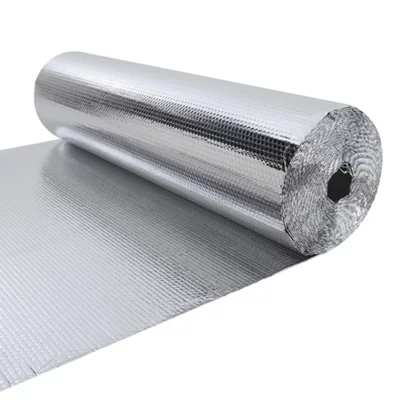
Garden Sanctuary
Heat Reflective Single Bubble Foil Insulation Double Aluminium Layer 0.6m X 8.4m
Add this foil to your windows to reflect light and heat away from your windows, keeping your indoors cooler.
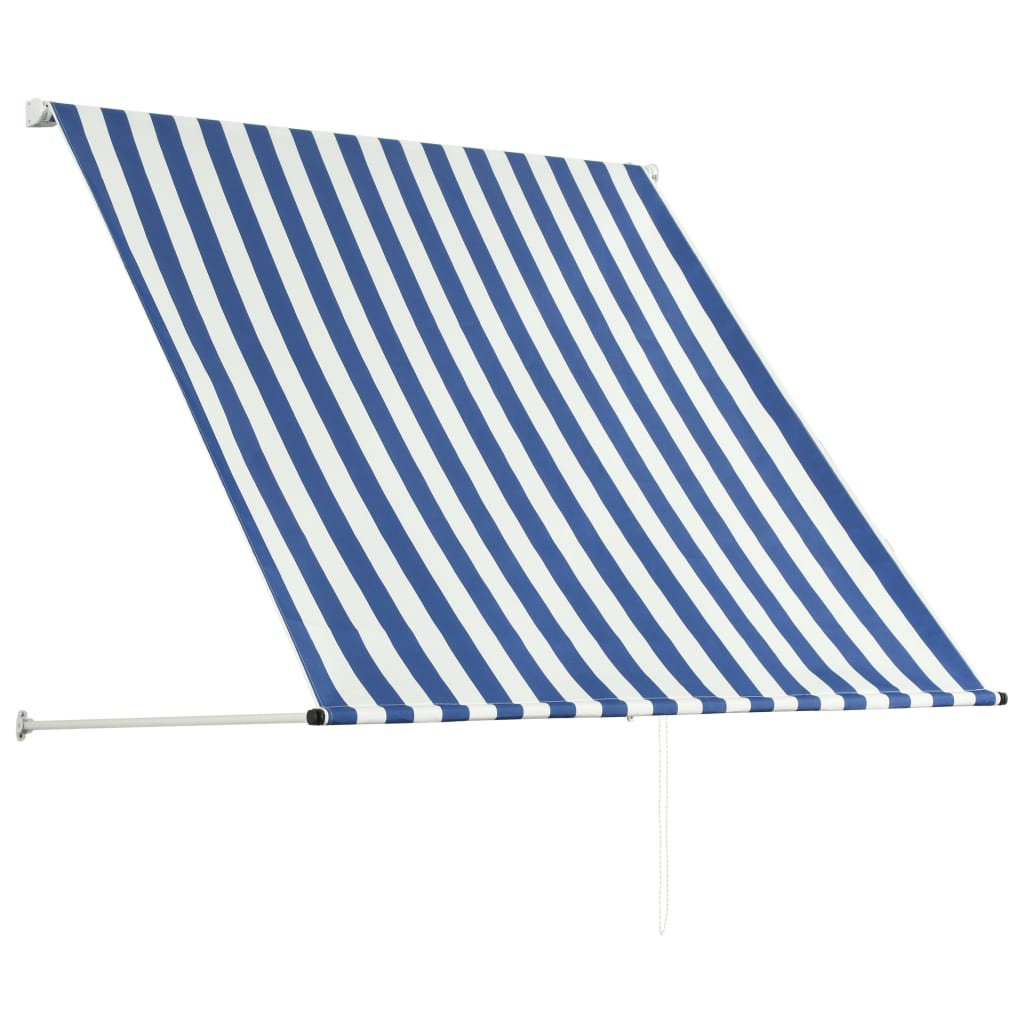
Wayfair.co.uk
Dakota Fields Kurken Retractable Awning 100×150 Cm
An awning can create shade over your windows and looks far more stylish than a camo net.
Kingsleeve
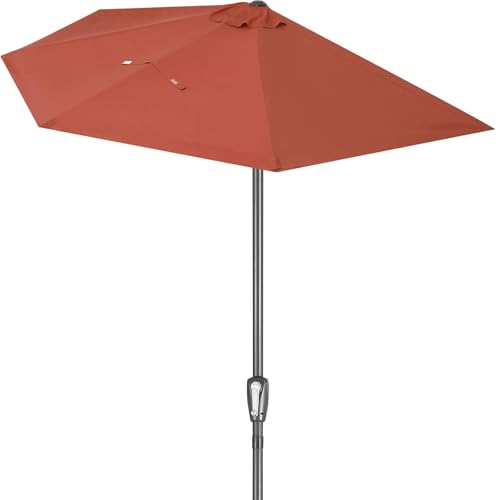
Kingsleeve® 2.7m Half Parasol
A parasol can also be used to shade groundfloor windows or balcony doors. This half-parasol shape means it can be pushed up against a wall easily.
‘Ultimately, external shading is the most efficient way to cool down your house, since it stops the heat from entering the building at all. Whether this is camouflage, a shade cloth, or just an awning, stopping the sun from heating your windows will almost always be more effective than cooling down the room after it has been heated up,’ Max concludes.
It may not be the most attractive cooling method, but camo netting is a cheap and effective one. Would you be willing to try it?