
Top 10 Things to Do in Yerevan, Armenia
With a new direct flight from London, Yerevan — Armenia’s capital, and a destination with an alluring fusion of ancient depth and modern confidence – is now easier than ever to savour. Head east to the jewel of the Caucasus, and discover a charming city in the geographical and cultural shadow of Mount Ararat.
With a stone inscription left by King Argishti in 782 BC, Yerevan is officially 29 years older than Rome, though archaeologists date the first human settlement here from at least 2,000 years earlier.
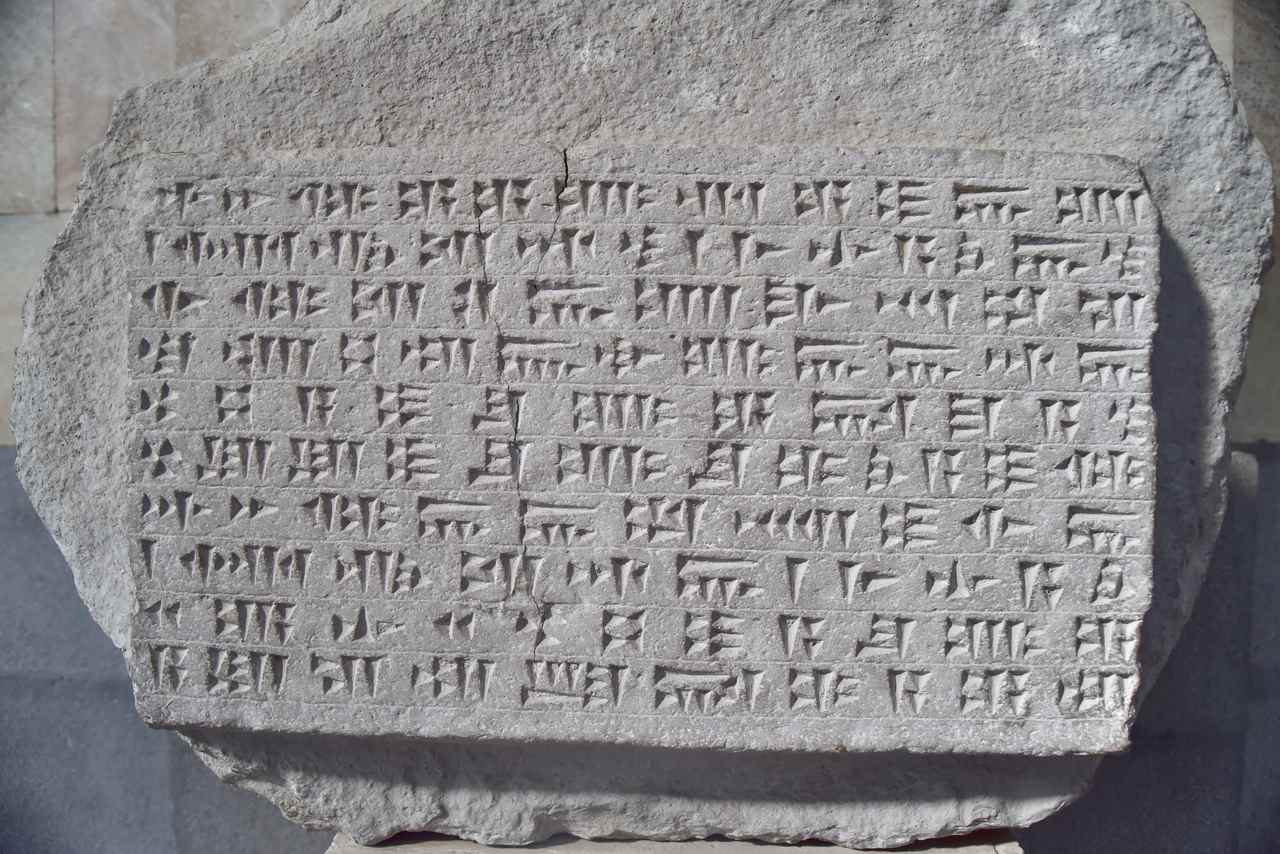
Ancient Armenian script.
It sits as the capital city of the world’s first Christian nation, again stealing a march on the Roman Empire by several years. Since then, Armenia’s fortunes have been turbulent and often tragic, thanks to shifting borders, conflict with its neighbours, Russian Imperial ambition, and Soviet rule.
But modern Yerevan feels remarkably unburdened. European in outlook, though undeniably different, it is safe, cultured, easygoing, and ambitious.
Visit it now and try out our Top 10 things to do in Yerevan before everyone else catches on.
Soak in the Views of Mount Ararat
Whatever you do on your first day in Yerevan, end the daylight hours by finding a vantage point to admire the city and its astonishing backdrop: the snowy, majestic Mount Ararat. This towering volcanic cone, rising more than 5,000 m, glows in the sunset, and the city – much of it built from rose-tinted igneous rock – answers in colourful harmony.
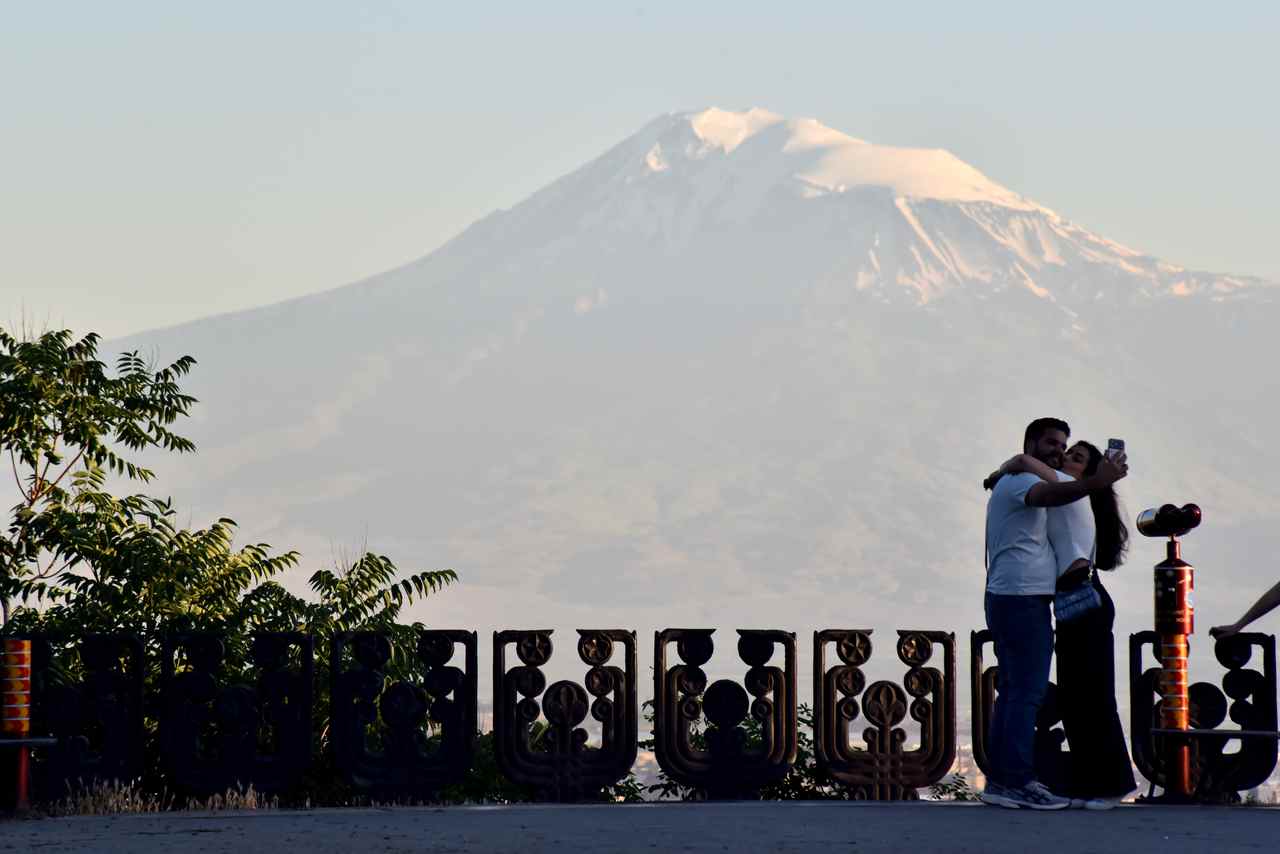
Mount Ararat stands in modern-day Turkey
Though Ararat’s presence defines Yerevan, it actually stands in modern-day Turkey; a quirk of Stalin’s capricious geopolitical games. Fittingly, one of the finest views is from the base of the 55‑metre‑tall Mother Armenia, a statue that replaced one of Stalin, because he never deserved the vista.
For an even more poignant perspective, look towards Ararat from the Genocide Museum, gazing to where more than a million Armenians lost their lives in the early 20 th century.
Enjoy Republic Square
When the Bolshevik revolution remade the Russian Empire into the Soviet Union, major cities were given face-lifts, which included vast, soulless spaces for rallies, marching boots, and tank treads.
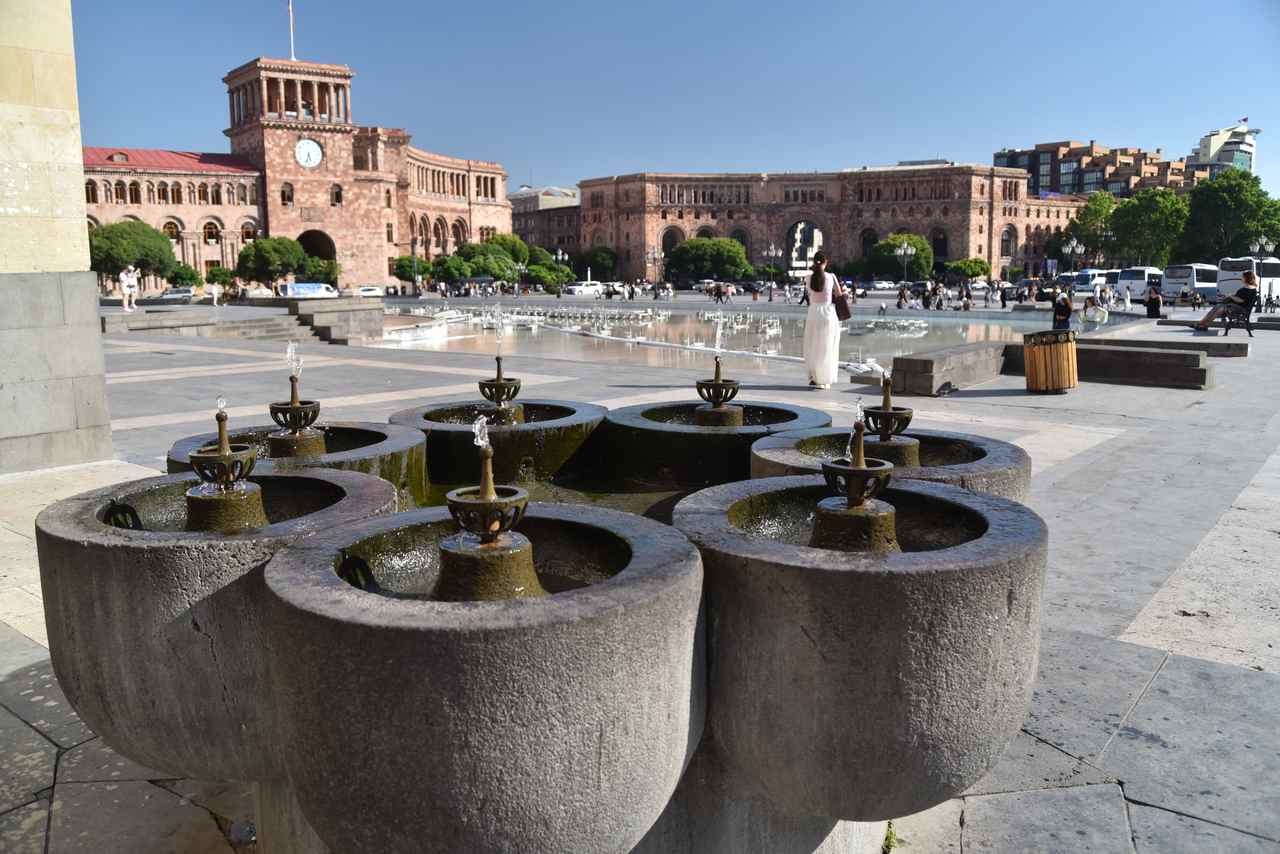
Republic Square (Hanrapetutyan Hraparak), the central public square in Yerevan, Armenia.
In Yerevan, things fortunately turned out differently. Its orange and yellow local tufa building stone lent itself to graceful curves and ornament, so masons threaded Yerevan’s Republic Square with Armenian motifs – wheat, grapes, and local flourishes – alongside the obligatory hammer and sickle.
For a cool drink with a view, head to the rooftop terrace of Diamond in the corner by the museum. You’ll spot it because it’s the only black-stoned survivor of the Russian Imperial era, when darker, pricier rock was in fashion.
Meet Yerevan’s Heroes
You can scarcely walk 20 paces in Yerevan without encountering a statue or carved tribute to a national figure, which includes cultural leaders from a diaspora which far outnumbers those on home soil.
Lenin’s monument in Republic Square has vanished, just as Stalin’s was removed from its perch above the city, this time leaving only a modest flowerbed in its place.
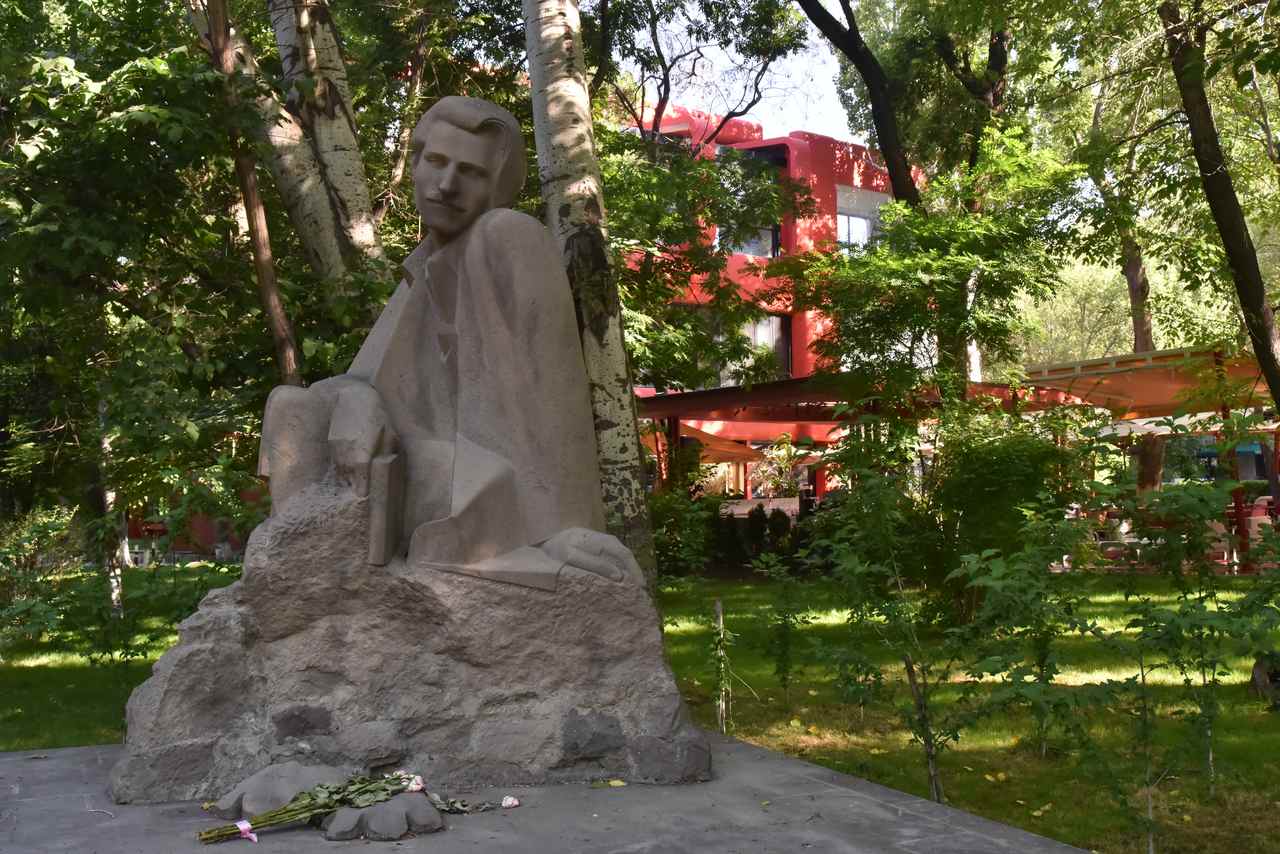
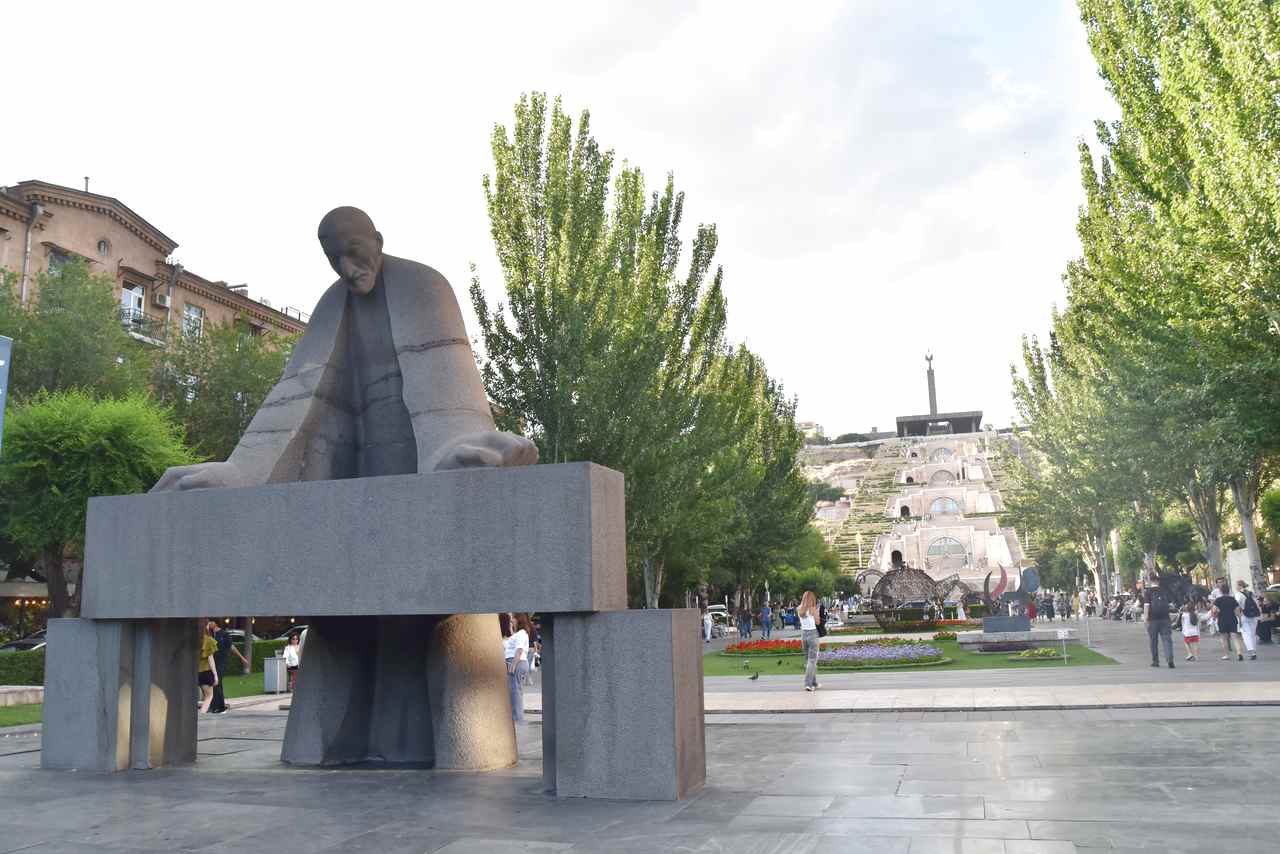
For the most eclectic collection of sculptures, stroll from the grand Opera House to the garden below the Cascade Complex, itself an immense artwork. More statues await on the cascade terraces, linked by 572 steps, or, for a cooler ascent, via the internal escalator of the Cafesjian Center for the Arts.
Go to Retro on the Metro
Local lore says the Soviet official with the power to grant a metro was repeatedly steered into staged traffic jams, ensuring Yerevan received its system; albeit a single 13‑kilometre line. Its remarkably fast fleet of creaky three‑car trains plunge up to 70 m underground, taking you to stations which themselves are worth seeing.
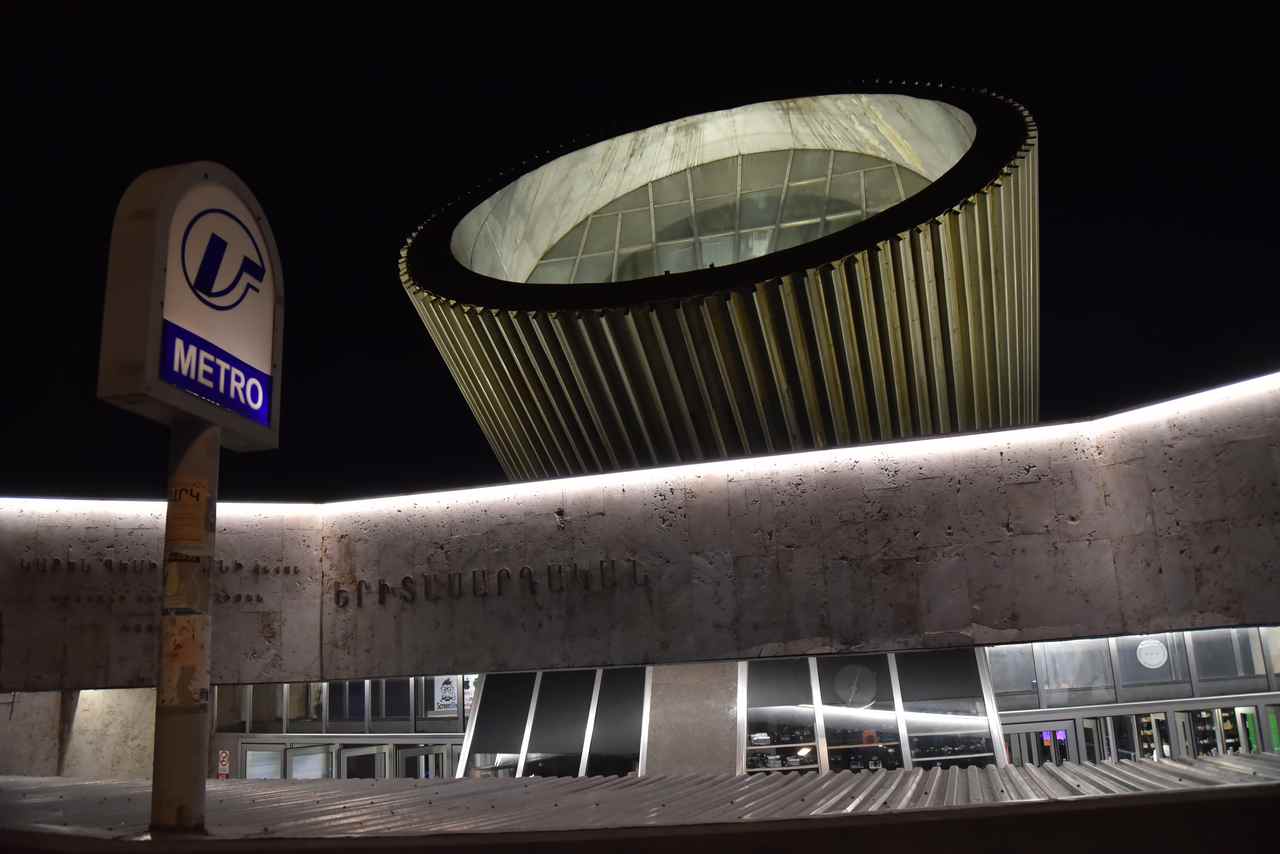
Armenia’s Soviet-era metro is famed for its striking architecture.
Republic Square’s huge sunken flower‑fountain competes with the space‑age corrugation of Yeritasardakan in the university district. And for fans of Soviet Modernism beyond the metro, Yerevan offers further gems: the latticework of the Institute of Communication, the Ararat‑shaped roof of the old Rossia cinema (now a shopping centre), the retro‑cool façade of the State Engineering University, and more.
Visit Yerevan’s Museums
The sense of being Armenian is entirely entwined with history, so it’s no surprise that Yerevan excels at museums. Chief among them is the National Museum on Republic Square, a place so large and packed with exhibits that it could occupy a whole day.
If you have just an hour, seek out the cuneiform foundation stone of the city and the world’s oldest shoe. Adjacent is the excellent National Gallery, but if your time is limited, head instead to the Manuscript Museum (Matenadaran, named after the inventor of the Armenian alphabet), a place recognised by UNESCO’s Memory of the World programme. Other gems include the Yerevan History Museum, devoted to the city itself; the Erebuni Fortress Museum, which traces its ancient beginnings; and the Sergei Parajanov Museum, an immersive tribute to Armenia’s most unconventional filmmaker and artist.
Sip Ancient Wine
In the Areni cave, where archaeologists found the world’s oldest shoe, they also discovered wine-making vessels and grape seeds dating to around 4100 BC.
Georgia may claim an even earlier vintage through chemical traces, and the Bible credits Ararat-dwelling Noah as the first winemaker, but such debates fade once you’re tasting the modern wines in Areni itself.
It’s a sybaritic day trip from Yerevan that can be combined with Noravank Monastery, tucked away up a canyon of burnished sandstone cliffs. Returning to the city, the day can be completed in style at Yerevan’s Ararat Brandy Company Museum. Kenats! (“To life!”)
Enjoy the Water
Yerevan was one of the few major Soviet cities with a reliable, drinkable public water supply, and watery traditions run deep. Fountains – both for drinking and ornament – are everywhere, adding greatly to the aesthetic appeal and comfort of the city.
Drinking fountains, or pulpulaks, double as meeting places, and the most famous is Yotnaghbyur (“Seven Springs”) in Republic Square. Summer evenings (except Tuesday) bring the nightly Singing Fountains spectacle of music, water and light outside the National Museum. And if you’re in Yerevan 14 weeks after Easter, you can’t avoid Vardavar, a city-wide water fight when getting soaked is regarded as a blessing for the year ahead.
Discover the Artisans
Spend a delightful hour browsing the stalls of the Vernissage Market, where traditional Armenian crafts are laid out in a diverse and tempting array. It’s a good place to pick up souvenirs such as the double-reed duduk instrument, made from apricot wood and known for its warm, soulful sound.
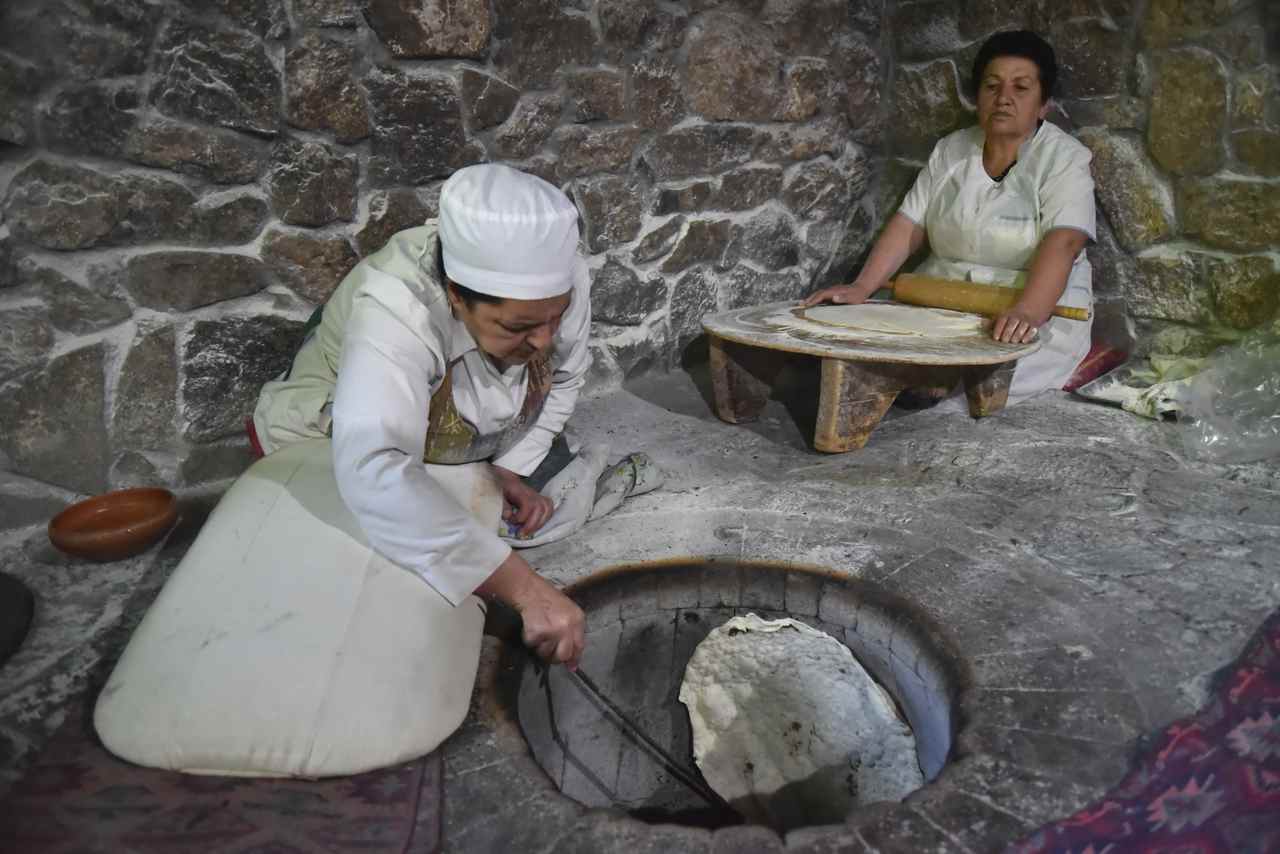
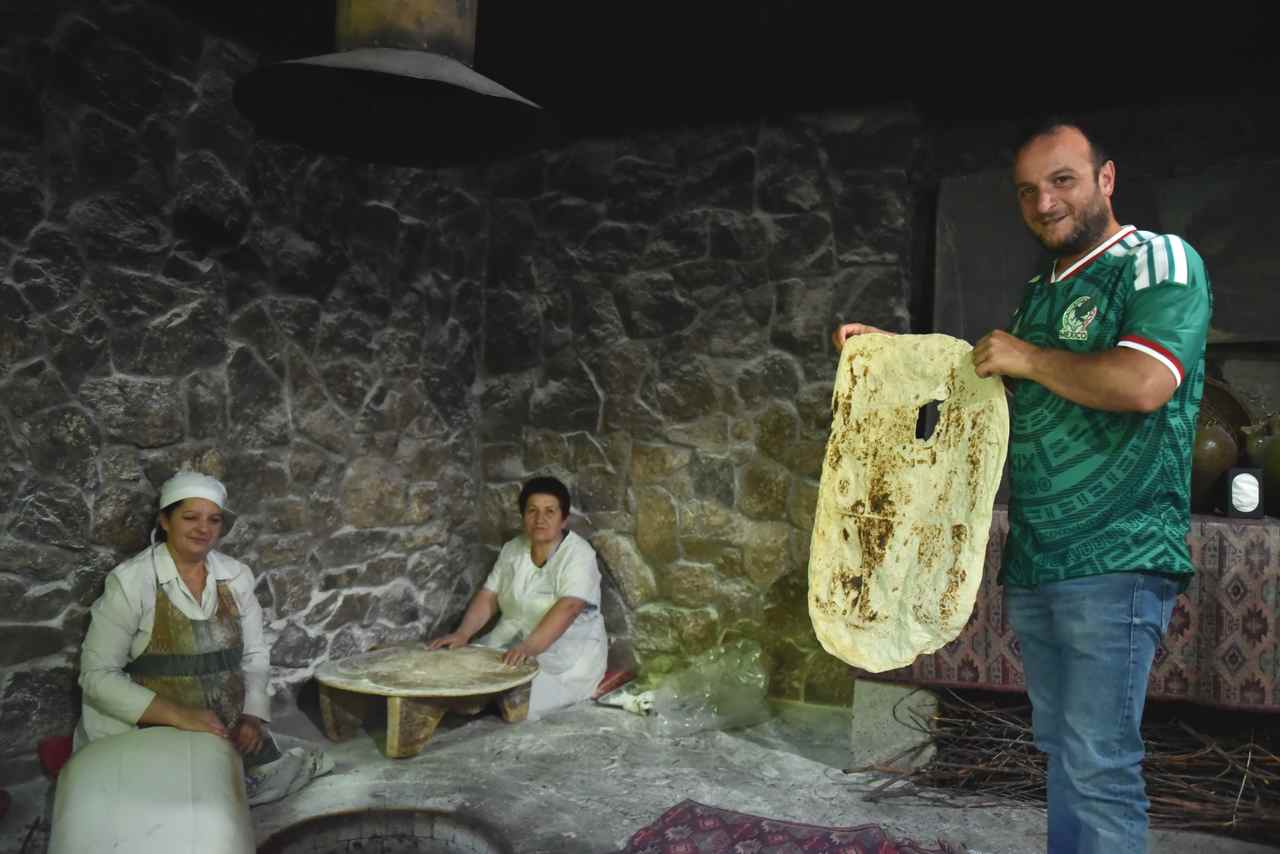
If you’re inspired, there are plenty of masterclasses on offer in Yerevan, including rug-weaving, pottery and stone carving. Armenia abounds in intricate khachkars (cross stones), and while you might not have time or luggage allowance for the full version, you can attempt making your own at a small scale. You might also consider a cookery class, perhaps learning the art of baking lavash, Armenia’s signature bread.
Head to the Lake District
Although landlocked Armenia has no coastline, it still has beaches – and even its own species of gull – thanks to Lake Sevan, where the inhabitants of Yerevan decamp at weekends. At almost 2,000 m, the lake stays refreshingly cool in summer, which is why the prime minister’s retreat and the Soviet‑era modernist Writers’ Union lodge share a peninsula, overlooked by the mediaeval Sevanavank Monastery.
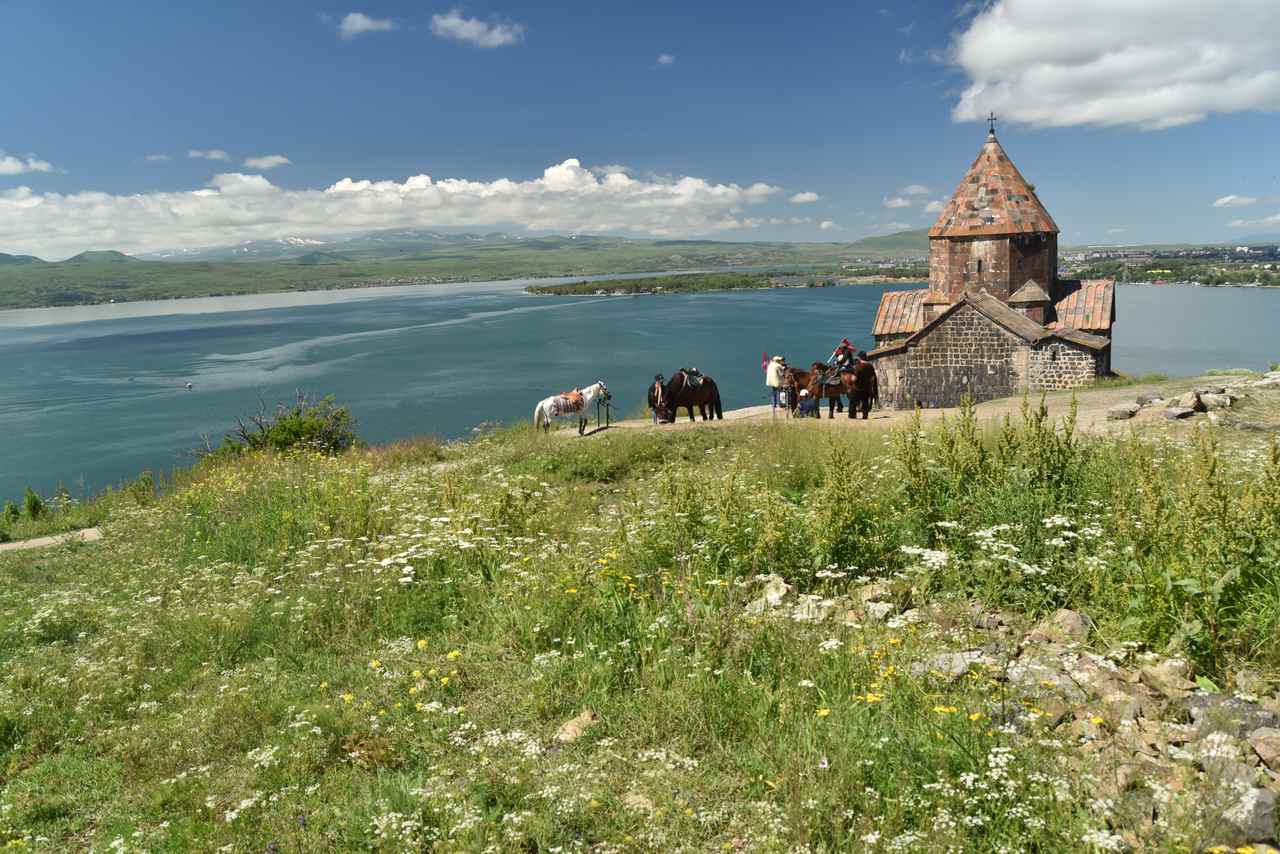
Sevanavank Monastery, perched on a rocky peninsula overlooking Lake Sevan in Armenia
On the road to Sevan, stalls selling buckets and spades mingle with fishermen’s stands, often fronted by mannequins theatrically displaying the size of the fish on sale. In reality, Sevan’s fish are far smaller than they once were: the hard post‑Soviet years led to heavy overfishing as many Armenians relied on whatever Sevan could provide.
Discover the Switzerland of Armenia
Pass through the tunnel from the high-altitude steppe grassland of the Lake Sevan region towards Georgia, and the landscape changes in an instant. Suddenly, you find yourself amid pine forests with alpine meadows and craggy peaks above before reaching Dilijan.
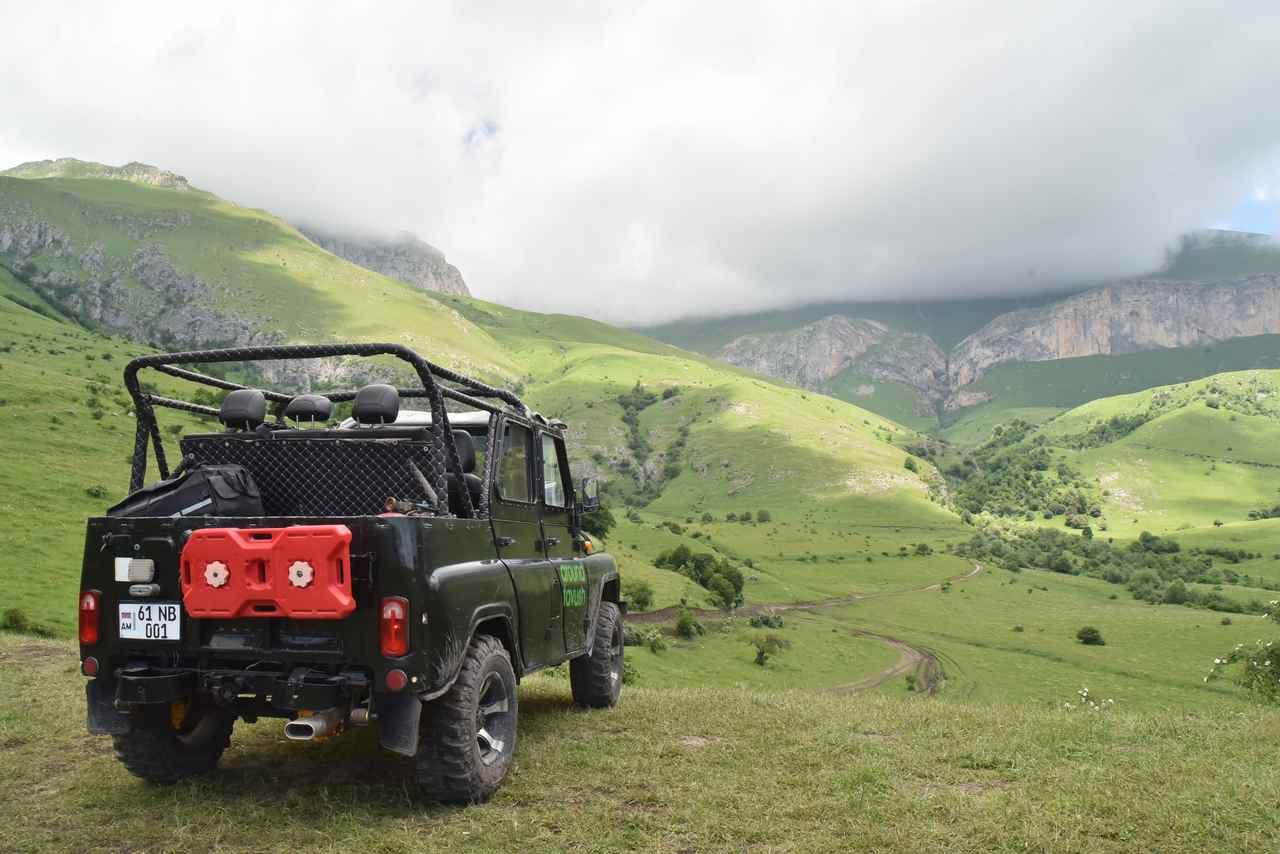
Earmarked by the government as the future centre of finance, Dilijan’s chalet-like architecture will feel familiar to anyone who frequents ski resorts. For a perspective from an even higher altitude, venture up Mount Dinats on a hair‑raising four‑wheel‑drive ascent. The cliff‑edge picnic at the top may prove the literal and figurative high point of your stay in Armenia.
Fact Box
WIZZ Air flies twice a week direct from London Luton to Yerevan, with tickets starting from £55 one way.
Yerevan‑based phoenixtour specialises in private and small group tours of Armenia. Book their five-day Armenia City Break from €615 per person.
The post Top 10 Things to Do in Yerevan, Armenia appeared first on The Travel Magazine.