

Great Ocean Road Itinerary: The Perfect 3-Day Road Trip
A complete Great Ocean Road itinerary: the best stops, how many days you need, where to stay, and what to know before you rent a car.
No trip to southeastern Australia is complete without driving the Great Ocean Road. This is one of those road trips where the drive itself is just as much a part of the experience as the places you stop along the way.
You can drive the entire route in one day, but I wouldn’t recommend it. There are beaches, waterfalls, wildlife, coastal viewpoints, and small towns worth stopping for, and three days gives you enough time to actually enjoy them without spending the entire trip in the car.
I recommend driving from east to west, starting in Torquay and ending around Warrnambool. This puts the ocean on your passenger side for much of the drive and also means you’ll reach the Twelve Apostles in the afternoon, when the light is particularly beautiful.
The Great Ocean Road stretches between Torquay and Allansford in Victoria, with highlights including the Twelve Apostles, Memorial Arch, Loch Ard Gorge, and plenty of lesser-known stops along the way. You’ll need a car to do this road trip, so I’ve also included some tips on renting a car and planning your route.
Here’s my ideal 3-day Great Ocean Road itinerary.
Best Stops on the Great Ocean Road
If you’re short on time, these are some of the stops I’d prioritize:
- Bay of Islands: More dramatic limestone formations and a great place for photos.
- Port Fairy: A charming historic coastal town worth spending some time in.
- Bell’s Beach: A beautiful surf beach with dramatic cliffs.
- Memorial Arch at Eastern View: A quick stop with an interesting piece of Great Ocean Road history.
- Split Point Lighthouse: Great coastal views and the chance to spot whales or dolphins.
- Erskine Falls and Teddy’s Lookout: A waterfall and one of the best coastal viewpoints near Lorne.
- Kennett River: One of the best places to look for wild koalas.
- Cape Otway Lightstation: A historic lighthouse surrounded by beautiful coastal scenery.
- Great Otway National Park: Dense forest, hiking trails, and plenty of opportunities to get off the main road.
- Gibson Steps: A dramatic beach backed by towering limestone cliffs.
- The Twelve Apostles: The iconic Great Ocean Road viewpoint and a must-see.
- Loch Ard Gorge: A spectacular coastal gorge with an interesting history.
- London Bridge: A unique limestone formation shaped by erosion.
- The Grotto: A natural limestone sinkhole right along the coast.
How many days do you need on the Great Ocean Road?
Three days is the sweet spot for a Great Ocean Road road trip.
You could easily stretch to four or five days, as we did on our New Zealand trip – especially if you want to hike, explore more of the beaches, or detour into the surrounding areas – but three days gives you enough time to see the major sights without feeling like you’re constantly rushing to the next stop.
And one of my favorite things about this road trip is that there’s plenty to see beyond the famous viewpoints. Keep an eye out for koalas, birds, whales, and other wildlife along the way.
Day One: Torquay to Apollo Bay
I recommend starting your road trip in Torquay and working your way west toward Apollo Bay. Your first day is filled with beaches, coastal viewpoints, waterfalls, and some of the Great Ocean Road’s best wildlife spotting.
Bell’s Beach
About 10 kilometers from Torquay, Bell’s Beach is an easy first stop – and especially worth adding if you’re a surfer.
This is one of Australia’s most famous surf beaches and is home to the Rip Curl Pro surfing competition over Easter. Even if you’re visiting at another time of year, the beach is worth stopping for. The high cliffs create a dramatic backdrop, and the Southern Ocean can put on quite a show when the swells are up.
There are also several viewpoints along the cliffs, so you don’t necessarily have to head down to the beach to enjoy the scenery.
Memorial Arch at Eastern View
Continue west to the Memorial Arch at Eastern View, which commemorates the workers who built the Great Ocean Road.
More than 3,000 workers were involved in constructing the road, which was built between 1919 and 1932 as a memorial to Australian soldiers who died during World War I.
The arch has been replaced several times over the years, but the original sign remains. There’s also a memorial sculpture nearby honoring servicemen who returned after World War II.
It’s a quick stop, but I think it’s worth pulling over to appreciate the history behind the road you’re driving.
Split Point Lighthouse at Aireys Inlet
Just a short drive farther west, you’ll reach Split Point Lighthouse in Aireys Inlet.
The lighthouse sits dramatically above the rugged coastline and has been guiding ships through the waters of Bass Strait for more than a century. If the weather is clear, you can get some beautiful views of the coastline from here.
Keep an eye out for whales and dolphins, too. I wasn’t lucky enough to see them during my visit, but the viewpoint is a good place to try.
Erskine Falls and Teddy’s Lookout at Lorne
If you love waterfalls as much as I do, don’t skip Erskine Falls.
The waterfall is tucked inside the Great Otway National Park and is about a 28-kilometer detour from Split Point. There’s an 80-step walk down to the lower viewing area, so keep that in mind if you’re traveling with young kids or anyone who has difficulty with stairs.
Afterward, make the short drive to Teddy’s Lookout in Lorne. It’s an easy walk from the parking area and one of the best places to get a panoramic view of the coastline.
This is one of those stops where I’d give yourself a little extra time rather than rushing through for a quick photo.
Koalas at Kennett River
One of the highlights of this stretch of the Great Ocean Road is Kennett River, where you’re likely to spot one of Australia’s most famous residents: the koala.
They’re notoriously difficult to find in the wild, but Kennett River is known for its koala population. Look up into the eucalyptus trees and you may spot one curled up in the branches.

Koalas can sleep up to 20 hours a day, so don’t be surprised if your wildlife encounter involves watching one sleep. I happened to see a few awake and eating eucalyptus leaves, which felt like a pretty lucky bonus.
Day 2: Apollo Bay to Port Campbell
Day two takes you deeper into the Great Ocean Road, with more dramatic coastline, forests, historic sites, and eventually the famous Twelve Apostles.
Cape Otway Lightstation
Start your second day with a drive to Cape Otway Lightstation, about 28 kilometers from Apollo Bay.
The lighthouse itself is an important piece of Australian maritime history, although access to the tower may be restricted depending on current conservation work. The surrounding grounds and cafe are still worth visiting, and there are plenty of scenic spots for photos.
Cape Otway also has a fascinating – and sometimes tragic – history. For many immigrants arriving by ship after months at sea, this was their first sight of land after leaving Europe, Asia, or North America.
Great Otway National Park
Continue through the Great Otway National Park, where the scenery changes dramatically from the open coastline to dense eucalyptus forest.
There are plenty of ways to explore the park, including hiking trails, mountain biking, four-wheel driving, and the Otway Fly treetop adventure.
Personally, I was happy just taking my time through the forest and enjoying the change of scenery. If you’re looking to add some adventure to the itinerary, though, the Otway Fly is a fun option.
Gibson Steps
As you get closer to the Twelve Apostles, make a stop at Gibson Steps.
The steps lead down toward a wild stretch of beach surrounded by towering limestone cliffs. From the beach, you get a completely different perspective of the coastline and the offshore stacks known as Gog and Magog.
Weather and ocean conditions can affect access to the beach, so check conditions before you go.
Even if you can’t make it down to the beach, the views from above are spectacular.
The Twelve Apostles
And then, finally, you reach the most famous stop on the Great Ocean Road: the Twelve Apostles.
Despite the name, there aren’t actually twelve limestone stacks standing today. Erosion has taken its toll over the years, but that doesn’t make the view any less impressive.
This is one of those places where the photos really don’t do it justice. The limestone formations rising out of the Southern Ocean, surrounded by cliffs and beaches, are pretty spectacular in person.
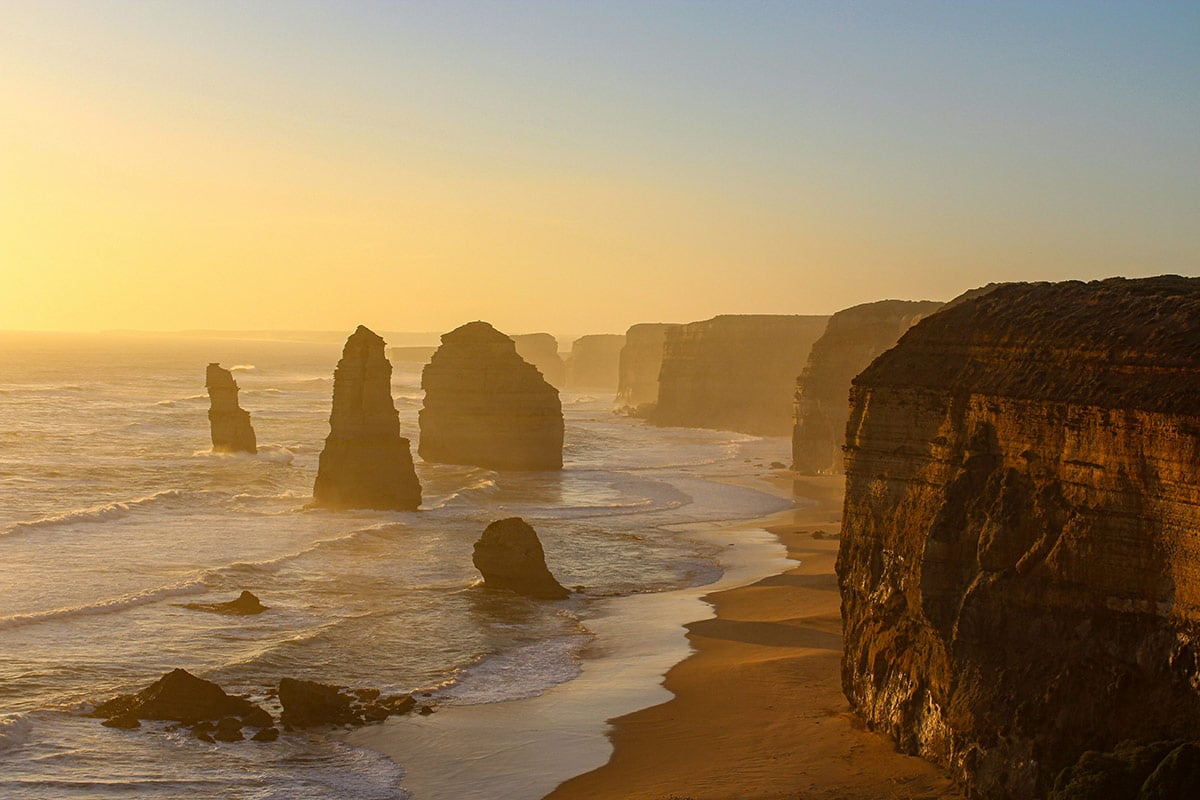
I recommend timing your visit for the afternoon when the light is softer. I spent a couple of hours here taking photos and enjoying the views rather than simply pulling over for a quick look.
Read more: Best Travel Cameras: Tested by a Pro Photographer
Loch Ard Gorge
Just a few minutes down the road from the Twelve Apostles is Loch Ard Gorge.
The gorge is named after the Loch Ard, a clipper ship that ran aground nearby in 1878. The shipwreck is part of the area’s tragic history, and there are several viewpoints where you can learn more about what happened.
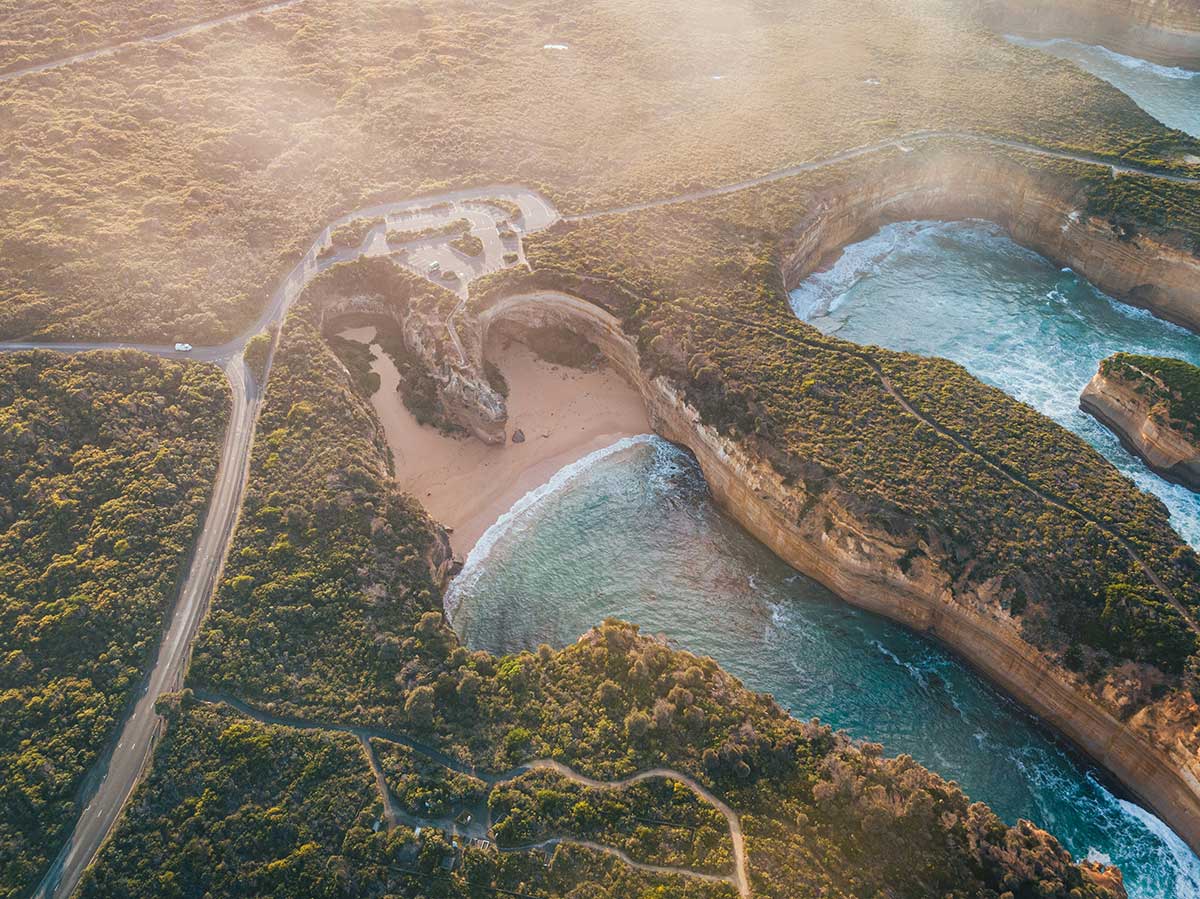
Access to the beach can be restricted depending on conditions, but even from the viewpoints, the gorge is one of the most dramatic landscapes along the road.
Spend the night in or around Port Campbell.
Day 3: Port Campbell to Warrnambool
By day three, you’ve reached the western end of the Great Ocean Road, but there are still plenty of worthwhile stops between Port Campbell and Warrnambool.
London Bridge
About 7 kilometers west of Port Campbell, you’ll find London Bridge.
The limestone formation once connected to the mainland, but part of the natural bridge collapsed unexpectedly in 1990, leaving the formation you see today.
There are upper western and lower eastern viewing platforms where you can take in the coastline.
If you’re here around dusk, keep an eye out for the penguins that return to the protected beach below.
The Grotto
Next up is the Grotto, about 9 kilometers west of Port Campbell.
This natural limestone formation is where the ocean meets a sinkhole, creating a beautiful combination of rock, water, and sky.
It’s an easy stop from the parking area and one of my favorite places along this section of the road for photography. The light reflecting off the water can make the scene especially beautiful.
Bay of Islands
Continue west to the Bay of Islands, where you’ll find even more limestone stacks rising dramatically from the Southern Ocean.
The formations here are a little different from the Twelve Apostles, but just as impressive. If the weather is overcast, don’t write the day off. The softer light can actually make this stretch of coastline look even more dramatic.
Port Fairy
Eventually, you’ll reach Port Fairy, a charming beach town that makes a great final stop on your Great Ocean Road itinerary.
The town has more than 50 National Trust-classified buildings, so it’s worth getting out of the car and walking around rather than simply driving through.
Nearby Griffith’s Island is home to a large colony of short-tailed shearwaters, along with a historic lighthouse built in 1859.
If you’re visiting between June and September, you can also head to Logan’s Beach, where southern right whales come to give birth to their calves.
After exploring Port Fairy, continue on to Warrnambool to finish your Great Ocean Road road trip.
Read more: 12 Best Beach Towns in California + Where to Stay
Can You Do the Great Ocean Road as a Day Trip?
Yes, technically.
The Great Ocean Road can be driven in about four hours without stops, but that’s not really the point of this road trip.
If you only have one day, you can absolutely do it. Just know that you’ll need to be selective about your stops and plan for a much longer day once you factor in sightseeing, photos, food, and traffic.
If you have the flexibility, I’d strongly recommend giving yourself at least three days. You’ll get to see much more of the coastline and won’t spend the entire day watching the clock.
Where to Stay Along the Great Ocean Road
You have plenty of options when it comes to accommodation along the Great Ocean Road.
Camping and campervans are popular, and there are campsites scattered along the route. If camping isn’t your thing, there are plenty of hotels, B&Bs, and other accommodation options in towns like Torquay, Lorne, Apollo Bay, and Port Campbell.
For a three-day itinerary, I’d recommend breaking up the drive rather than trying to stay in one place the entire time. Apollo Bay makes a convenient overnight stop after your first day, followed by Port Campbell on night two.
Best Time of Year to Drive the Great Ocean Road
The best time to drive the Great Ocean Road depends on what you want to see.
For generally mild weather and fewer crowds, autumn (March through May) and spring (September through November) are good choices.
Winter can be a great time to visit if whale watching is high on your list. Southern right whales can be spotted along the coast between June and September.
No matter when you go, bring layers. The weather along this stretch of coast can change quickly, and the conditions can feel very different once you’re standing on an exposed cliff overlooking the Southern Ocean.
Renting a Car for the Great Ocean Road
You’ll need a rental car to properly experience the Great Ocean Road. Most travelers pick up their car in Melbourne and drive from there to Torquay.
I recommend comparing rental car options before your trip rather than waiting until you arrive at the airport. You can also check whether your travel insurance already covers rental car excess before purchasing additional coverage from the rental company.
And don’t underestimate how much time you’ll spend getting in and out of the car. Comfortable clothes and shoes, a good playlist, snacks, water, and plenty of room for your camera gear will make the road trip much more enjoyable.
Read more: How To Take A Road Trip In Australia
Sign up for my travel newsletter here and be the first to get my best travel advice and secret finds — so you can discover hidden gems, and travel like an insider (not just a tourist).
Flights: Going is the first place I check when searching for cheap flights. If you sign up for their email alerts, you’ll receive flight deals at up to 90% off. I have traveled all over the world using their flight deals.
Accommodation: Booking.com offers savings on hotels, apartments, and villas in 80,000 destinations worldwide. You can browse hotel reviews and find the guaranteed best price on hotels for all budgets.
Travel Insurance: I never travel without a travel insurance policy because it’s not worth the risk! I use and trust Visitors Coverage, which I have used for the past 10 years.
Let me book your trip! Looking for a Travel Advisor to help you plan your trip? Learn more here!
The post Great Ocean Road Itinerary: The Perfect 3-Day Road Trip appeared first on Ordinary Traveler.