
How to Take Better Wildlife Photos by Thinking Like an Animal
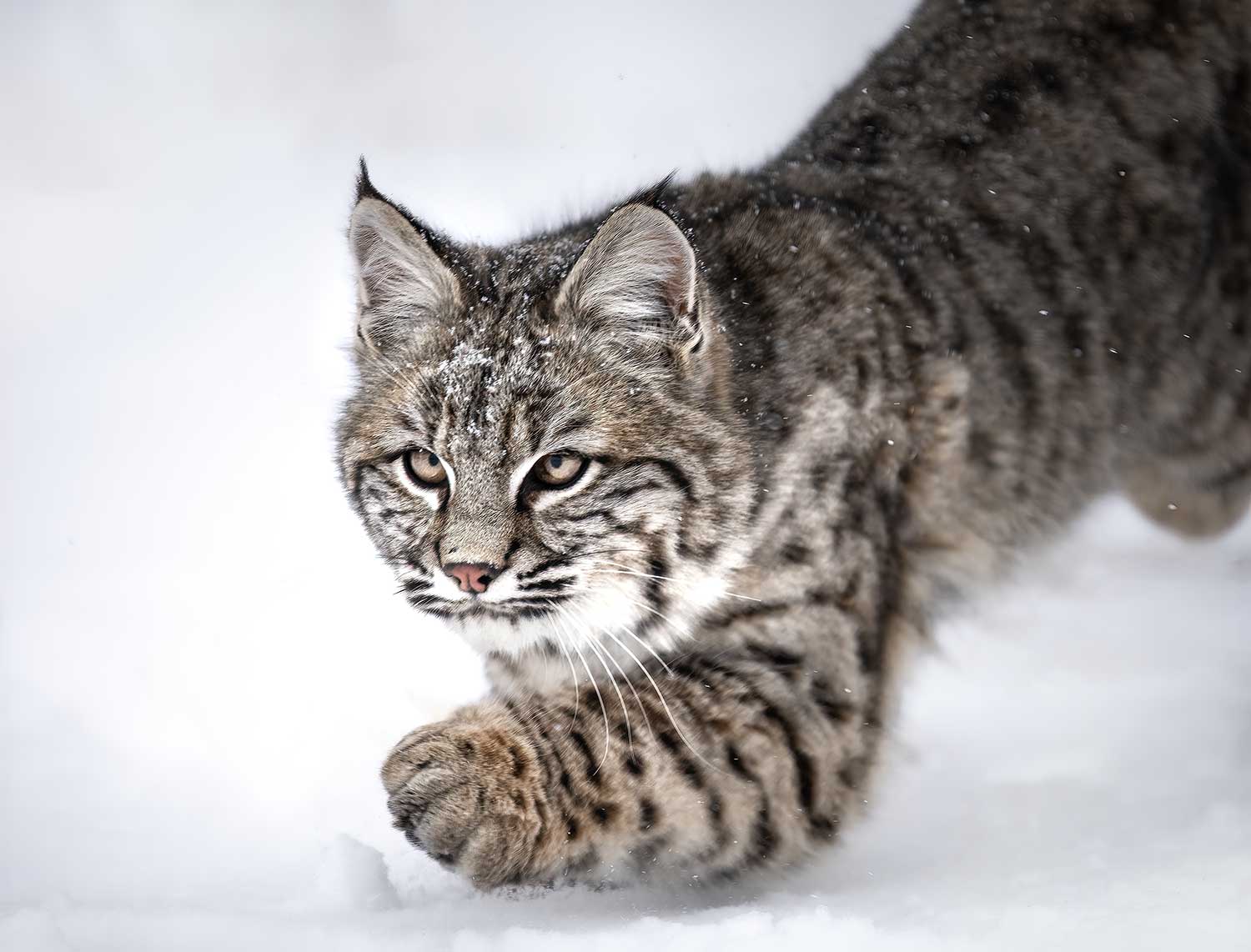
A juvenile bobcat springs through the snow in Yellowstone National Park. OM System OM-1, OM SYSTEM M. Zuiko 150-400mm f/4.5 TC 1.25 IS PRO at 150mm. Exposure: 1/1000 sec., f/5.6, ISO 200.
For me, wildlife photography has always been about more than just capturing images of animals. The magic lives in feeling like an animal myself. To create wildlife photos that truly come alive, you need to step outside the comfort of the ordered world and into something older, wilder, deeper and more chaotic.
Feel the north wind blow as you follow a bear down the Alaskan coast. Hear the gravel crunching beneath your boots as you trace her tracks along the edge of a salmon stream. Taste the crisp air as you wait beneath unnamed mountain peaks. See the way the bear watches you back, unblinking, as though you are no different from any other wild thing stirring in the thick brush.
My favorite wildlife photos aren’t necessarily the ones that are technically perfect — they’re the ones that breathe, bite and reveal the pulse of the animal in front of the camera.
See how this story appears in the magazine: Outdoor Photographer Vol. 2 (Digital Edition)
Find Yourself in the Wild
One reason I’m so drawn to wildlife photography is because I often see so much of myself in my wild subjects.
My fascination with bears reveals a lot about me. Bears inspire me to own my solitary nature, embrace my independence and expand my resilience. I encourage aspiring wildlife photographers to identify the qualities their favorite animal inspires them to embody.
When you’re crouched low in the mud photographing a bear, don’t just think about shutter speed or camera settings. Think about how you can capture the moment in a way that reflects what inspires you most about the bear. Notice her powerful stride. Watch how she lifts her head to sniff the breeze. Create an image that doesn’t simply show a bear — it feels like one.
Embrace the Beautiful Chaos of Nature
Minimalism certainly has its place in fine art photography, but it can sometimes rob a wildlife photo of its wildness.
During the summer months, I work as a bear-viewing guide, taking clients into the Alaskan wilderness to photograph bears. One of the most common mistakes I see photographers make is trying to tame the wild. They wait for perfect light, an unobstructed composition and an ideal pose. They forget that nature owes us nothing, and sometimes the strongest wildlife photographs come from moments of complete chaos.
The real perfection lies in the details you can’t control — the blur of flapping wings, the texture of rain-soaked fur or shadows deepened by changing light. Invite that unpredictability into your images. Shoot through tangled branches. Frame the bear half-hidden in shadow. Let the rain soften the background.
Imperfections are part of the story.
Patience Is One of the Most Important Wildlife Photography Skills
Wildlife photography requires the same patience that enables bears to catch fish, mountain lions to ambush deer and owls to dive for rodents beneath the snow.
In a world built around instant gratification, patience has become a lost art. I’ve learned to appreciate the long stretches of stillness between photo opportunities. Those quiet moments are increasingly rare in everyday life.
It’s uncommon to capture the wildlife photo you’ve dreamed about without spending hours — or even days — watching, waiting and trying without success. Eventually, you become part of the landscape, and every missed opportunity prepares you for the moment you’ve been waiting for.
Let Yourself Be Wild
To create unforgettable wildlife photography, you have to let yourself become untamed, too.
It’s easy to become consumed by the technical side of photography. You can spend endless hours researching camera bodies, lenses and gear, but what matters more than the equipment is your presence in the moment.
When you stop chasing perfection, you allow yourself to fully experience the scene unfolding before you. That awareness helps you recognize the split second that separates a good wildlife photo from a great one.
Let yourself be just as wild as the animal you’re photographing.
When the Wild Gives You the Shot
The untamed frame is never a finished product. It’s an evolving story that changes as you learn more about both your subject and yourself.
My photography continues to evolve with every season I spend among the bears. Every day I discover new behaviors, new moments and new ways of seeing them.
Wake before sunrise. Wade through marshes. Let your gear get muddy. Miss the shot — and then miss it again.
When everything finally comes together and you press the shutter at exactly the right moment, remember that you didn’t simply take the photograph.
The wild gave it to you. You earned it.
Brooke Bartleson is an OM System Ambassador specializing in wildlife photography. See more of her work at Little Bear Wildlife.
Subscribe to Outdoor Photographer.
The post How to Take Better Wildlife Photos by Thinking Like an Animal appeared first on Outdoor Photographer.